
Prado House
Location: Prado (Heritage Area), Montevideo, Uruguay
Design and Project Management: Arch. María Victoria Besonías, Arch. Guillermo de Almeida
Collaborators: Arch. Micaela Salibe, Hernán de Almeida
Land area: 482sqm
Built area: 143sqm
Construction Year: 2022
Photos: Besonías Almeida arquitectos
MEMORY
This house is located in El Prado, a neighborhood in the city of Montevideo that, due to its urban, architectural, and environmental value, is protected by the Permanent Special Commission (CEP) of the Municipality of Montevideo.
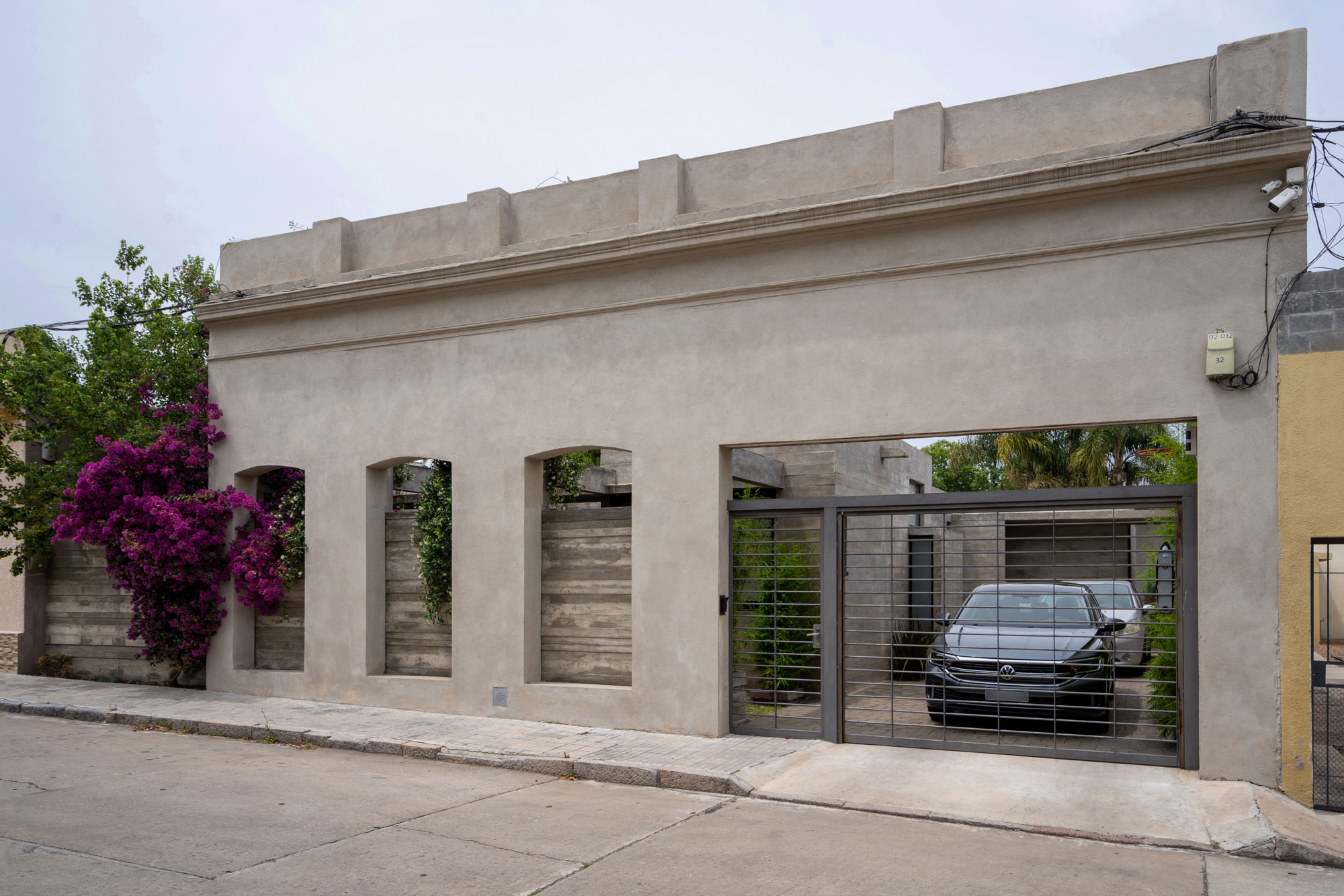
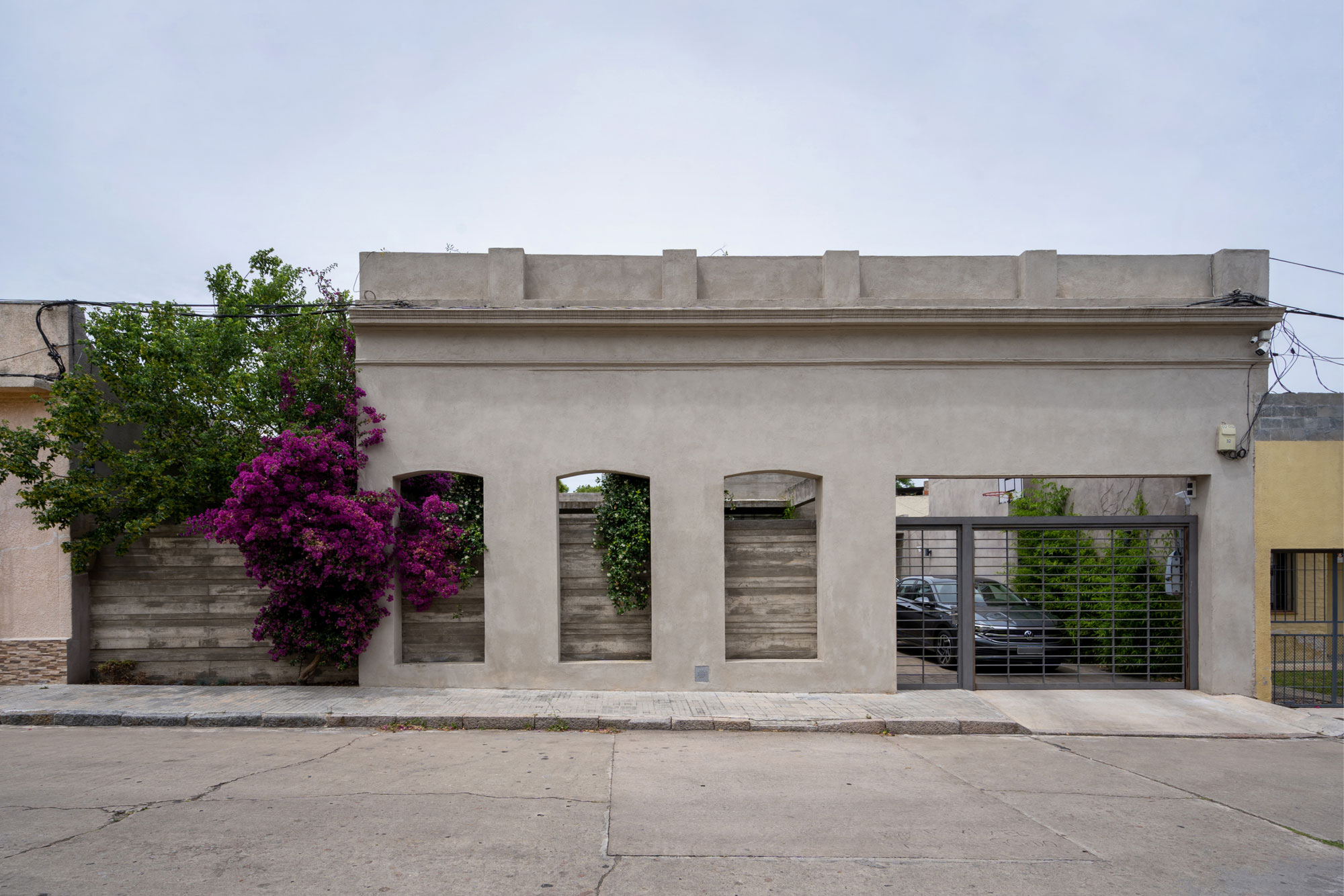
We began the project with the restrictions inherent to this location and with the relevant information that there were remains of a dilapidated building to be demolished, although, according to our assessment, it was possible to recover the façade wall by preserving it with adequate shoring.
Therefore, our first recommendation was to maintain the existing façade in order to comply with one of the CEP's requirements, which was to preserve the character of this area of El Prado: narrow streets with little traffic, lined with continuous façades along the municipal street line. This would be achieved by taking advantage of the material and labor present in the existing wall, without unnecessary expenses. We understood that our proposal should express coexistence between the image of an early 20th-century neighborhood and a contemporary house.
The requirements of the owners, a married couple with two daughters living in Montevideo, were, in short, a house with a fully integrated social area, although with a certain definition of each sector, with three bedrooms arranged in such a way as to provide marital independence and a connection between the daughters. They also needed a space for listening to and making music.
As for the location on the lot, the house had to be set back from the neighboring houses to allow for free circulation and achieve optimal conditions for natural lighting and ventilation. They also wanted all the rooms to be connected, as much as possible, to gardens with vegetation.
These requirements were provided in writing, in great detail and accompanied by photos of a study model (the owner had studied architecture for several years), which expressed a concept of the house based on articulated volumes. Thus, the approach to the project took into account not only functional data, but also spatial intentions.
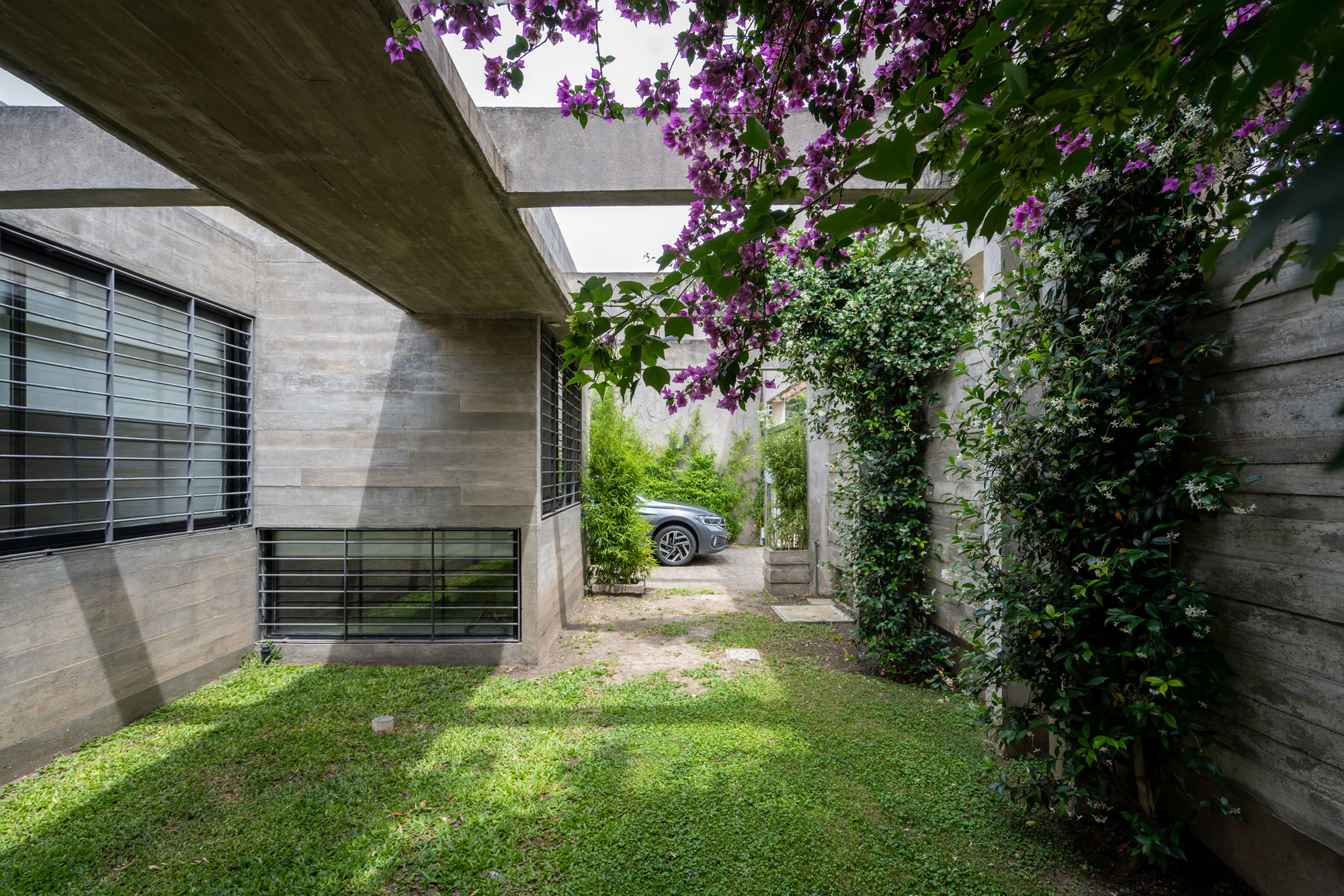
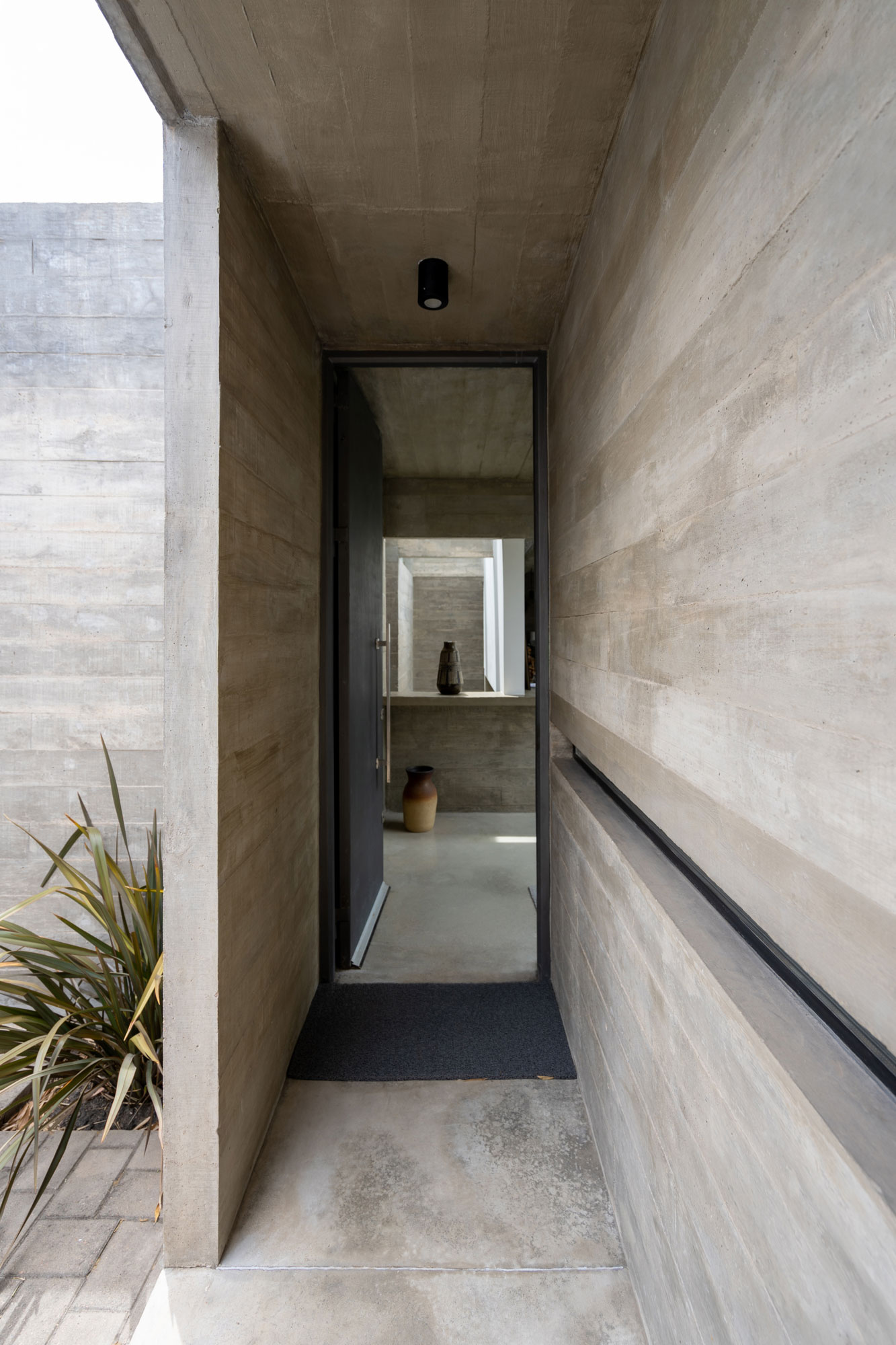
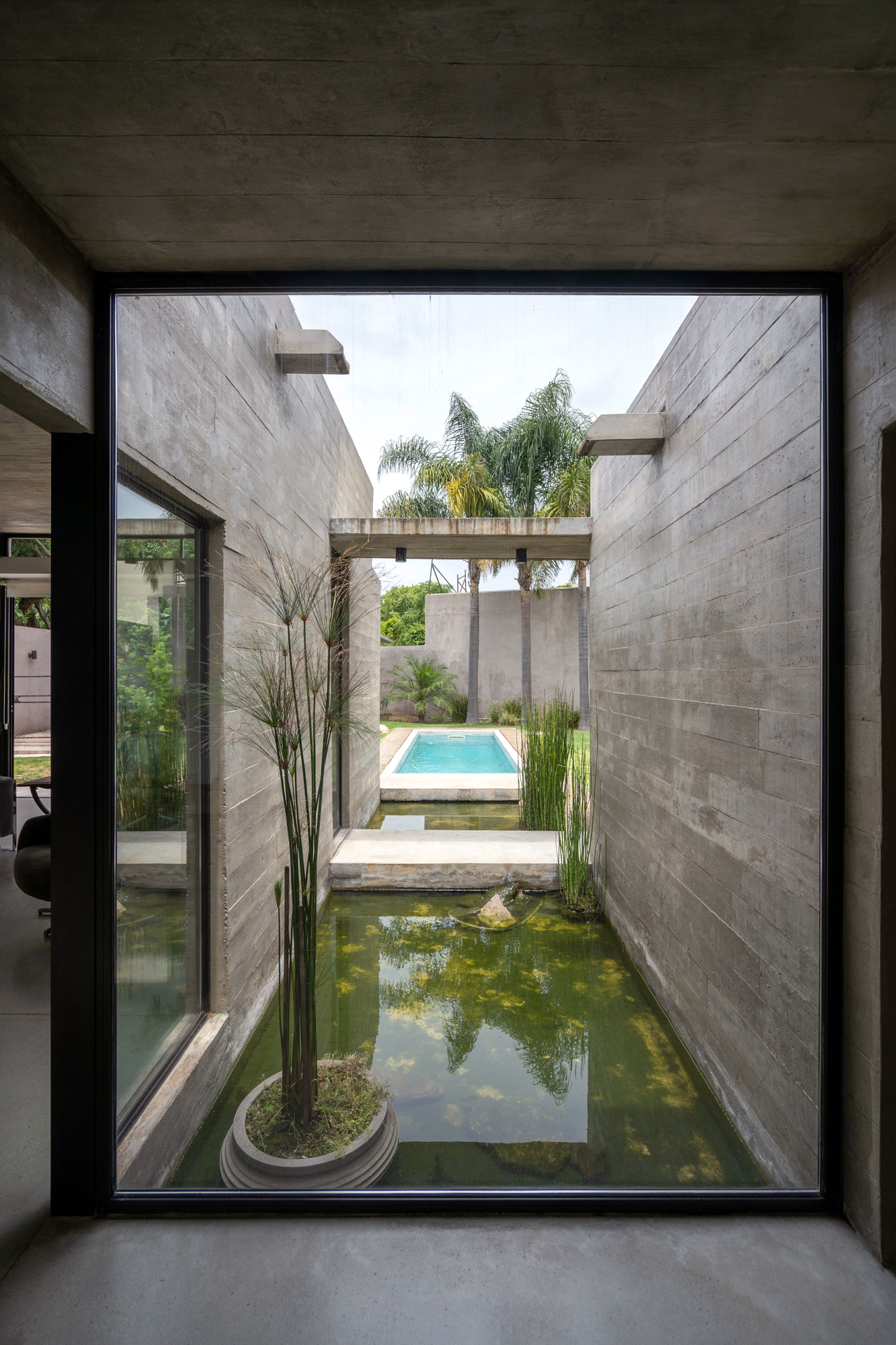
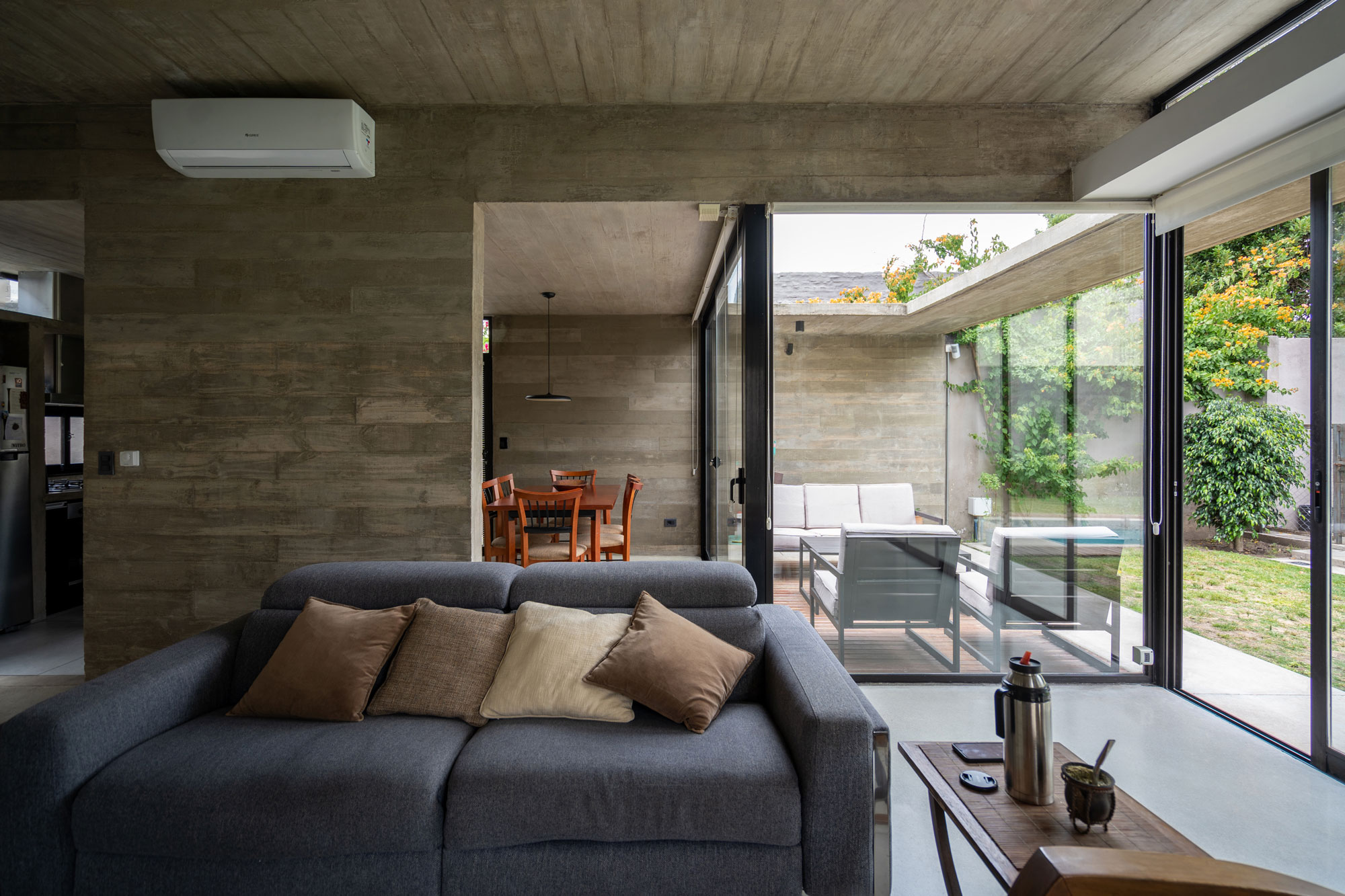
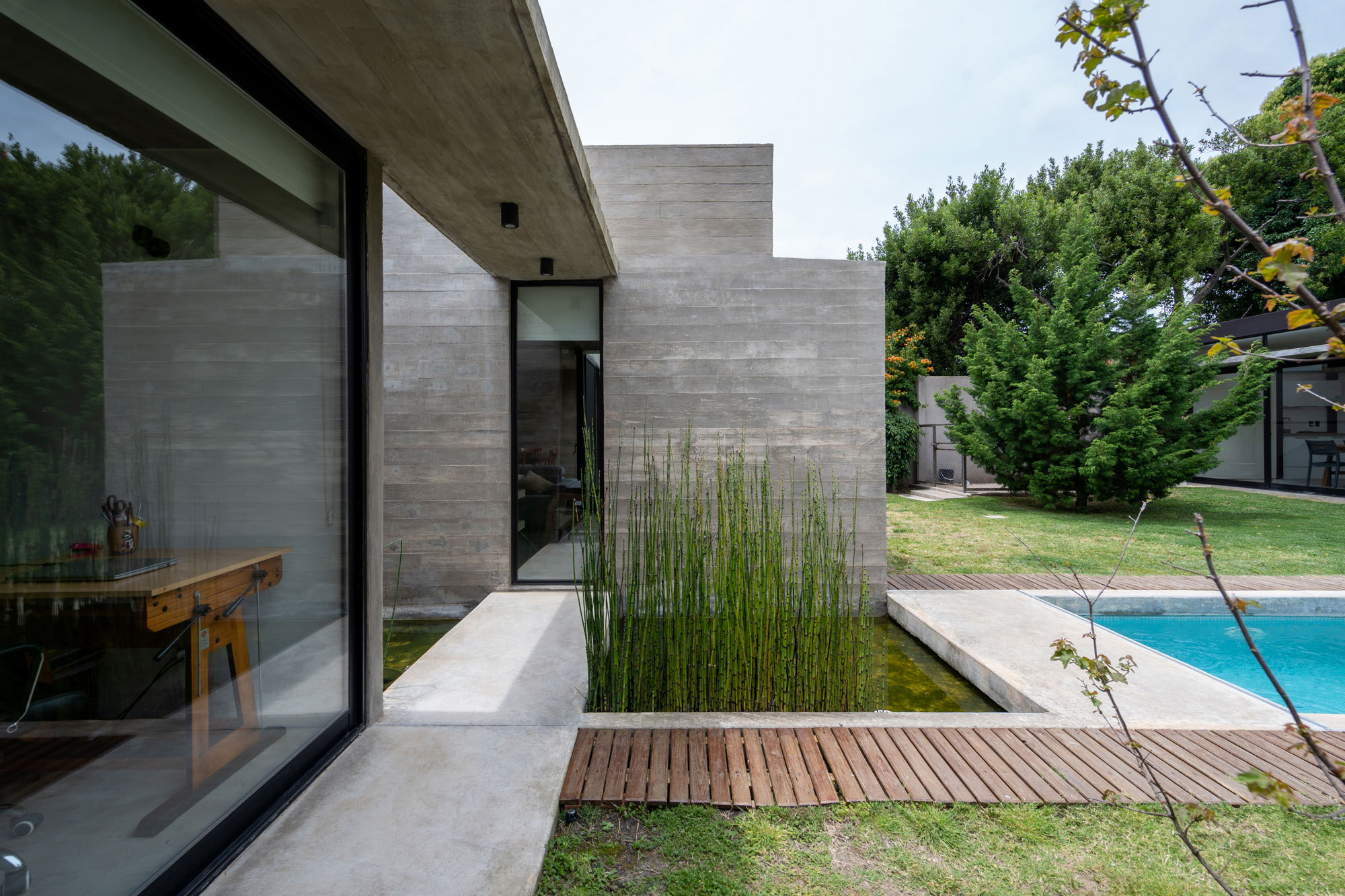
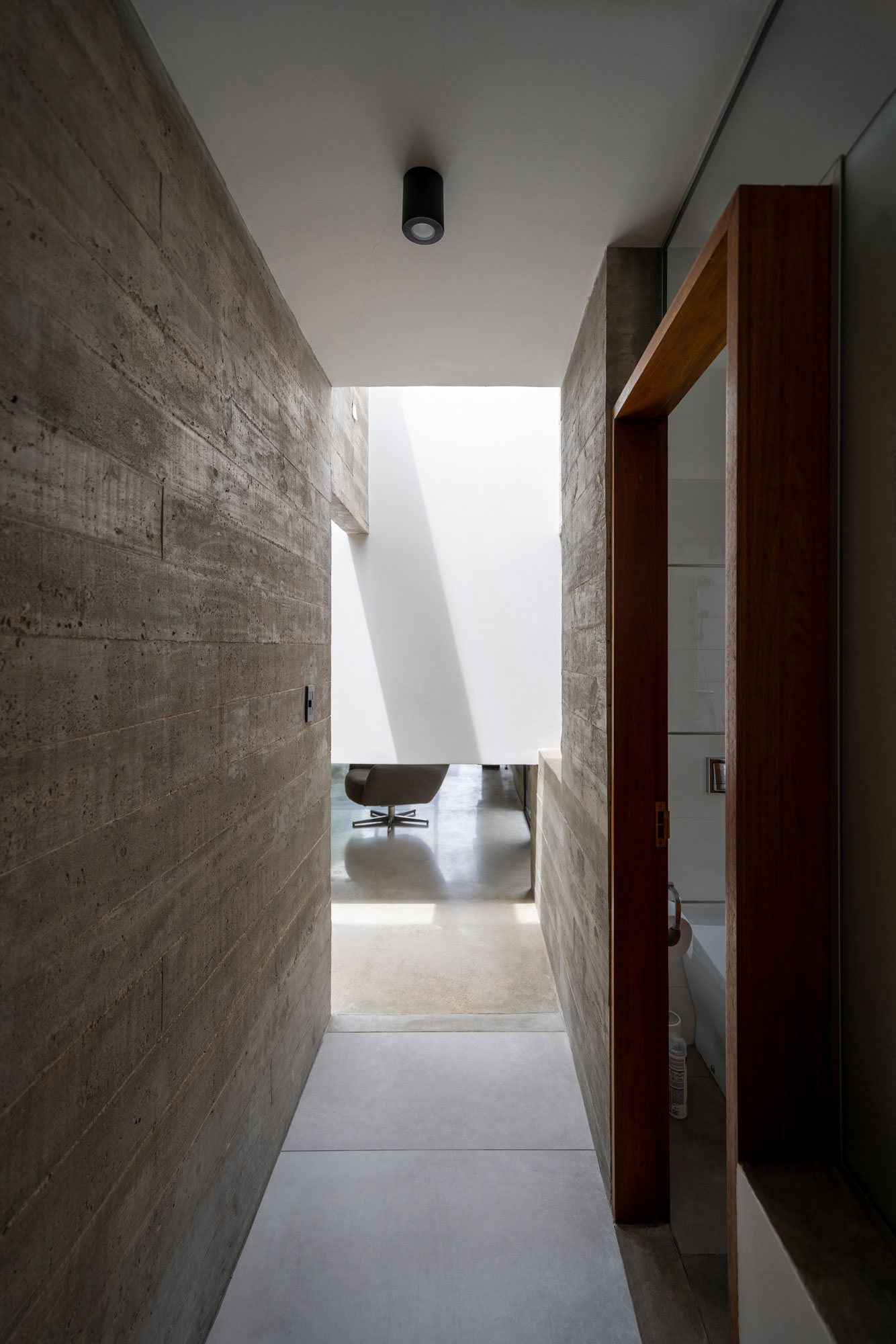
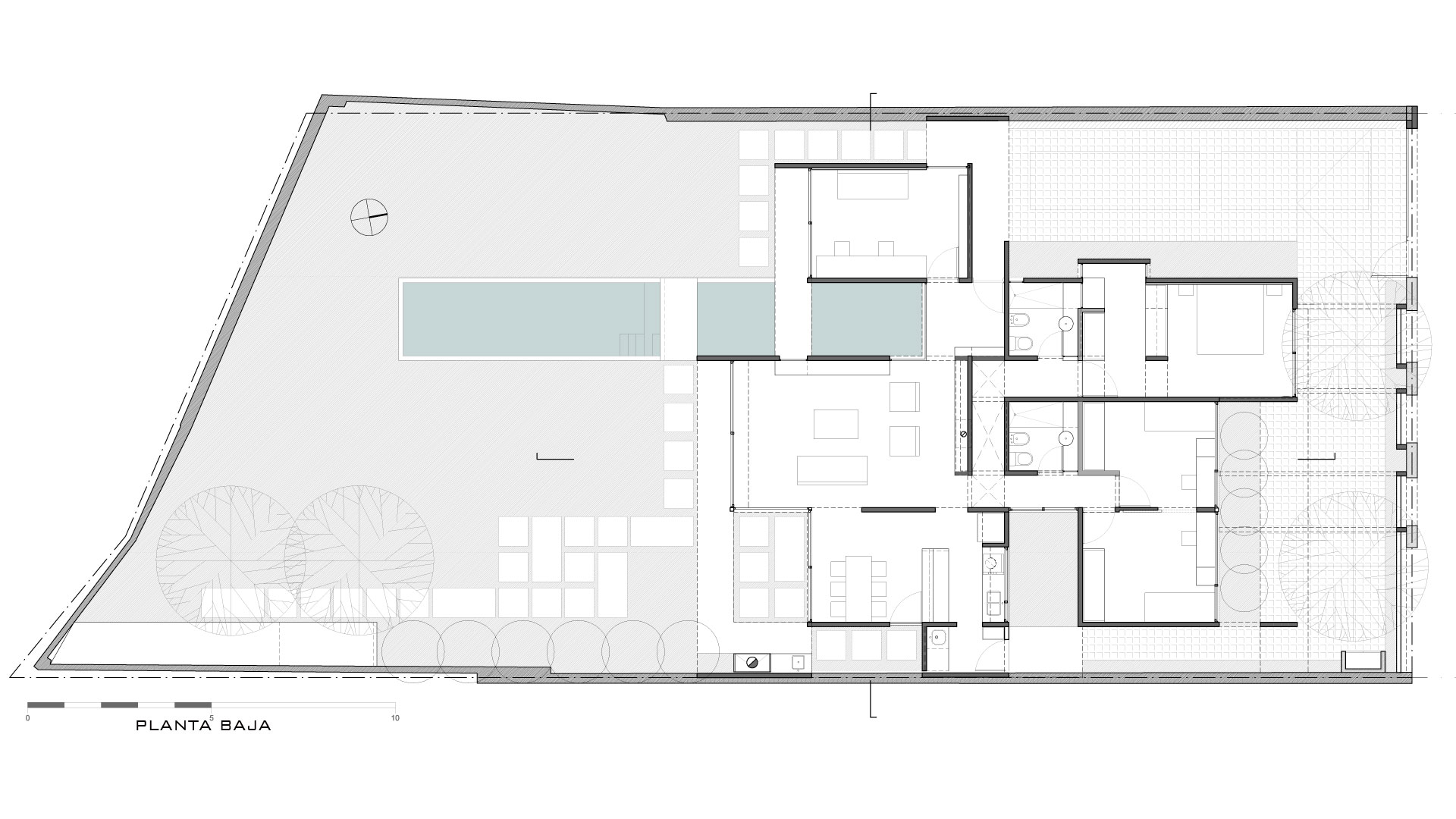
With all this carefully prepared material, a cordial meeting with the owners, and a visit to the site, our proposal was for a house that detaches itself from the existing wall and, at the same time, underpins it with a system that combines columns, beams, and slabs. This creates an outdoor space with vegetation that provides privacy and sound insulation for the three bedrooms. Access to the house is through the garage. From the entrance hall, there are views of a pond that extends into the pool and a corridor with overhead lighting that separates the social area from the bedrooms. A small patio, an extension of the garden that isolates the house from the public road, helps to reinforce this requirement. Separate, although directly accessible from the entrance, is the study, soundproofed from the rest of the house by the pond and from the neighbors by an open space that connects the garage and the garden at the back of the lot.
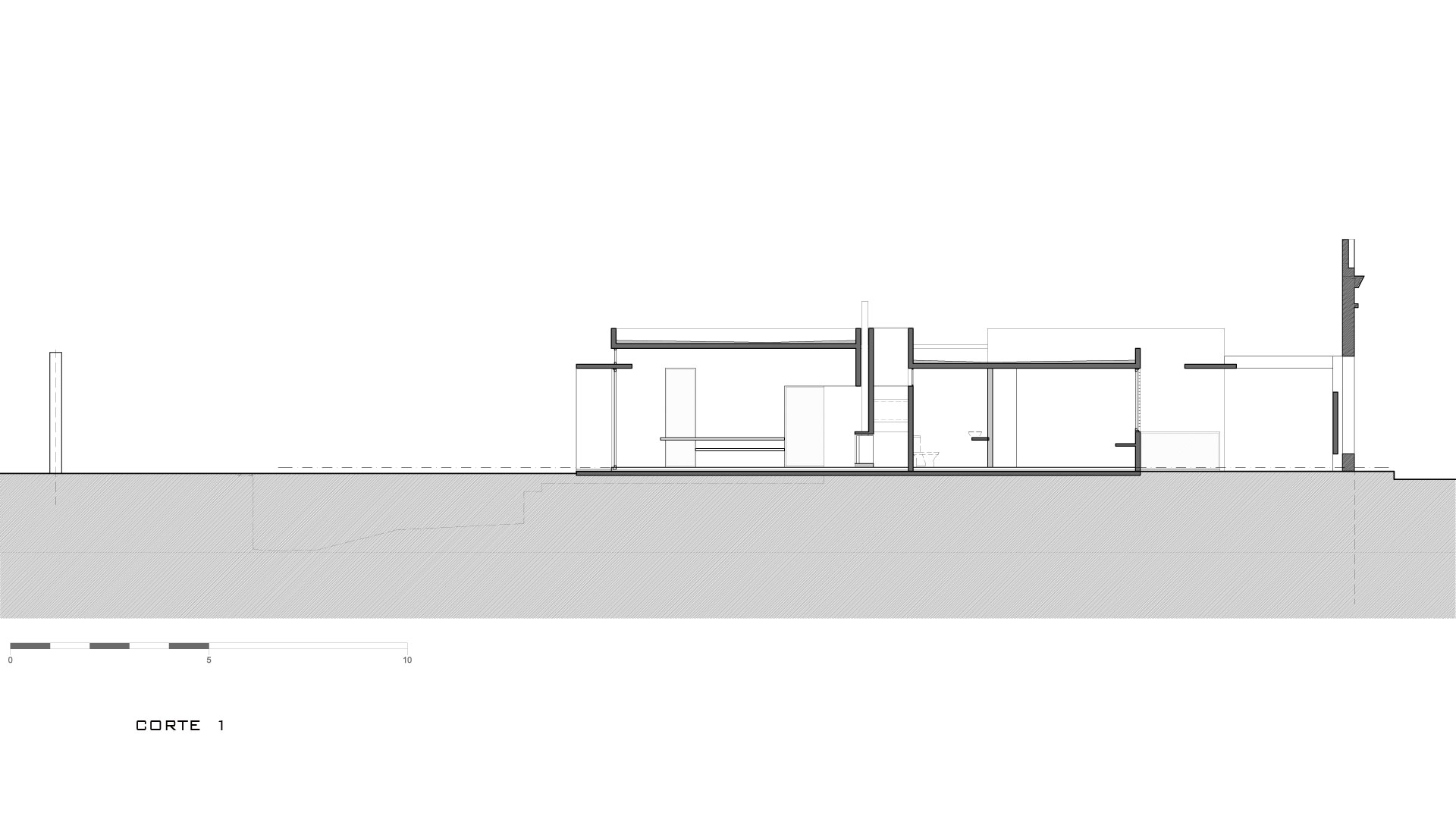
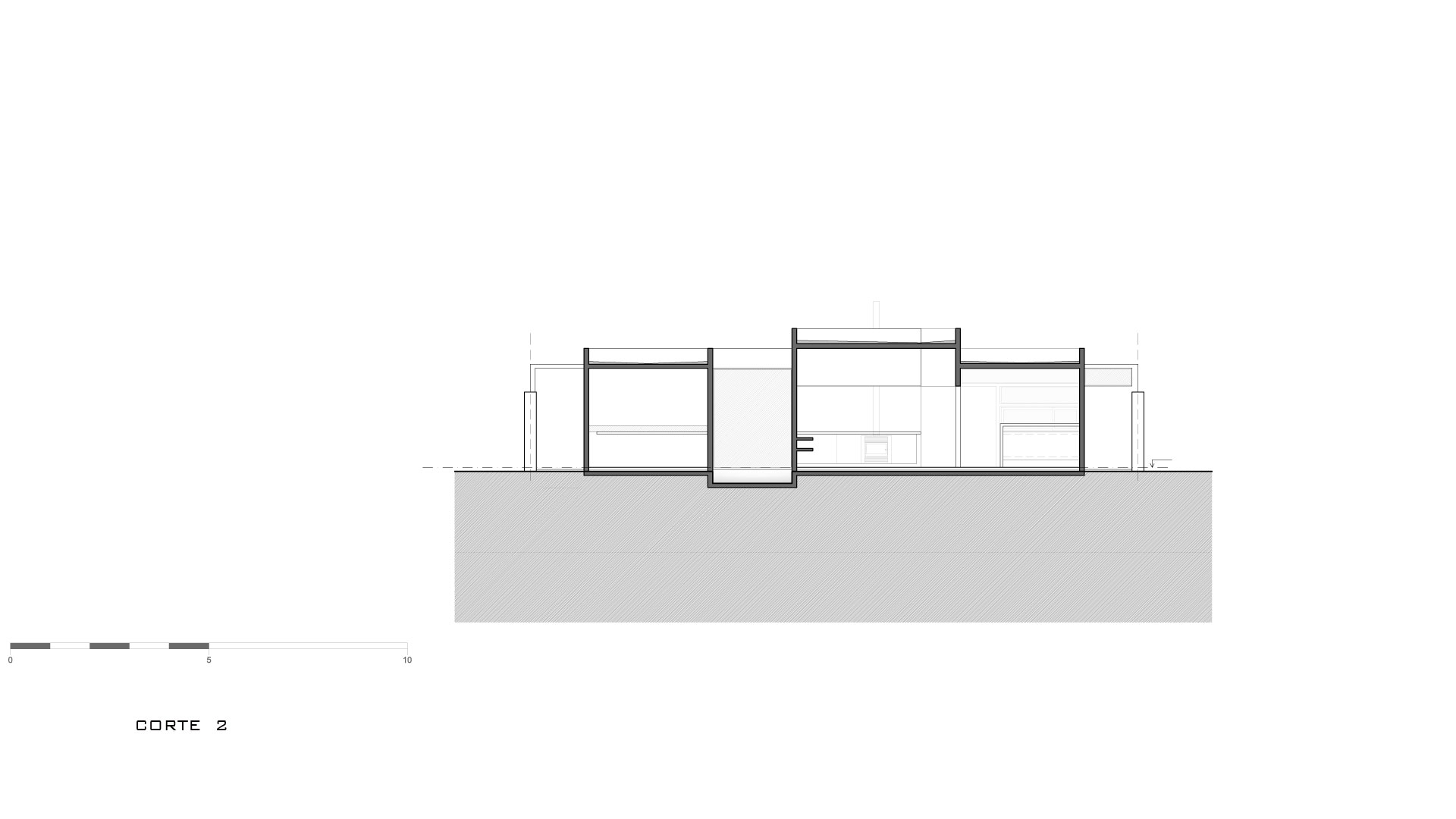
In this way, we were able to articulate the different areas of the house as a reinterpretation of the concept expressed in the model images provided by the owner, who generated it by proposing volumes of different heights. This volumetric proposal allows all rooms to have cross ventilation and to be physically or visually extended into the different gardens.
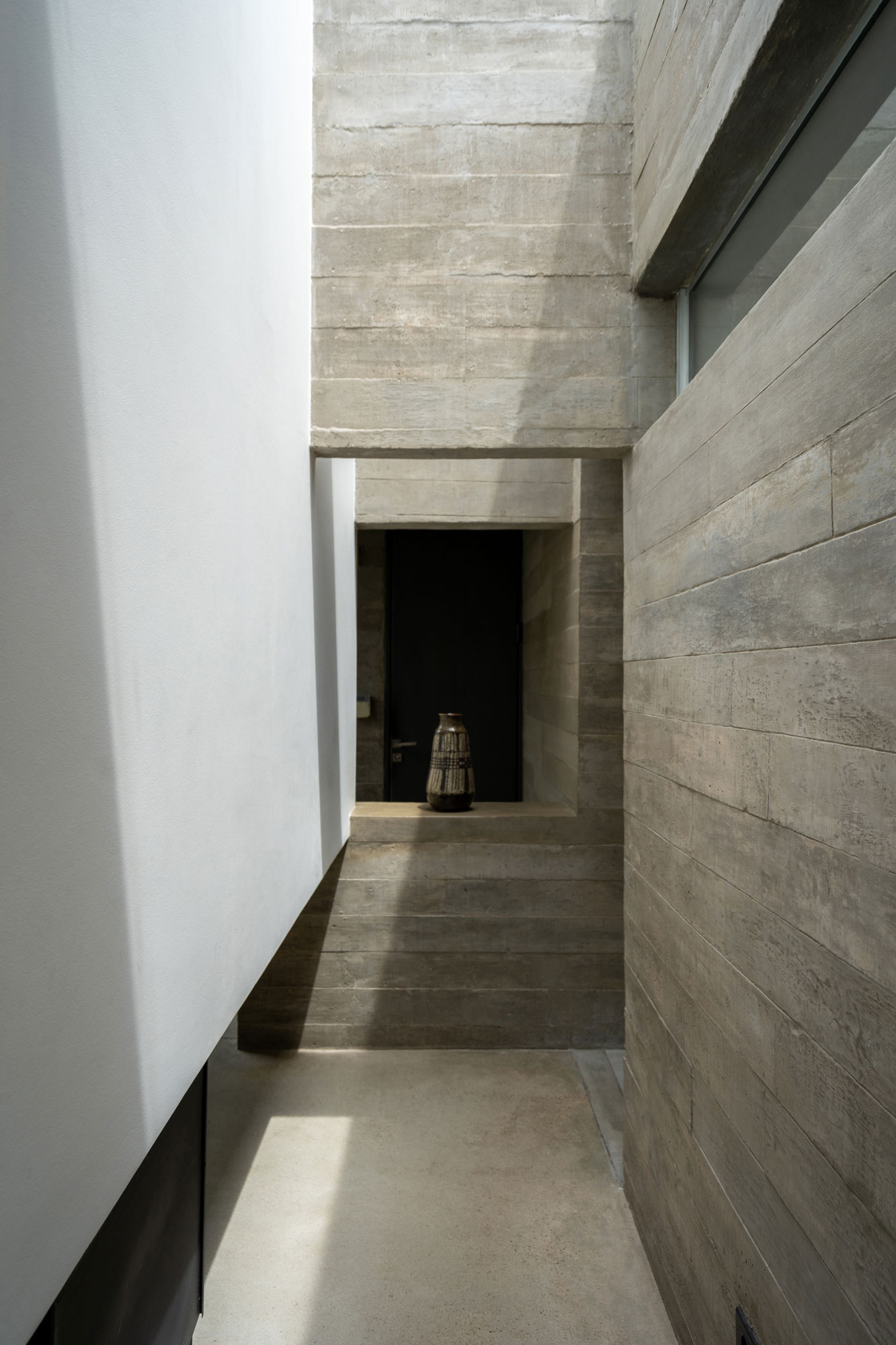
In all our projects, we pay special attention to the treatment of natural light, aimed both at controlling its incidence on glazed surfaces and at capitalizing on it as a design material that enriches living spaces. We conceive of openings as such, not as standardized elements with predetermined measurements and positions, but as holes in the buildings that, of course, allow for ventilation and lighting of the rooms, but also leave the exterior-interior relationship undefined, frame the landscape, filter the light, reflect it on a wall, etc. These perforations are the result of the particular research carried out for each project and the relationships that we want to establish with its specific environment.
In this particular project, the shape and position of the openings to the different open spaces define a multiplicity of changing atmospheres that enrich the spatiality of the environments.



Prado House
Location: Prado (Heritage Area), Montevideo, Uruguay
Design and Project Management: Arch. María Victoria Besonías, Arch. Guillermo de Almeida
Collaborators: Arch. Micaela Salibe, Hernán de Almeida
Land area: 482sqm
Built area: 143sqm
Construction Year: 2022
Photos: Besonías Almeida arquitectos
MEMORY
This house is located in El Prado, a neighborhood in the city of Montevideo that, due to its urban, architectural, and environmental value, is protected by the Permanent Special Commission (CEP) of the Municipality of Montevideo.
We began the project with the restrictions inherent to this location and with the relevant information that there were remains of a dilapidated building to be demolished, although, according to our assessment, it was possible to recover the façade wall by preserving it with adequate shoring.
Therefore, our first recommendation was to maintain the existing façade in order to comply with one of the CEP's requirements, which was to preserve the character of this area of El Prado: narrow streets with little traffic, lined with continuous façades along the municipal street line. This would be achieved by taking advantage of the material and labor present in the existing wall, without unnecessary expenses. We understood that our proposal should express coexistence between the image of an early 20th-century neighborhood and a contemporary house.
The requirements of the owners, a married couple with two daughters living in Montevideo, were, in short, a house with a fully integrated social area, although with a certain definition of each sector, with three bedrooms arranged in such a way as to provide marital independence and a connection between the daughters. They also needed a space for listening to and making music.
As for the location on the lot, the house had to be set back from the neighboring houses to allow for free circulation and achieve optimal conditions for natural lighting and ventilation. They also wanted all the rooms to be connected, as much as possible, to gardens with vegetation.
These requirements were provided in writing, in great detail and accompanied by photos of a study model (the owner had studied architecture for several years), which expressed a concept of the house based on articulated volumes. Thus, the approach to the project took into account not only functional data, but also spatial intentions.
With all this carefully prepared material, a cordial meeting with the owners, and a visit to the site, our proposal was for a house that detaches itself from the existing wall and, at the same time, underpins it with a system that combines columns, beams, and slabs. This creates an outdoor space with vegetation that provides privacy and sound insulation for the three bedrooms. Access to the house is through the garage. From the entrance hall, there are views of a pond that extends into the pool and a corridor with overhead lighting that separates the social area from the bedrooms. A small patio, an extension of the garden that isolates the house from the public road, helps to reinforce this requirement. Separate, although directly accessible from the entrance, is the study, soundproofed from the rest of the house by the pond and from the neighbors by an open space that connects the garage and the garden at the back of the lot.
In this way, we were able to articulate the different areas of the house as a reinterpretation of the concept expressed in the model images provided by the owner, who generated it by proposing volumes of different heights. This volumetric proposal allows all rooms to have cross ventilation and to be physically or visually extended into the different gardens.
In all our projects, we pay special attention to the treatment of natural light, aimed both at controlling its incidence on glazed surfaces and at capitalizing on it as a design material that enriches living spaces. We conceive of openings as such, not as standardized elements with predetermined measurements and positions, but as holes in the buildings that, of course, allow for ventilation and lighting of the rooms, but also leave the exterior-interior relationship undefined, frame the landscape, filter the light, reflect it on a wall, etc. These perforations are the result of the particular research carried out for each project and the relationships that we want to establish with its specific environment.
In this particular project, the shape and position of the openings to the different open spaces define a multiplicity of changing atmospheres that enrich the spatiality of the environments.