
4H House
Location: Costa Esmeralda, Buenos Aires, Argentina
Design and Project Management: Arch. María Victoria Besonías, Arch. Guillermo de Almeida
Collaborators: Arch. Micaela Salibe, Arch. Gisela Giovanetti, Hernán de Almeida
Land area: 1124sqm
Built area: 511sqm
Construction Year: 2024
Contractor: Desur Constructora
Photos: Hernán de Almeida
MEMORY
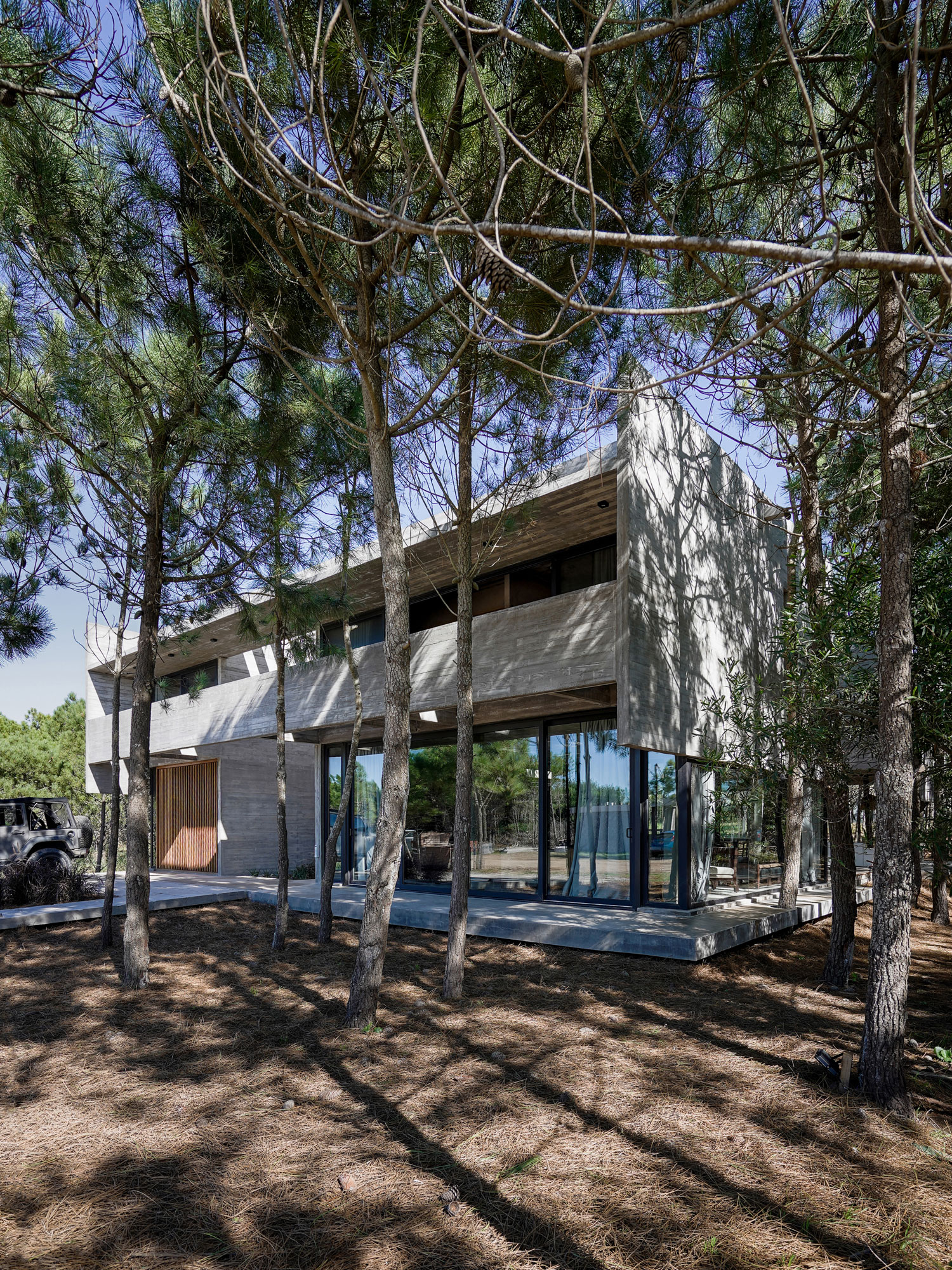
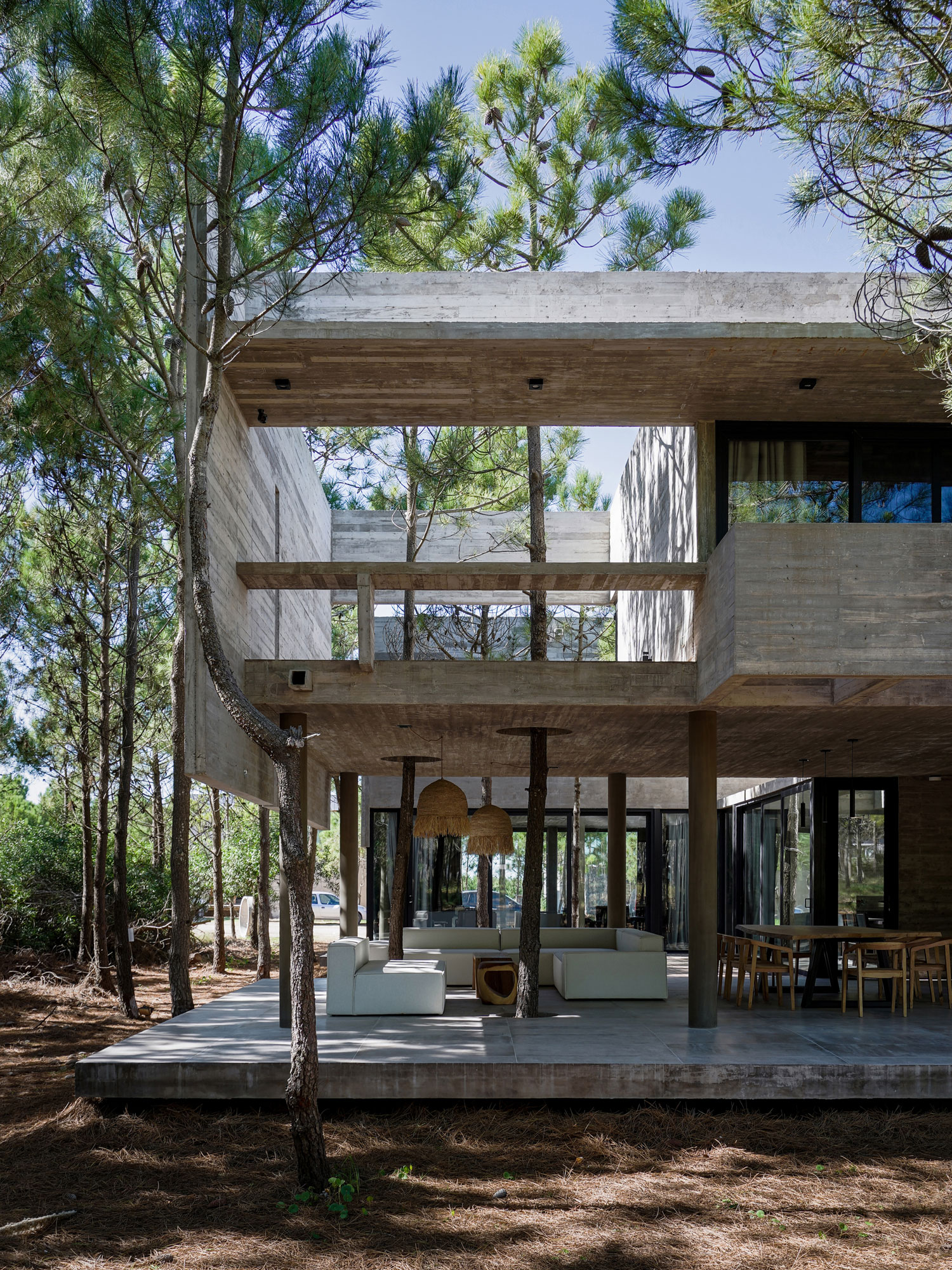
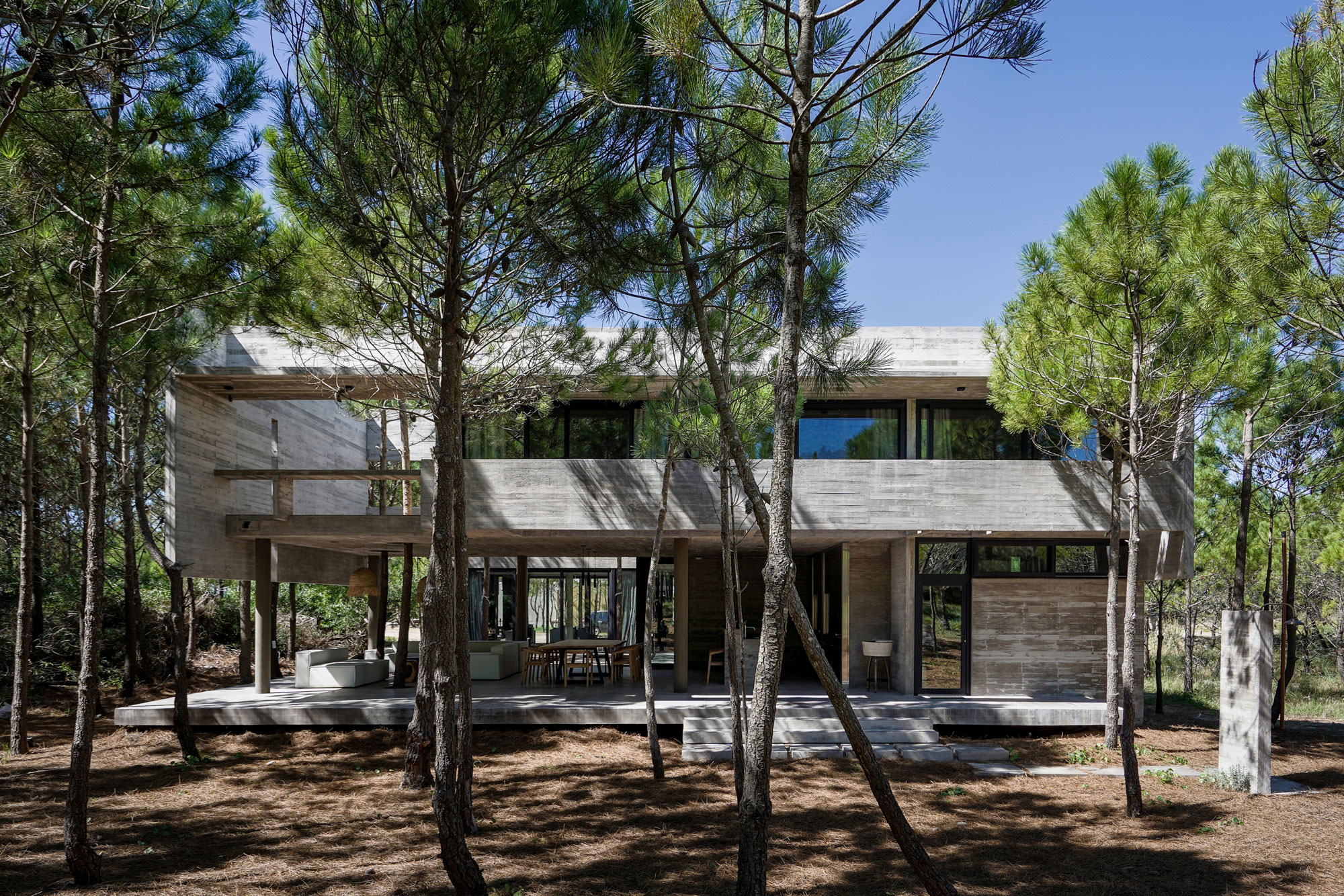
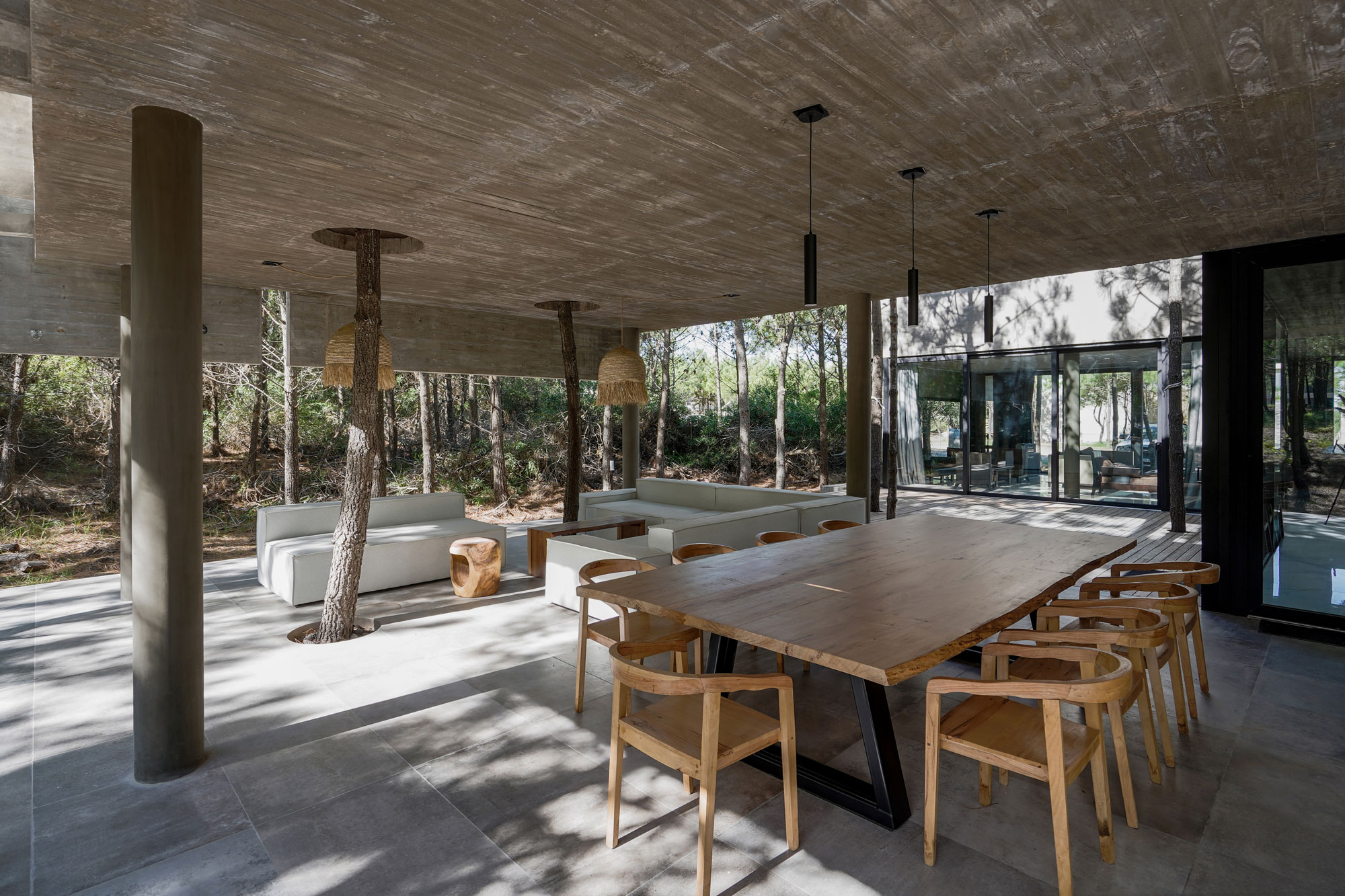
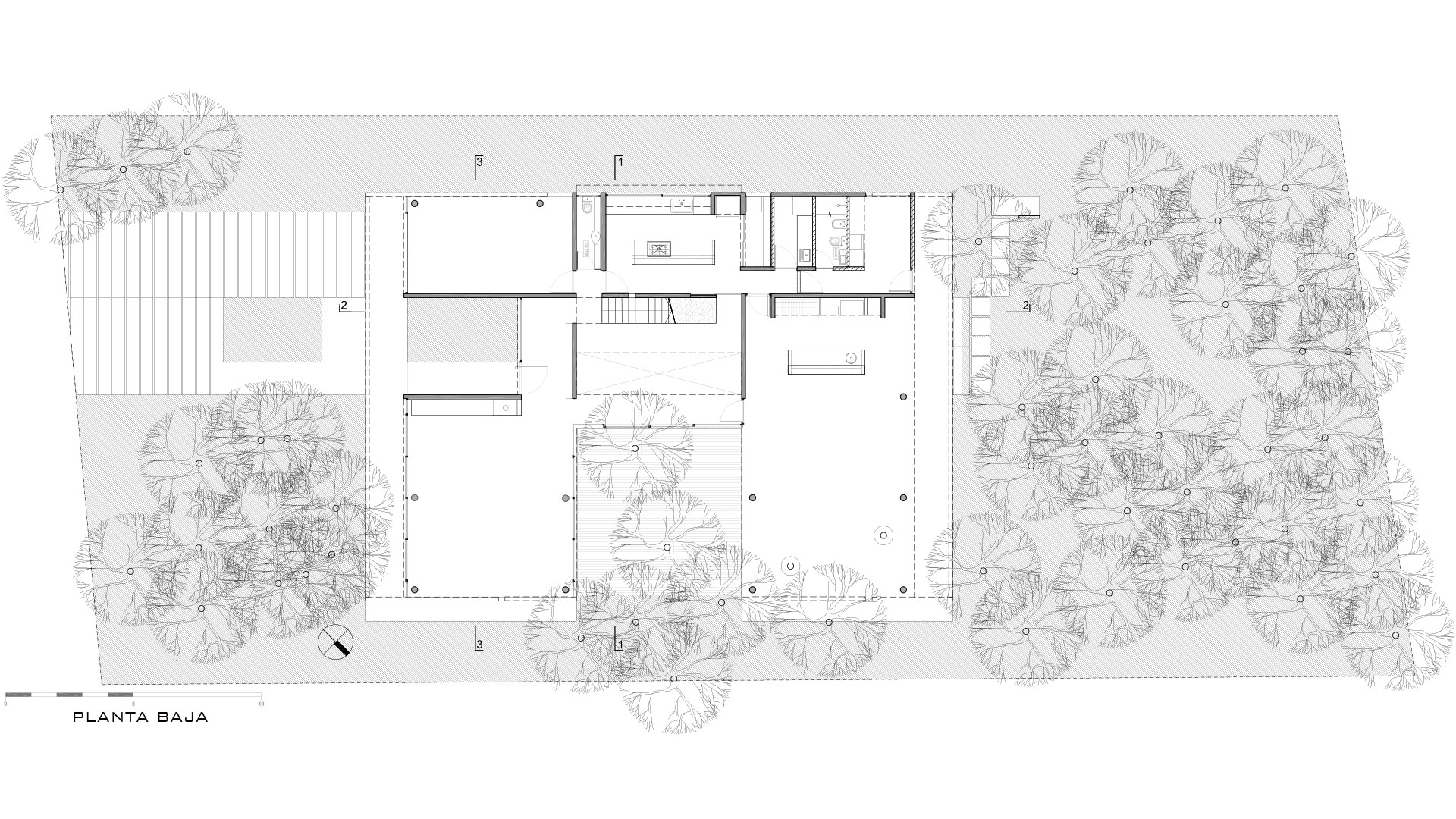
4H House is located in Costa Esmeralda, a site on the sand dunes of the Buenos Aires coast where native grasslands coexist with a young forest of acacias and maritime pines. The site, situated close to the sea but without a direct view of it, finds its greatest potential in a dense existing grove of pine trees. Here, architecture takes on the role of mediator, integrating the landscape as the heart of the dwelling experience.
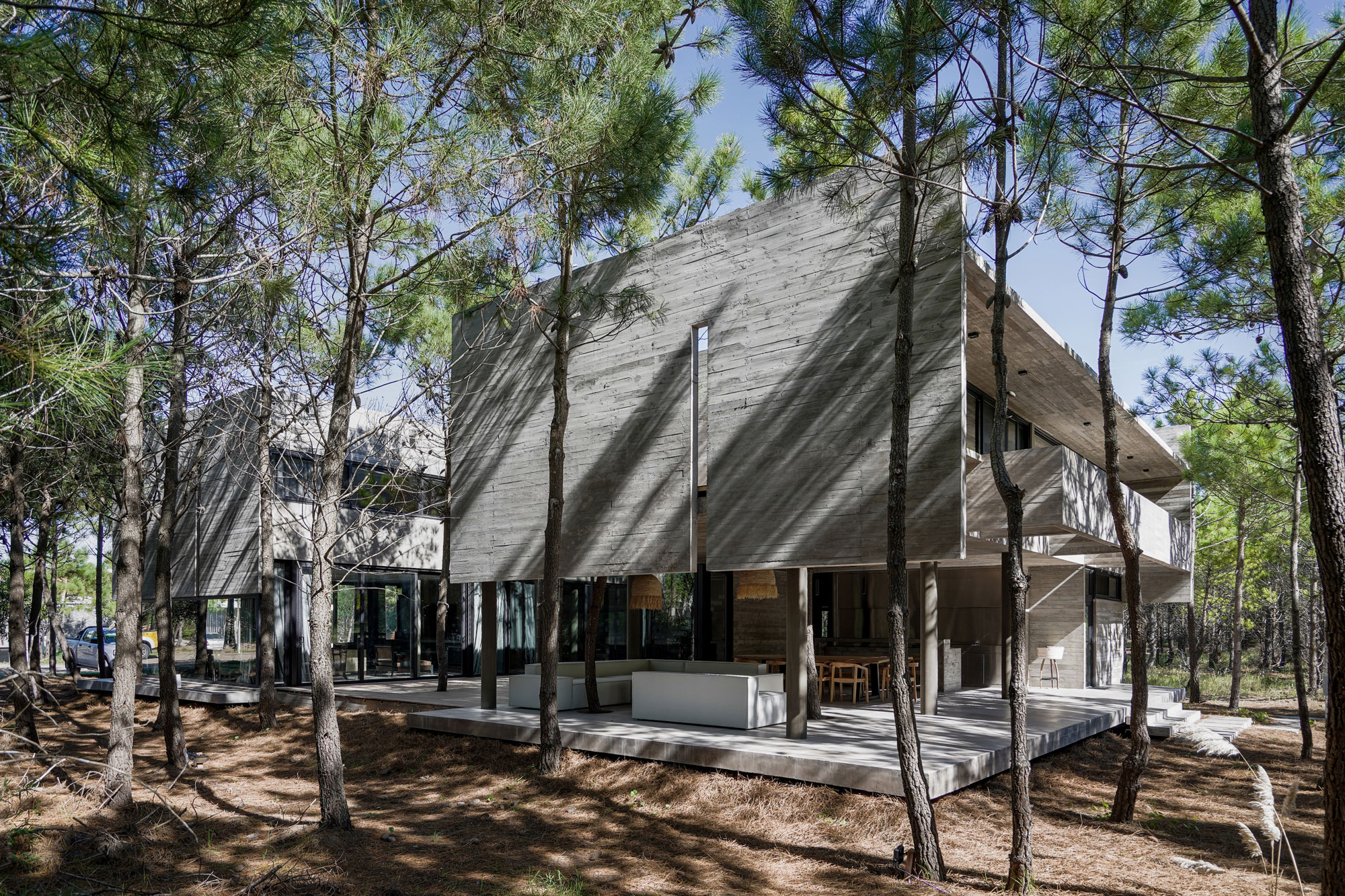
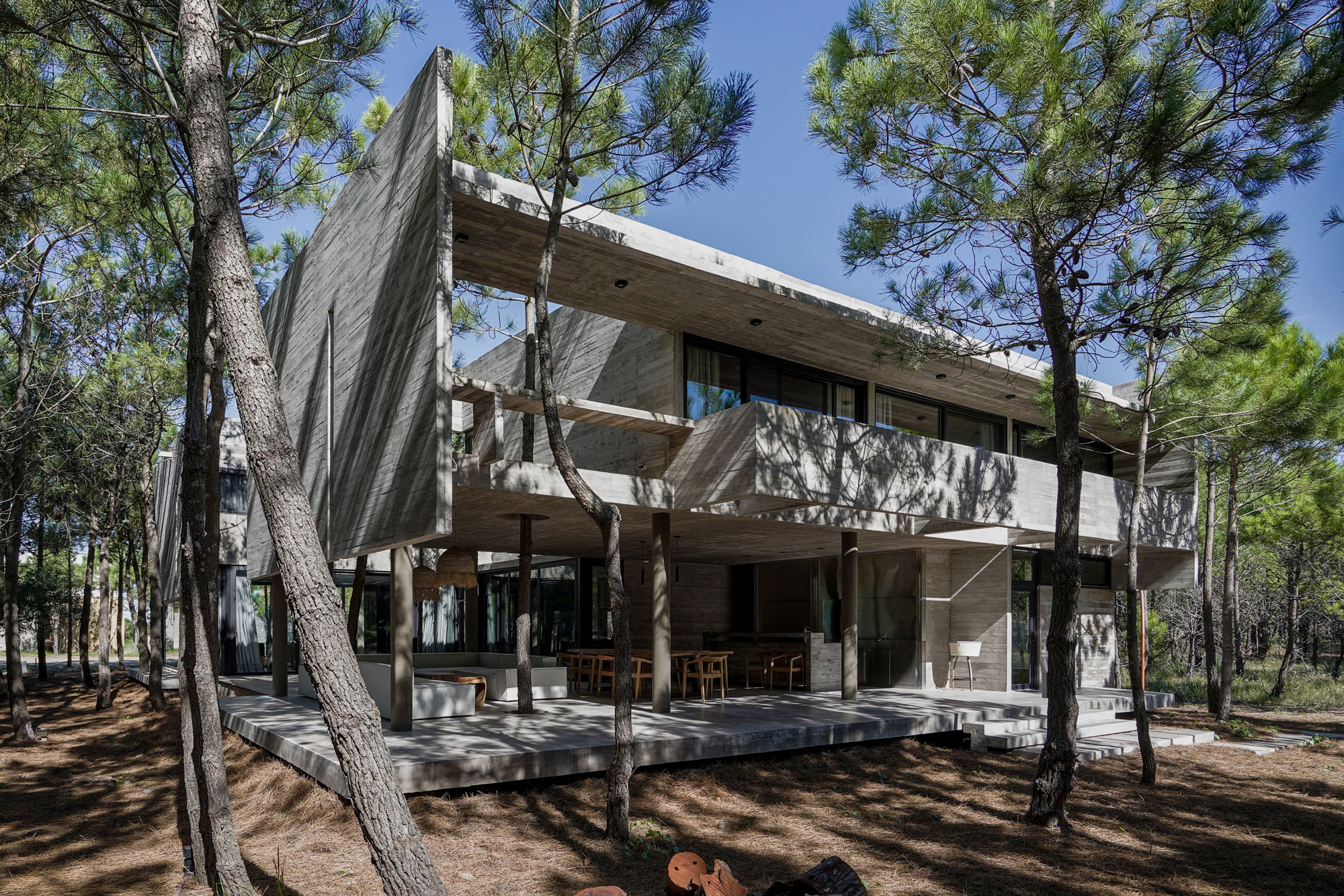
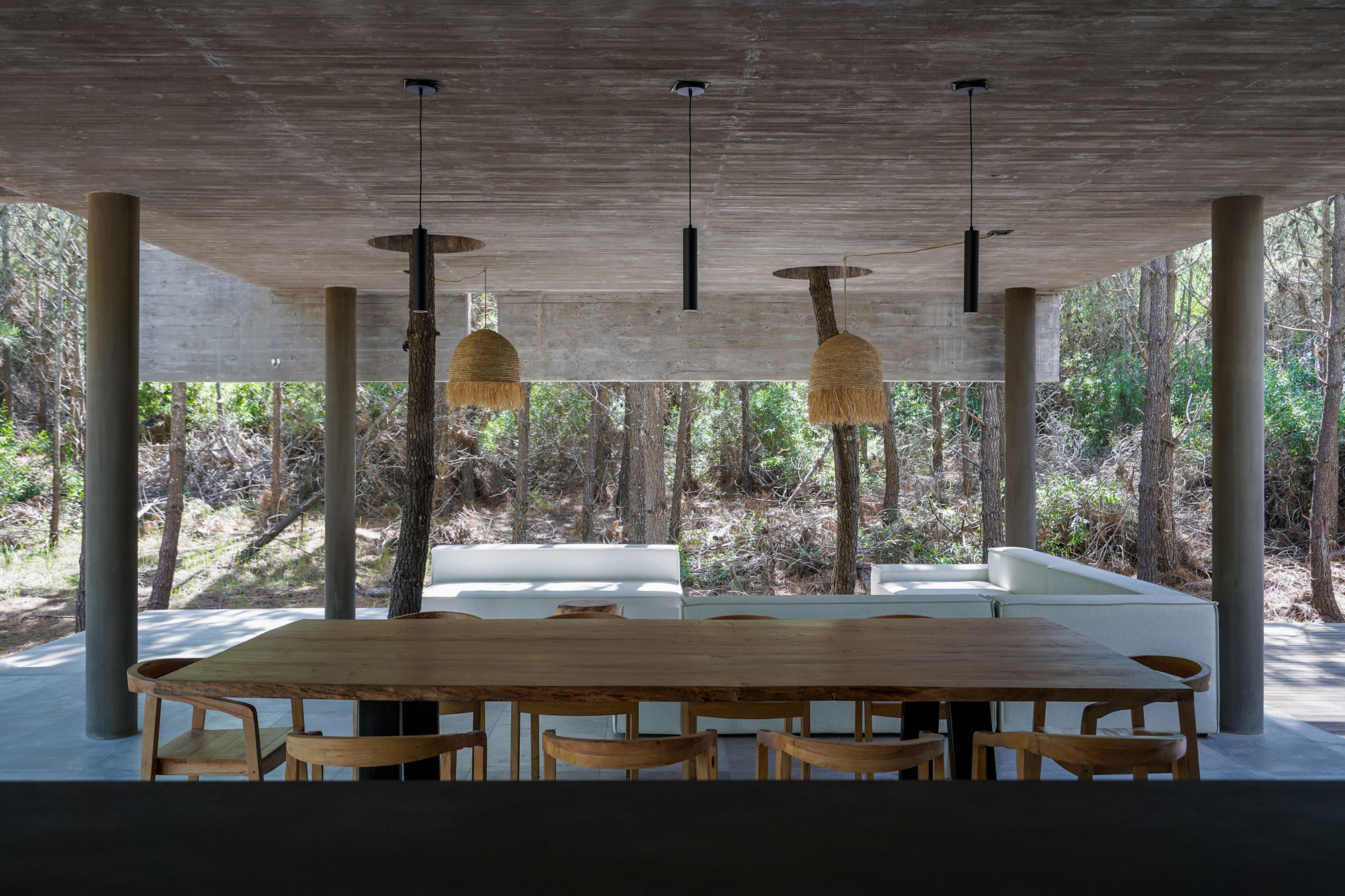
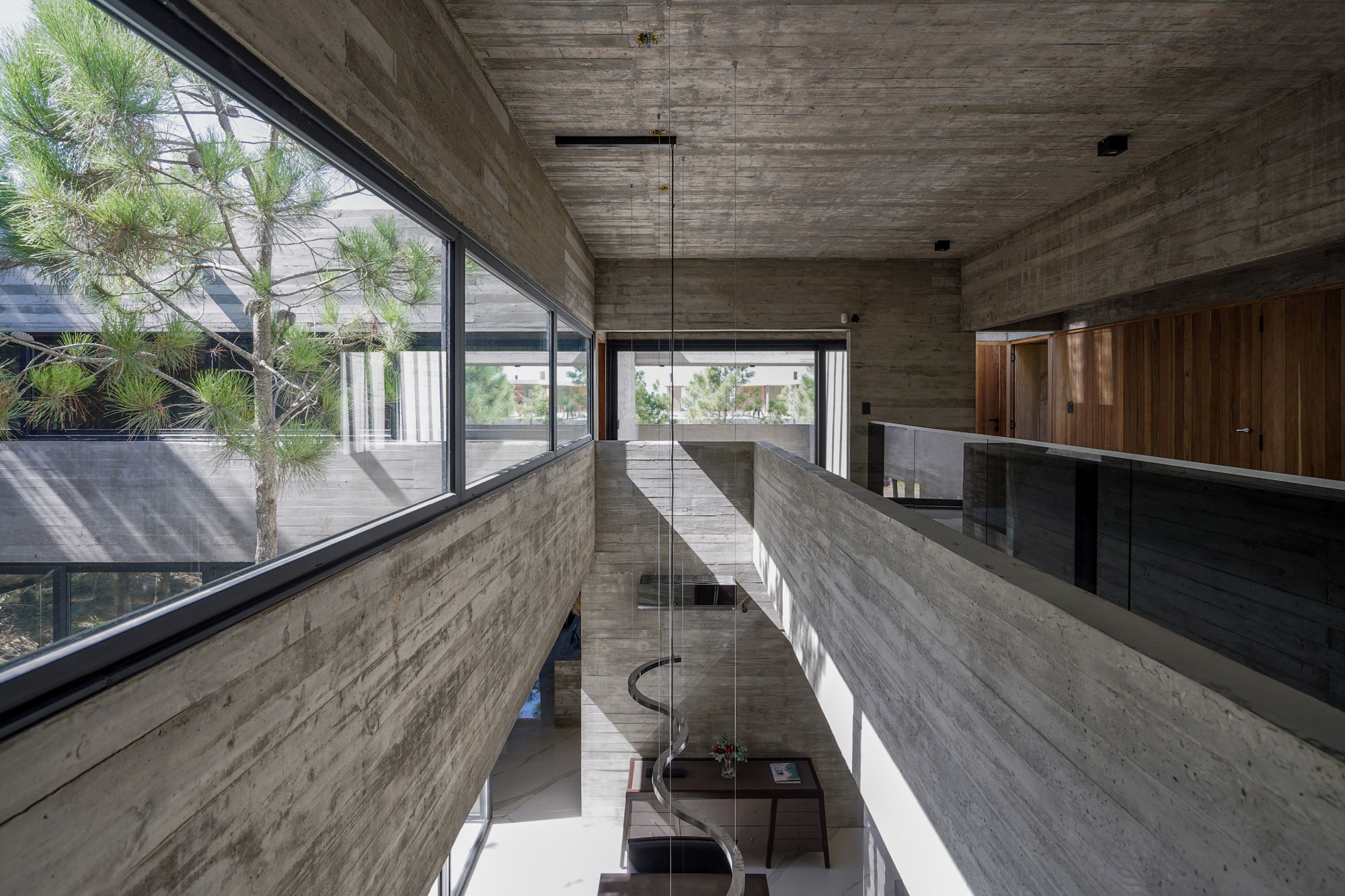
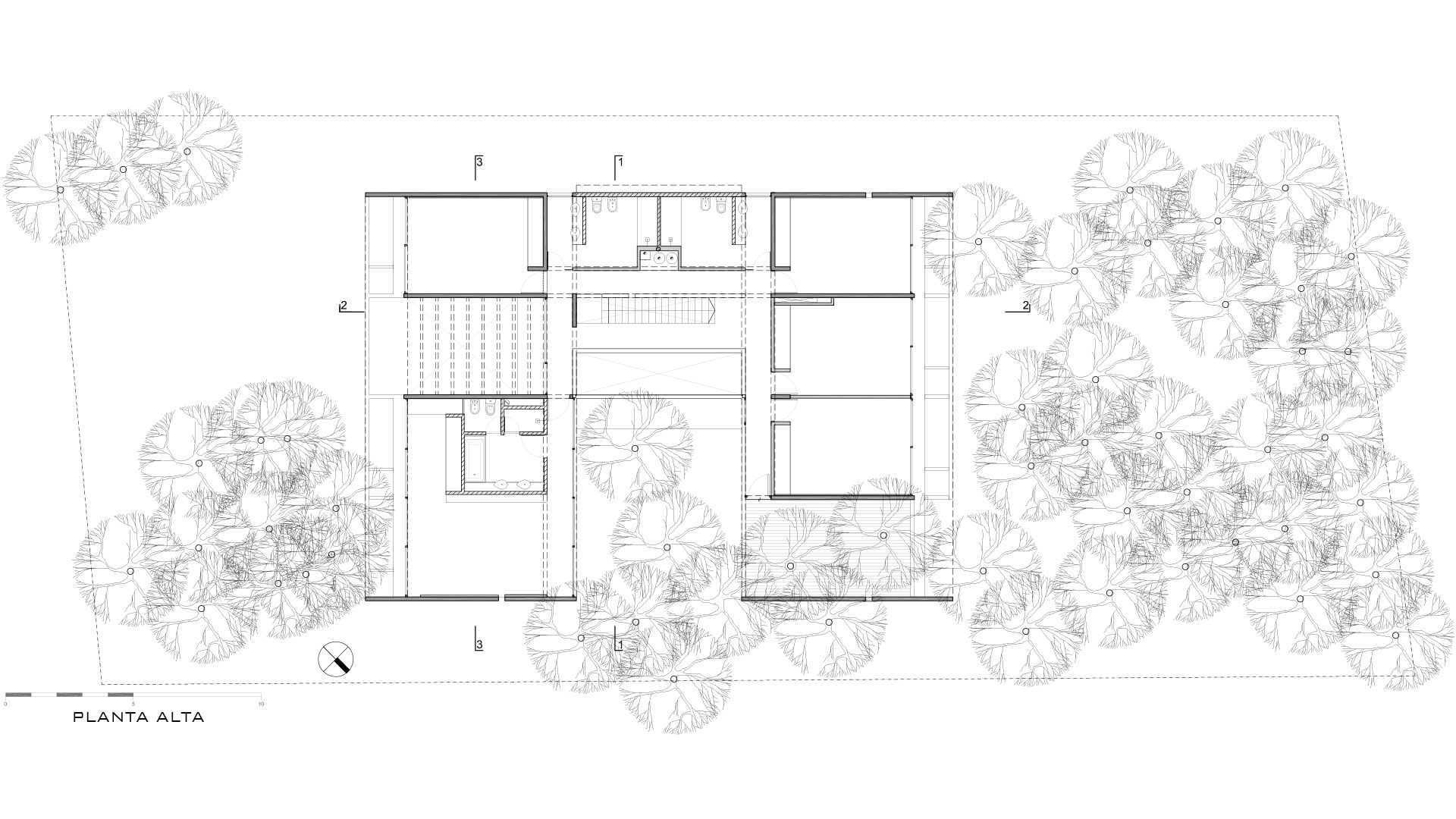
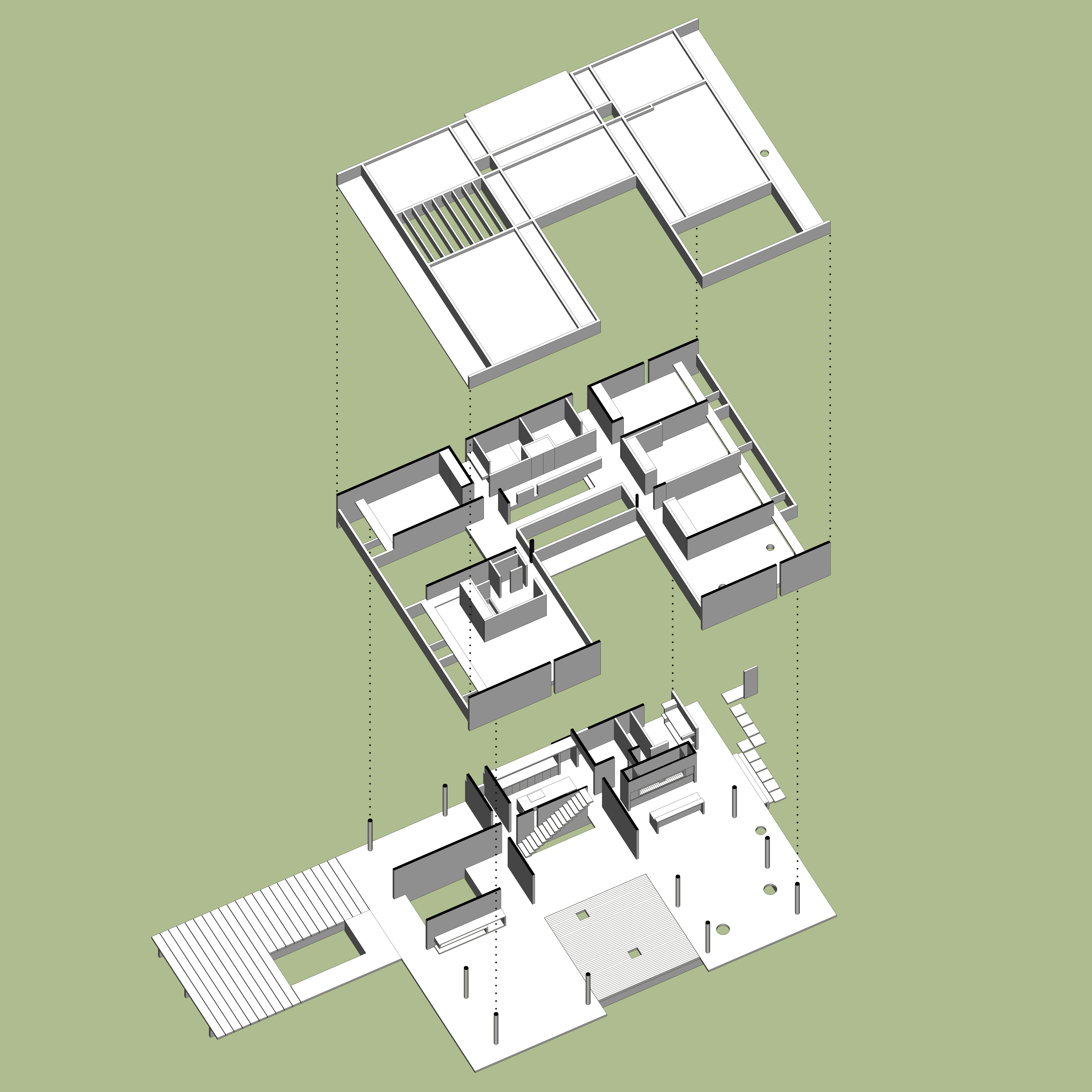
The project addresses the challenge of creating a summer home for a family with four young children, anticipating an active social life in the future without sacrificing each member’s independence. Under this premise, the program is organized over two floors around a central courtyard that preserves the original vegetation. This open space allows activities on the ground floor to enjoy a protected area under the trees, while the spaces on the upper level benefit from a constant view of the landscape in a fully private setting.
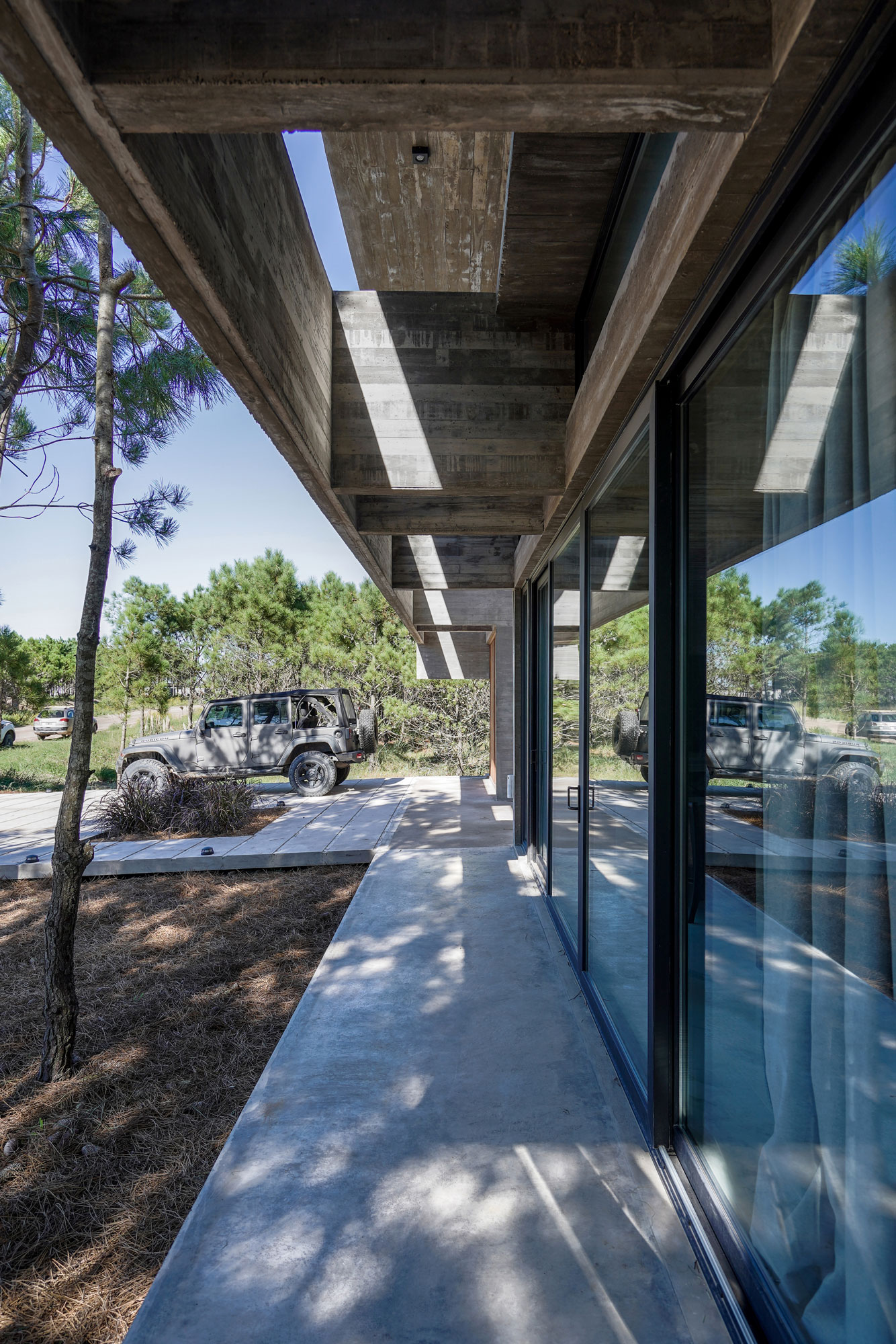
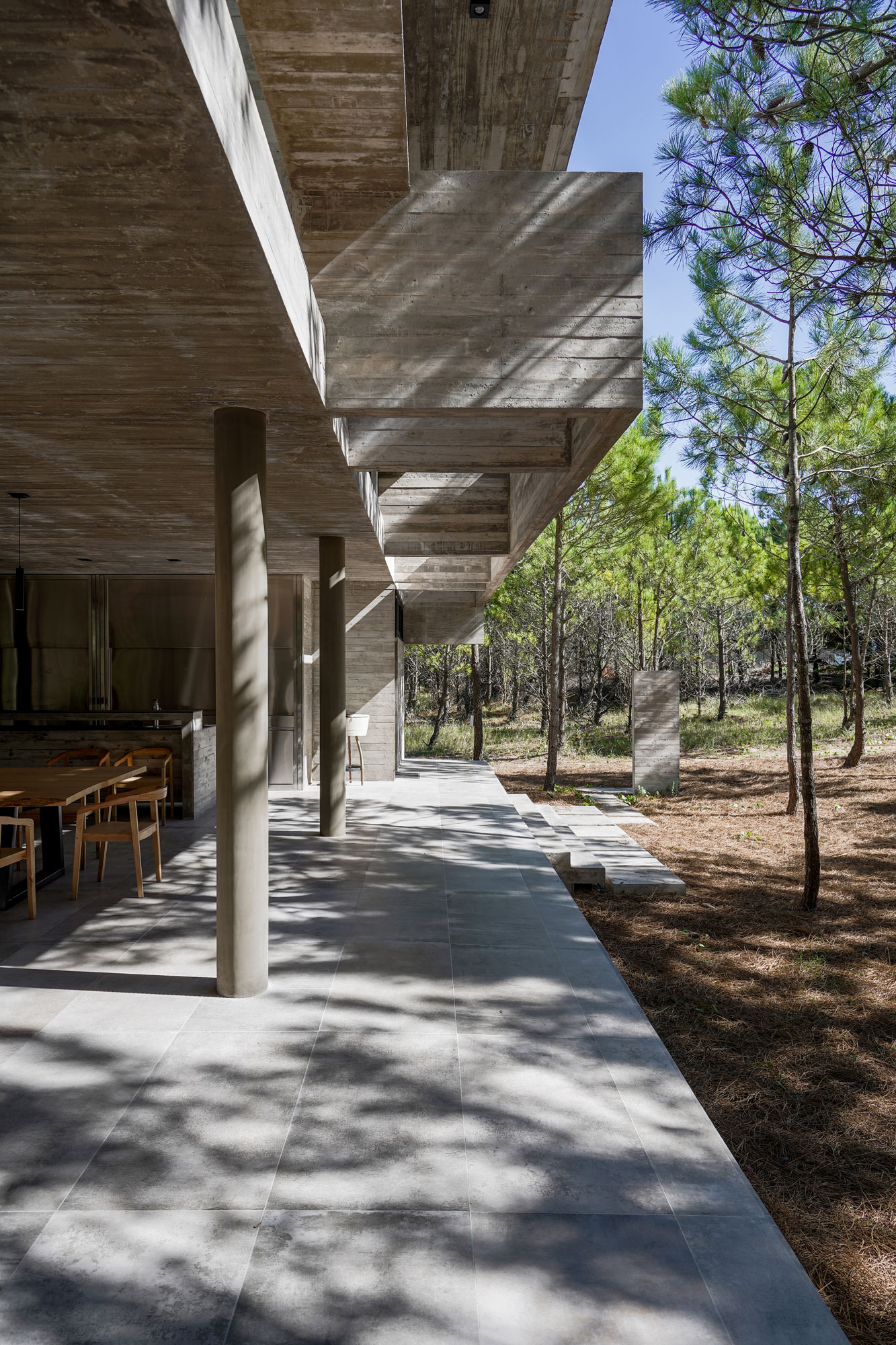
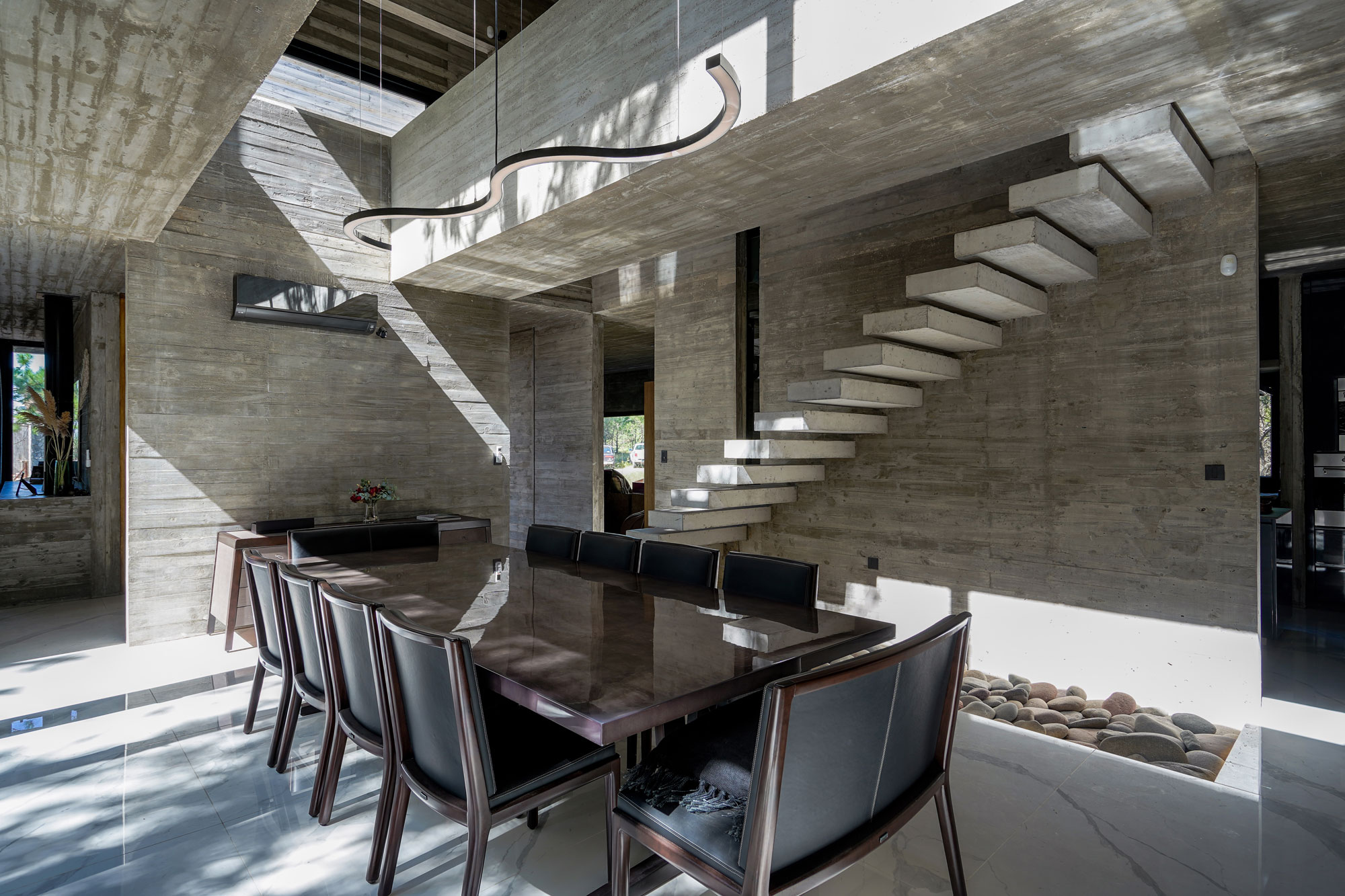
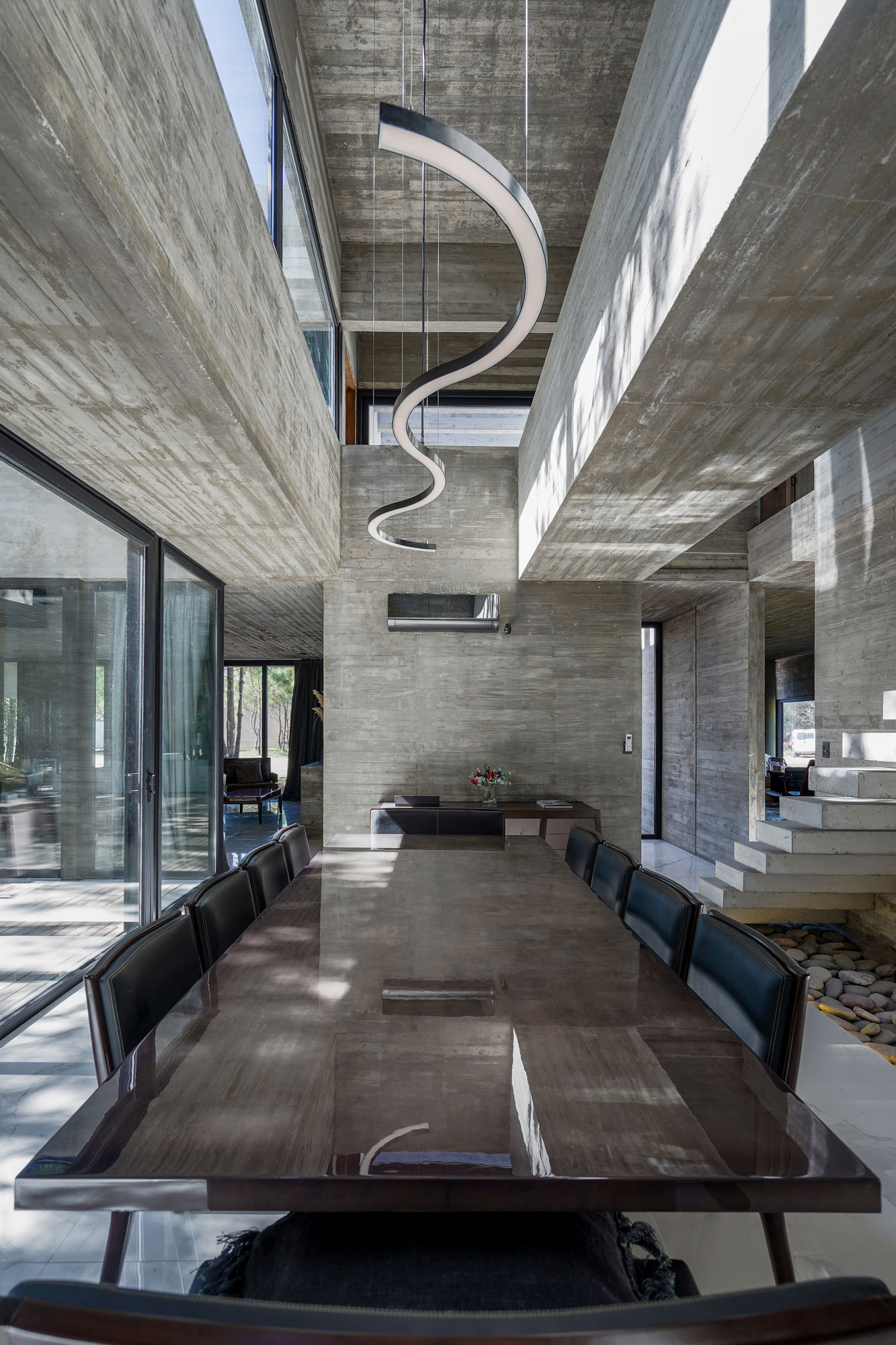
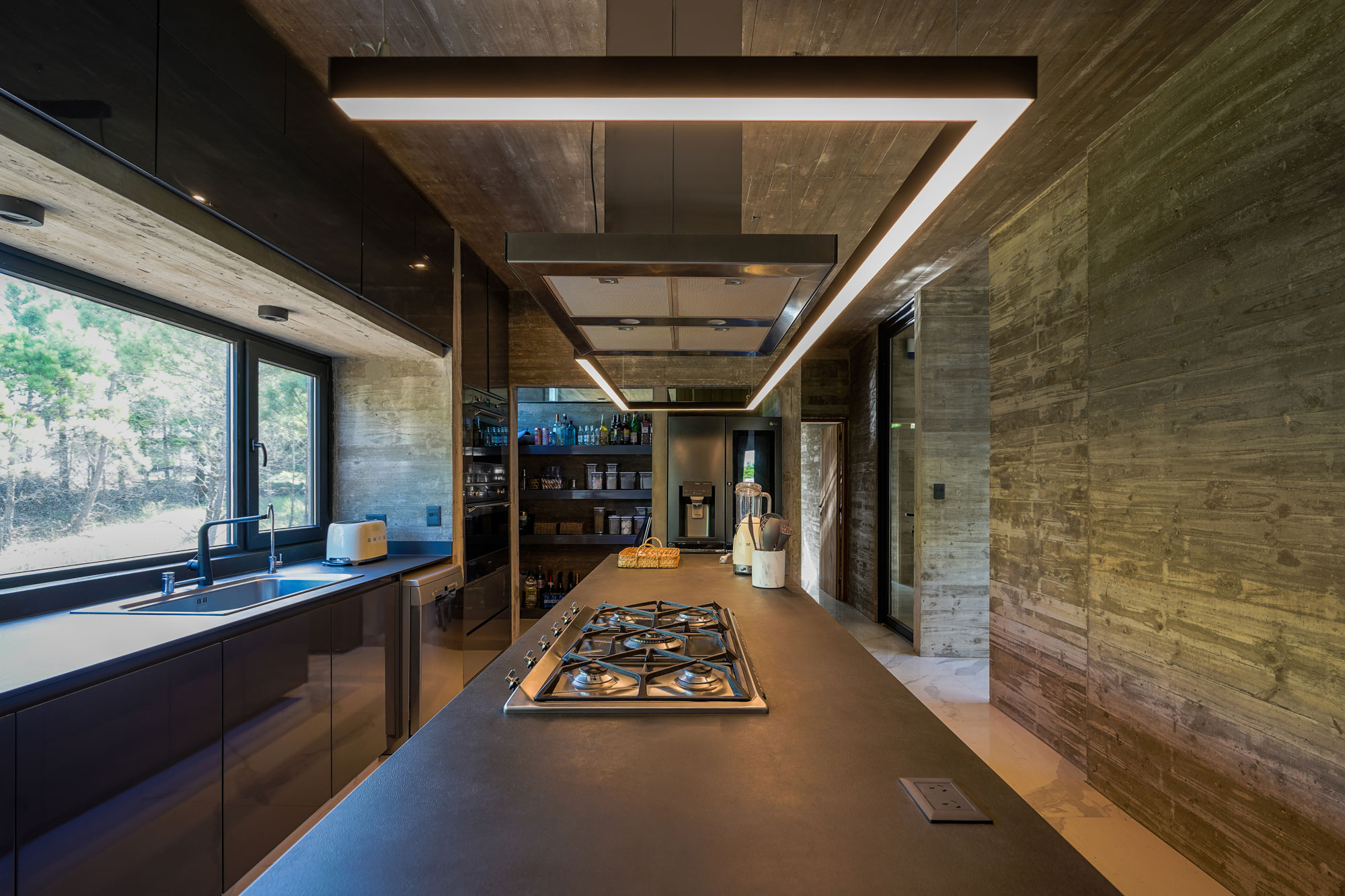
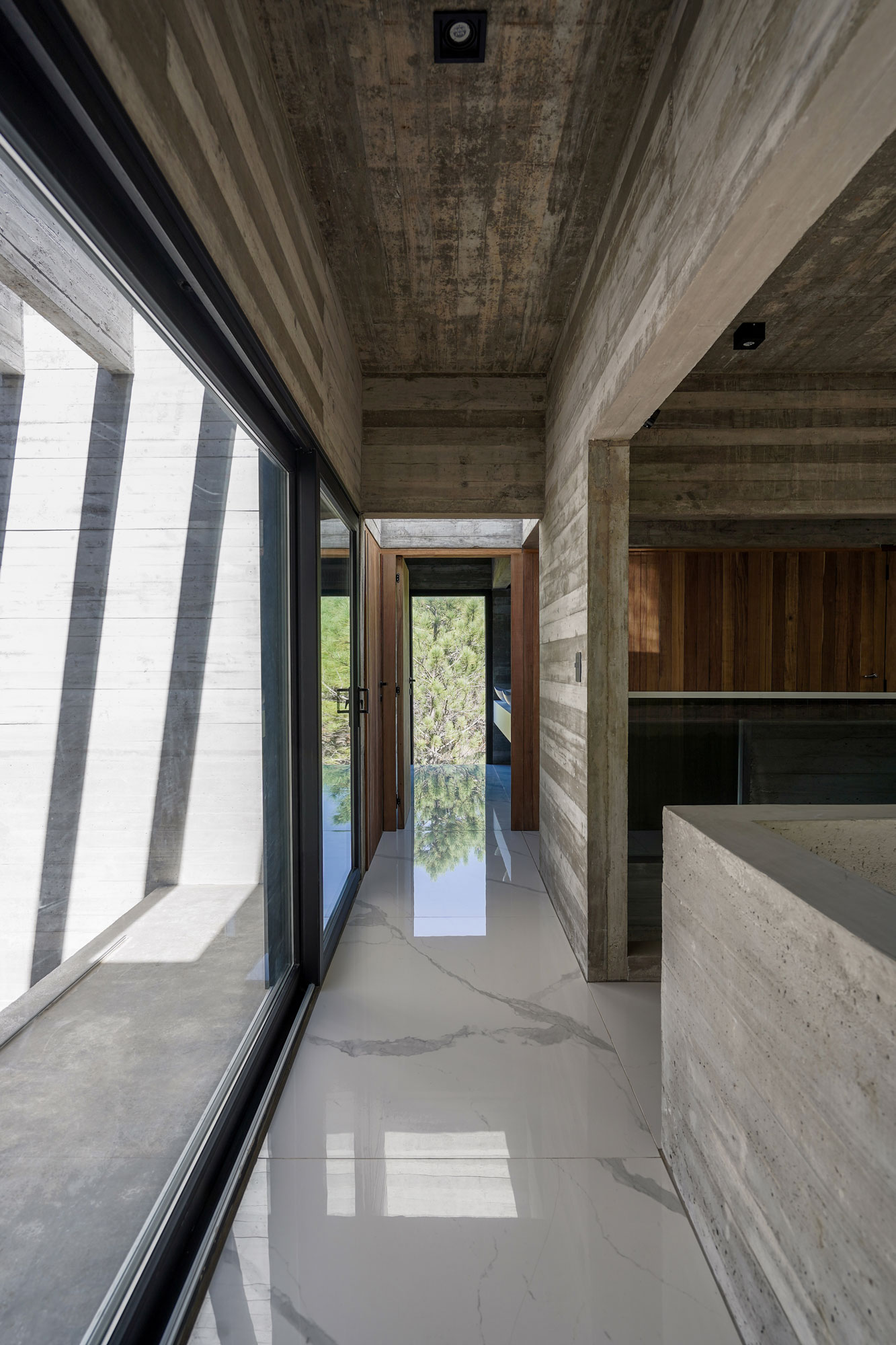
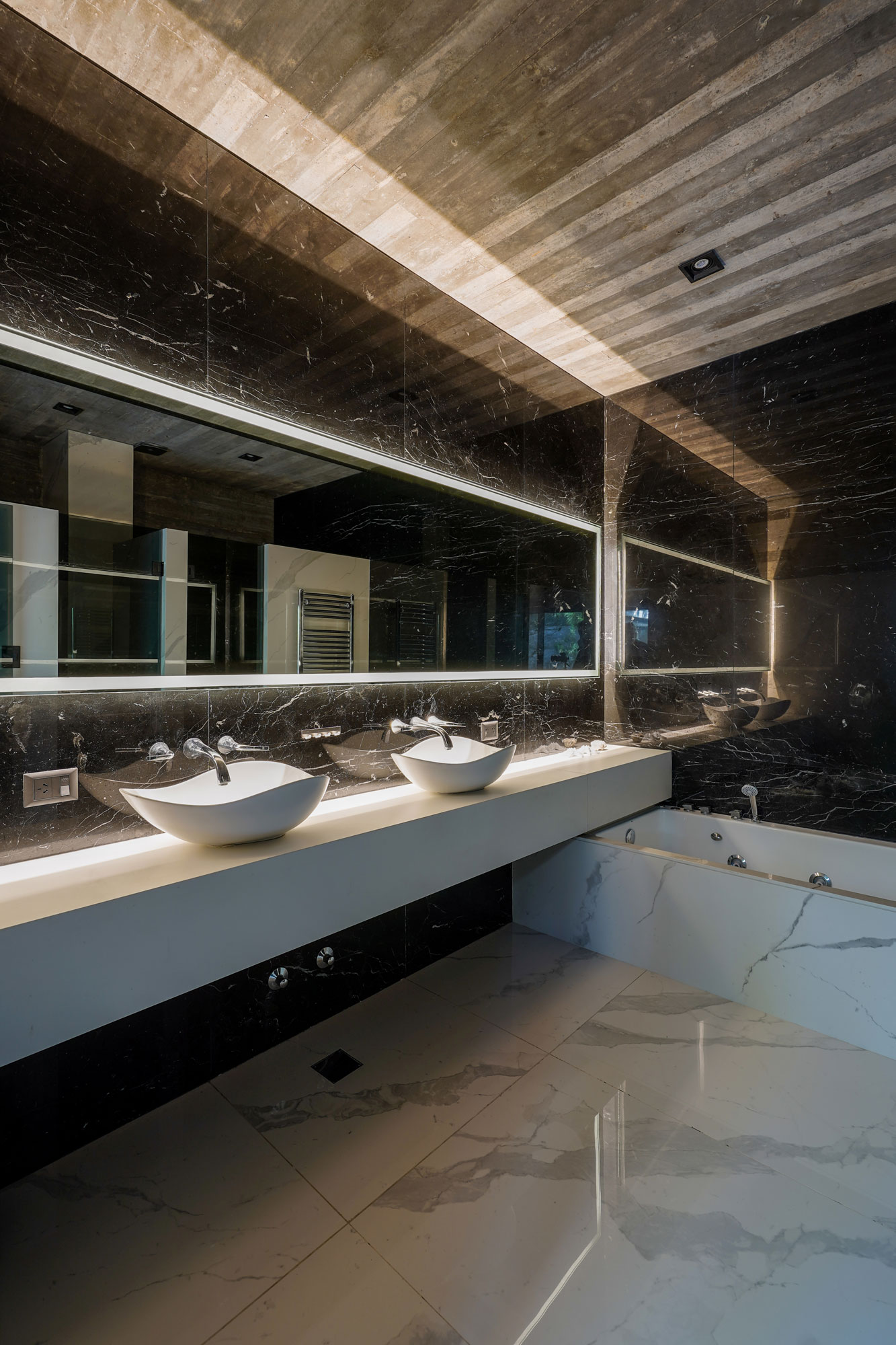
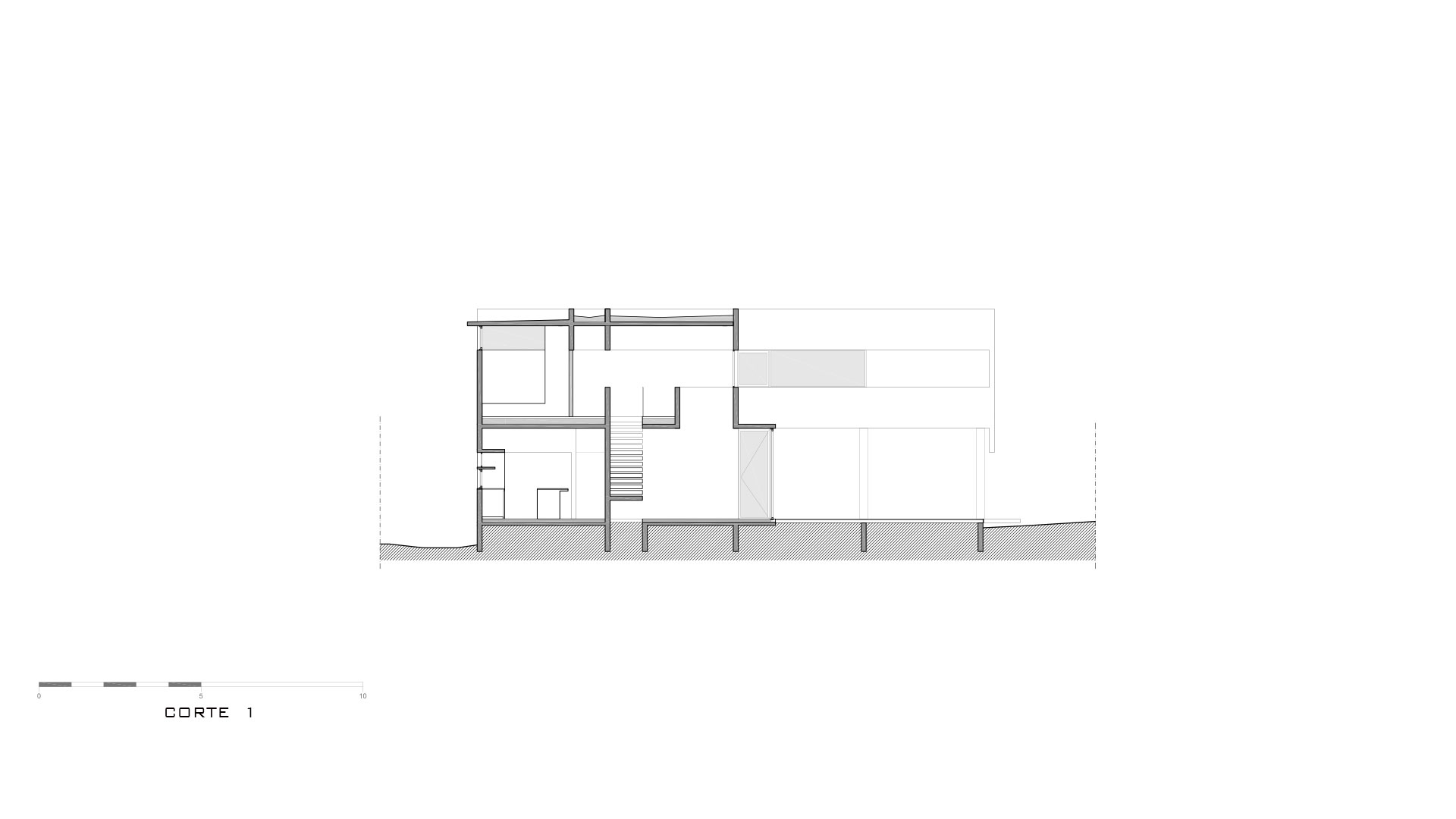
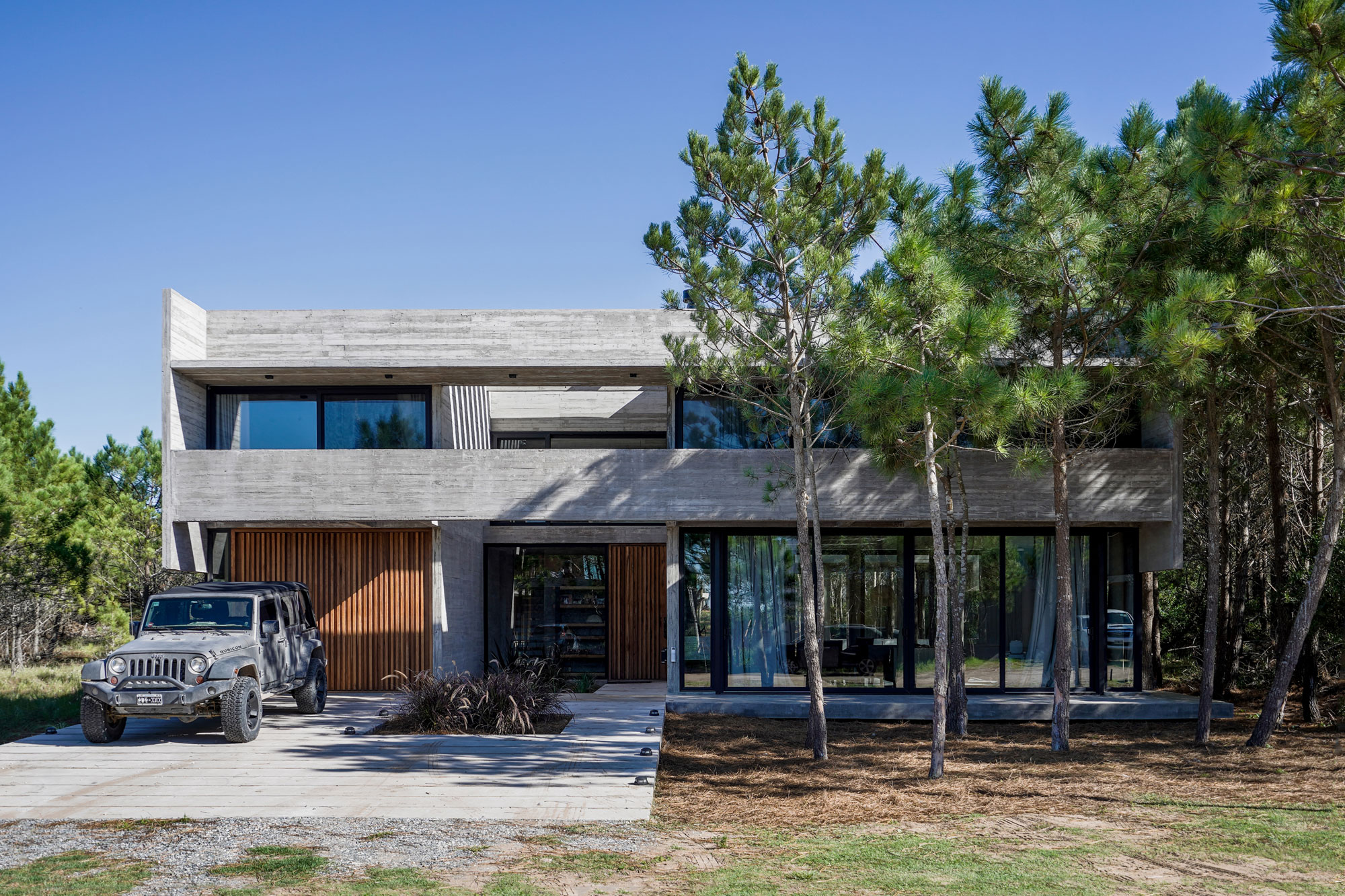
Exposed concrete was chosen as the primary material, achieving a formal synthesis that allows for large openings without intermediate supports. This decision not only responds to an ethic of material honesty but also guarantees uninterrupted visual continuity. By using a single material, the architecture acts as a neutral frame that captures and highlights nature, blurring the boundary between the built shelter and the outdoors.
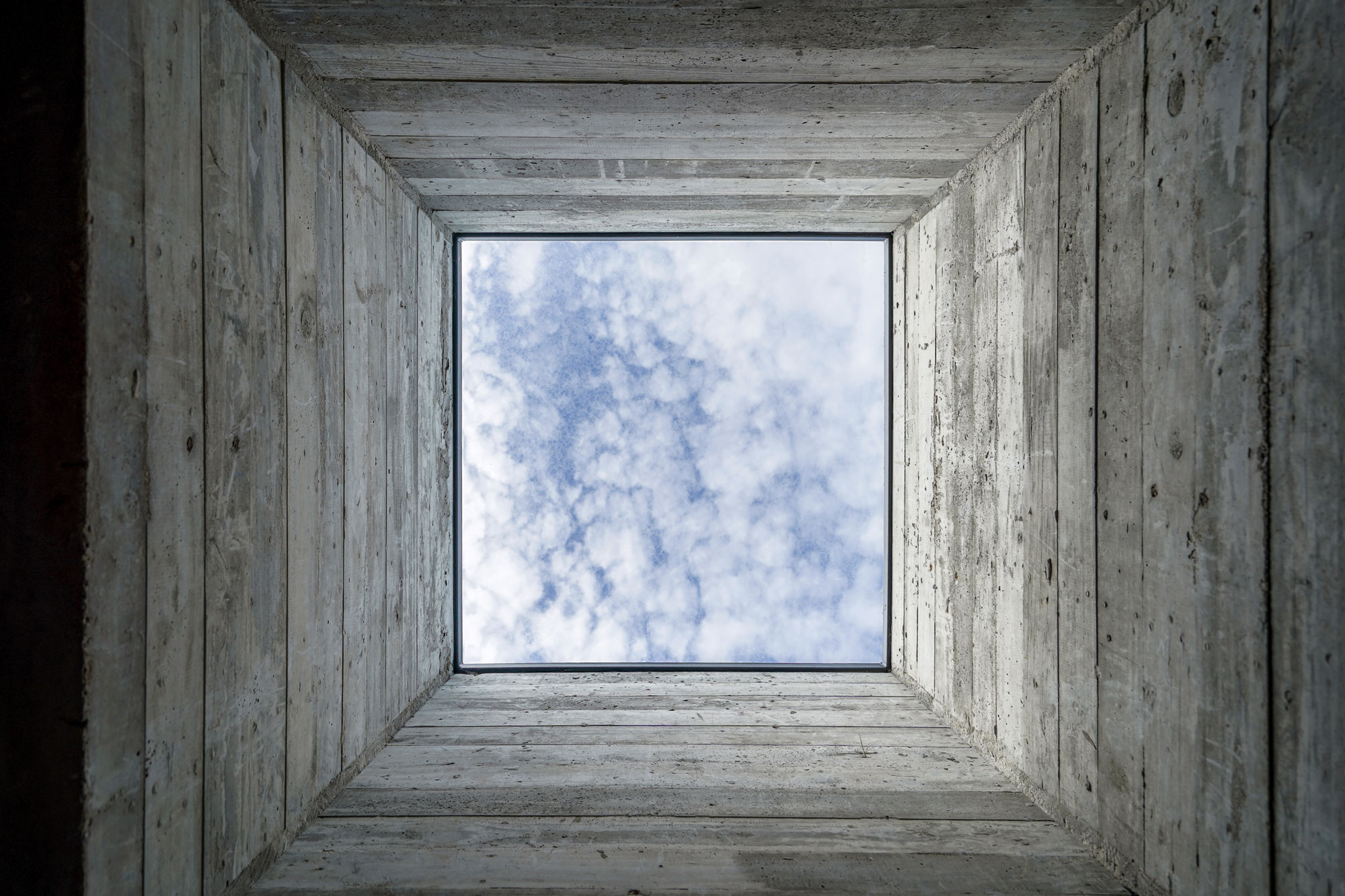
The volumetric simplicity of the complex is enlivened through two precise design elements. The first is a concrete pergola spanning the double-height entrance; its shifting shadows introduce distortions into the orthogonality of the spaces, bringing movement to the structure. The second device consists of a grid of beams projecting in front of the two main facades which, being separated from the building envelope, controls the incidence of sunlight and allows overhead light to enter. The result is a multifaceted perception of the spaces that continuously transform according to the sun’s path, turning light into yet another building material.








4H House
Location: Costa Esmeralda, Buenos Aires, Argentina
Design and Project Management: Arch. María Victoria Besonías, Arch. Guillermo de Almeida
Collaborators: Arch. Micaela Salibe, Arch. Gisela Giovanetti, Hernán de Almeida
Land area: 1124sqm
Built area: 511sqm
Construction Year: 2024
Contractor: Desur Constructora
Photos: Hernán de Almeida
MEMORY
4H House is located in Costa Esmeralda, a site on the sand dunes of the Buenos Aires coast where native grasslands coexist with a young forest of acacias and maritime pines. The site, situated close to the sea but without a direct view of it, finds its greatest potential in a dense existing grove of pine trees. Here, architecture takes on the role of mediator, integrating the landscape as the heart of the dwelling experience.
The project addresses the challenge of creating a summer home for a family with four young children, anticipating an active social life in the future without sacrificing each member’s independence. Under this premise, the program is organized over two floors around a central courtyard that preserves the original vegetation. This open space allows activities on the ground floor to enjoy a protected area under the trees, while the spaces on the upper level benefit from a constant view of the landscape in a fully private setting.
Exposed concrete was chosen as the primary material, achieving a formal synthesis that allows for large openings without intermediate supports. This decision not only responds to an ethic of material honesty but also guarantees uninterrupted visual continuity. By using a single material, the architecture acts as a neutral frame that captures and highlights nature, blurring the boundary between the built shelter and the outdoors.
The volumetric simplicity of the complex is enlivened through two precise design elements. The first is a concrete pergola spanning the double-height entrance; its shifting shadows introduce distortions into the orthogonality of the spaces, bringing movement to the structure. The second device consists of a grid of beams projecting in front of the two main facades which, being separated from the building envelope, controls the incidence of sunlight and allows overhead light to enter. The result is a multifaceted perception of the spaces that continuously transform according to the sun’s path, turning light into yet another building material.