
Senderos House
Location: Costa Esmeralda, Buenos Aires, Argentina
Design and Project Management: Arch. María Victoria Besonías, Arch. Guillermo de Almeida
Collaborators: Arch. Micaela Salibe, Arch. Gisela Giovanetti, Hernán de Almeida
Land area: 1646sqm
Built area: 167sqm
Construction Year: 2025
Execution: René Mamani Construcciones
Photos: Hernán de Almeida
MEMORY
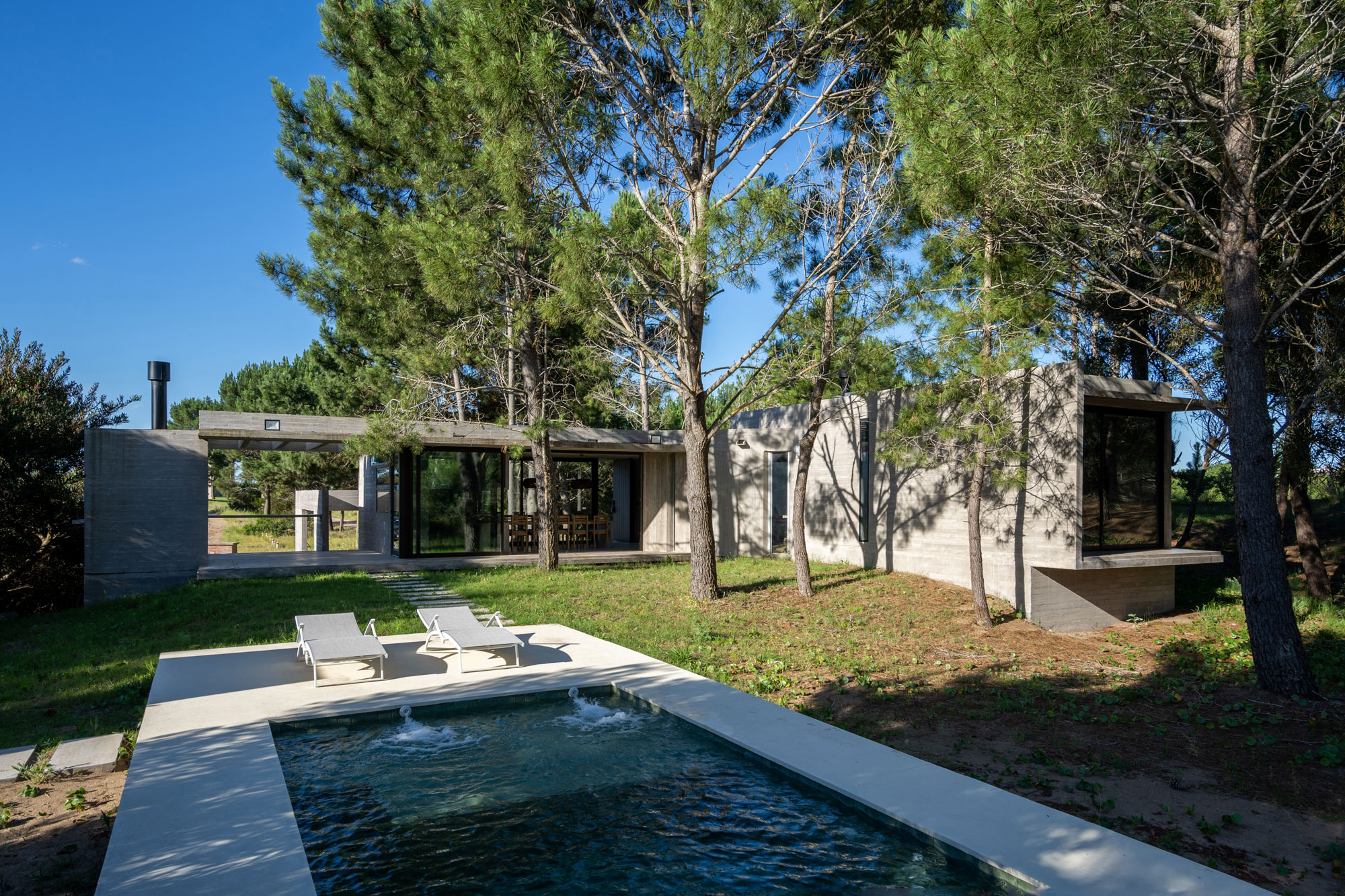
Senderos House is located in Costa Esmeralda, an area of outstanding natural beauty on the sand dunes of the Buenos Aires coast. The site is characterized by a harmonious coexistence between native grasslands, a young forest of acacias and maritime pines, and areas of established forest that the project seeks to preserve.
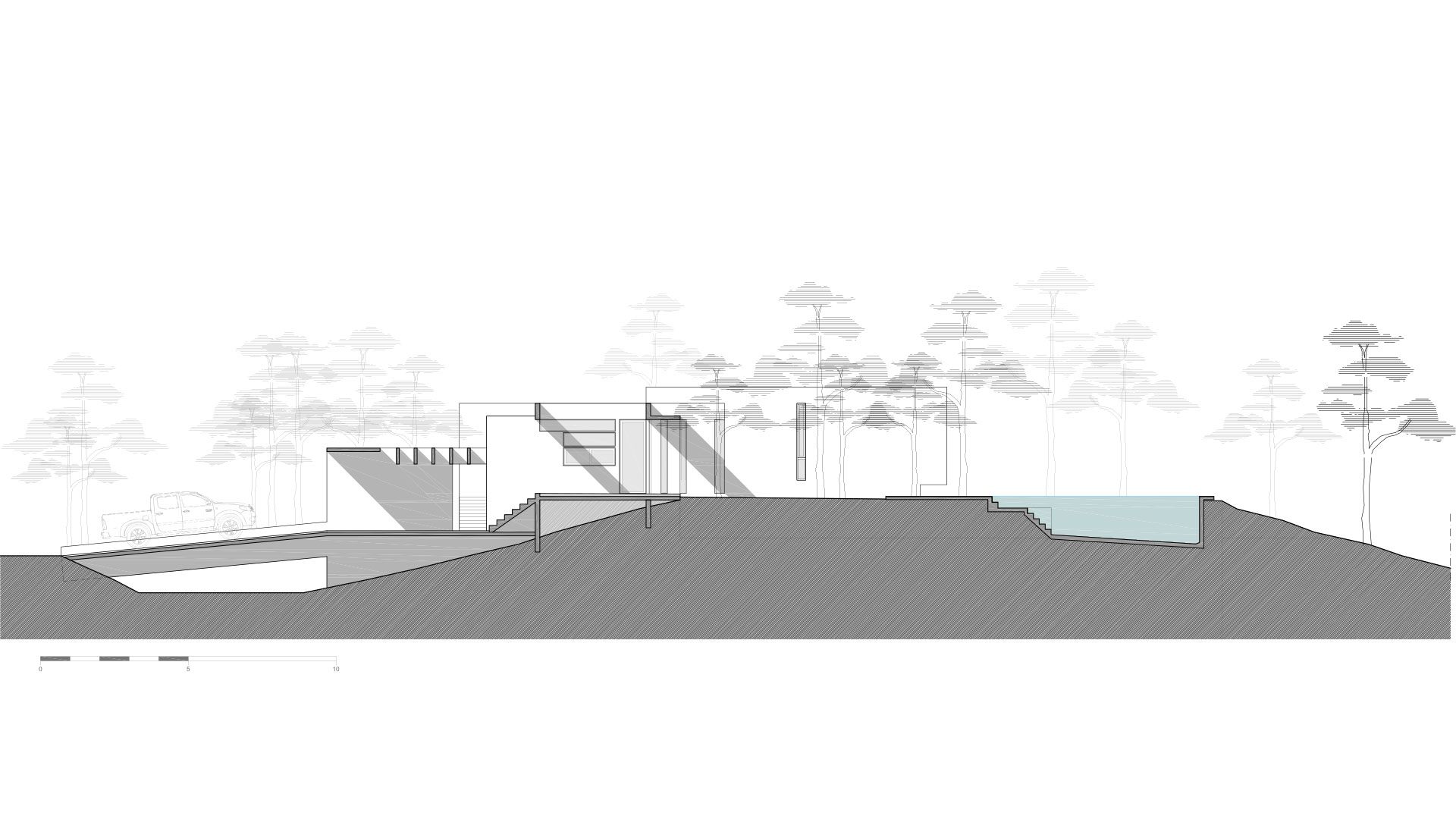
The lot has a peculiar geometry in the shape of a circular sector, with a narrow front of 12 meters that expands toward the back to reach 53 meters, bordering a forest reservoir. The topography presented an additional challenge: a depression near the access followed by an elevation of 2.50 meters, then descending abruptly toward the reservoir area.
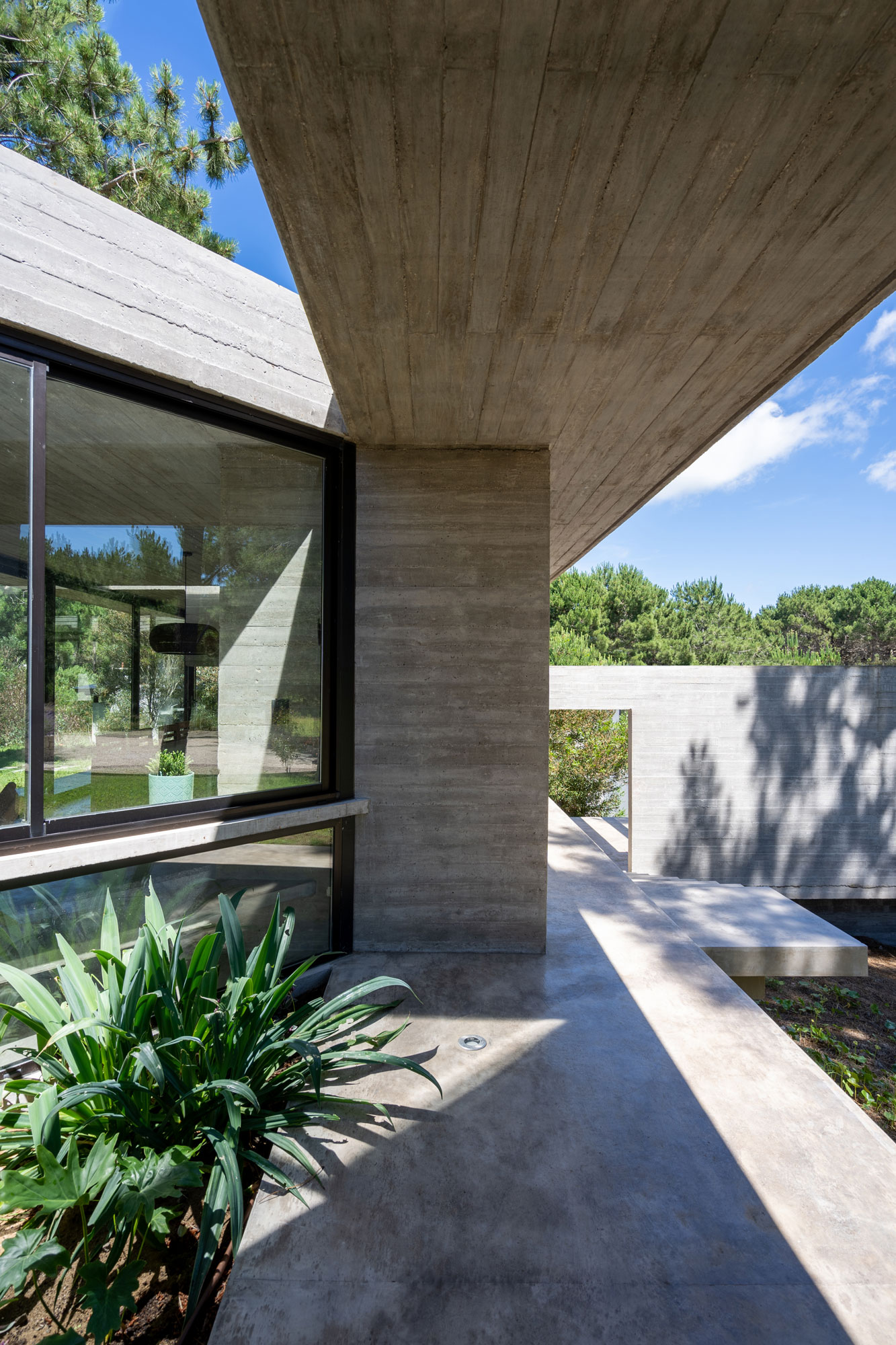
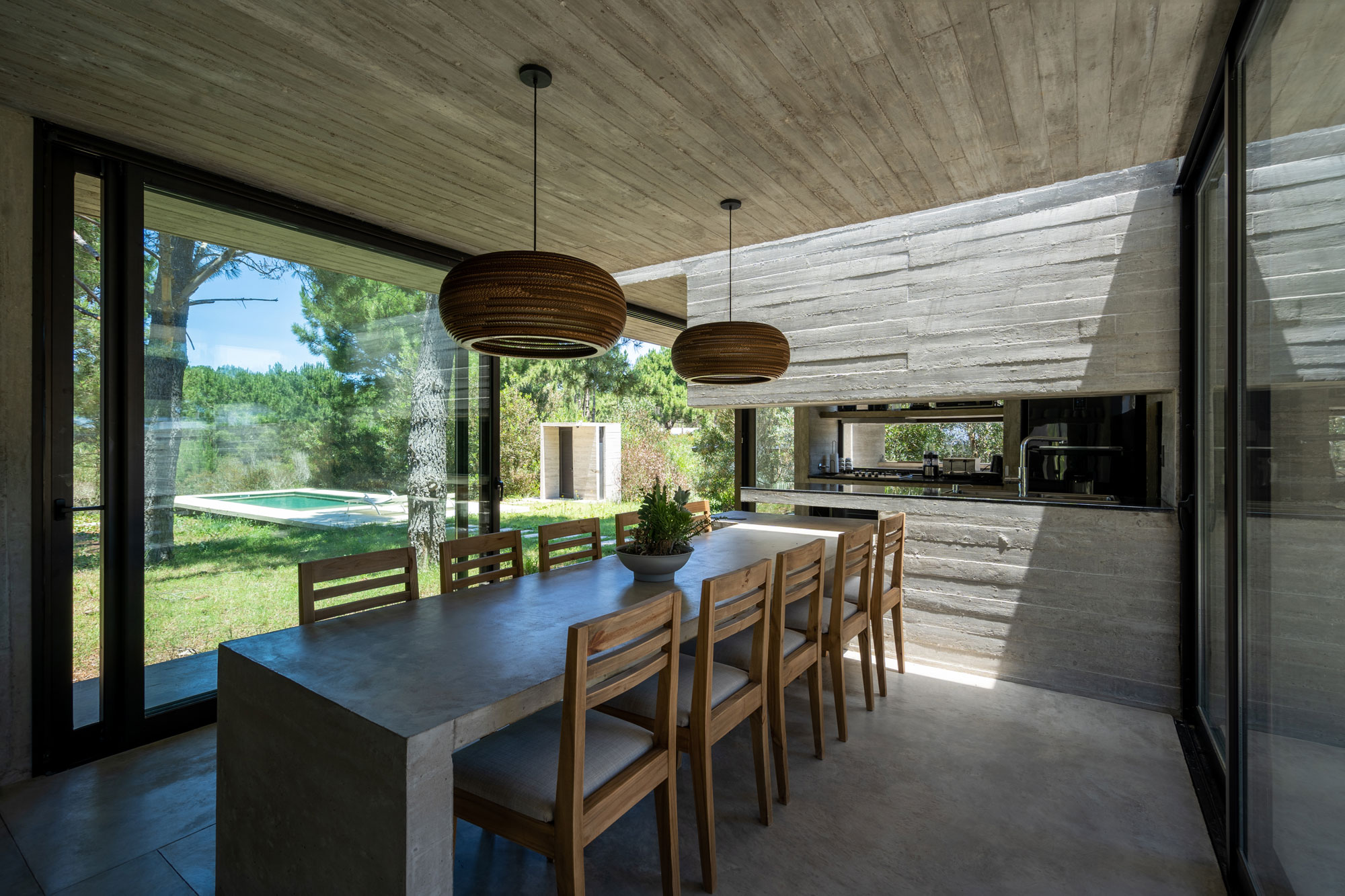
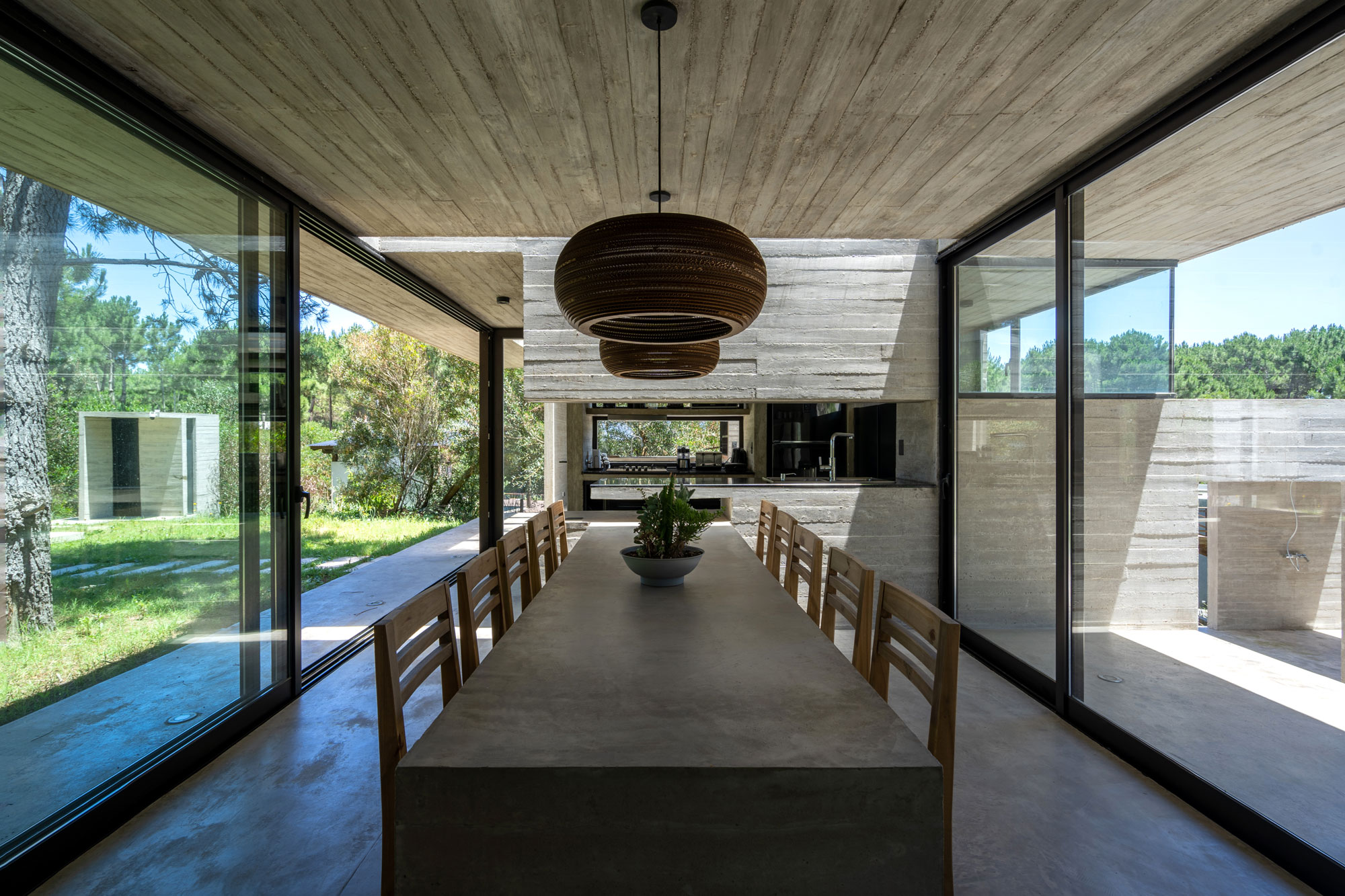
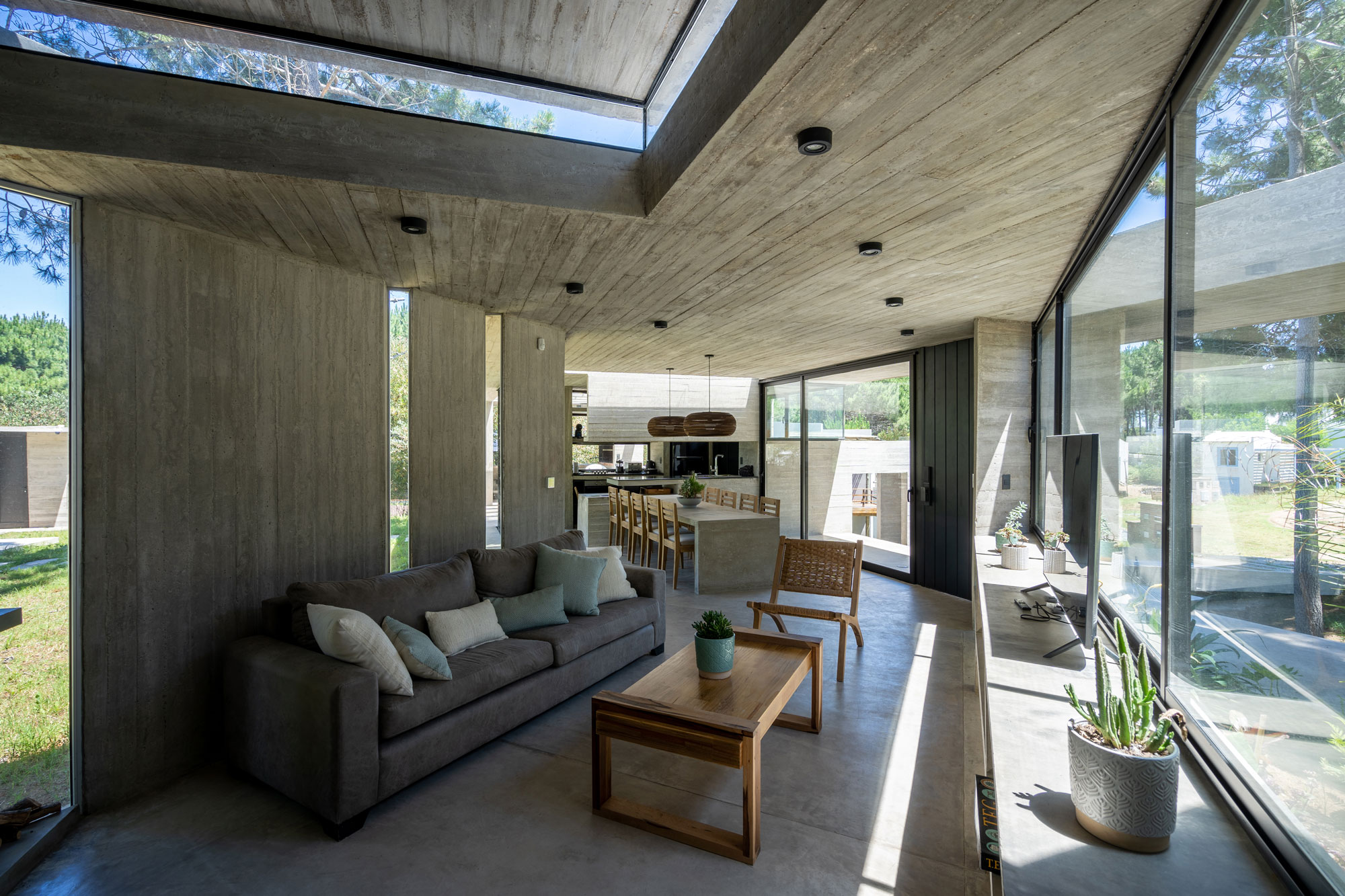
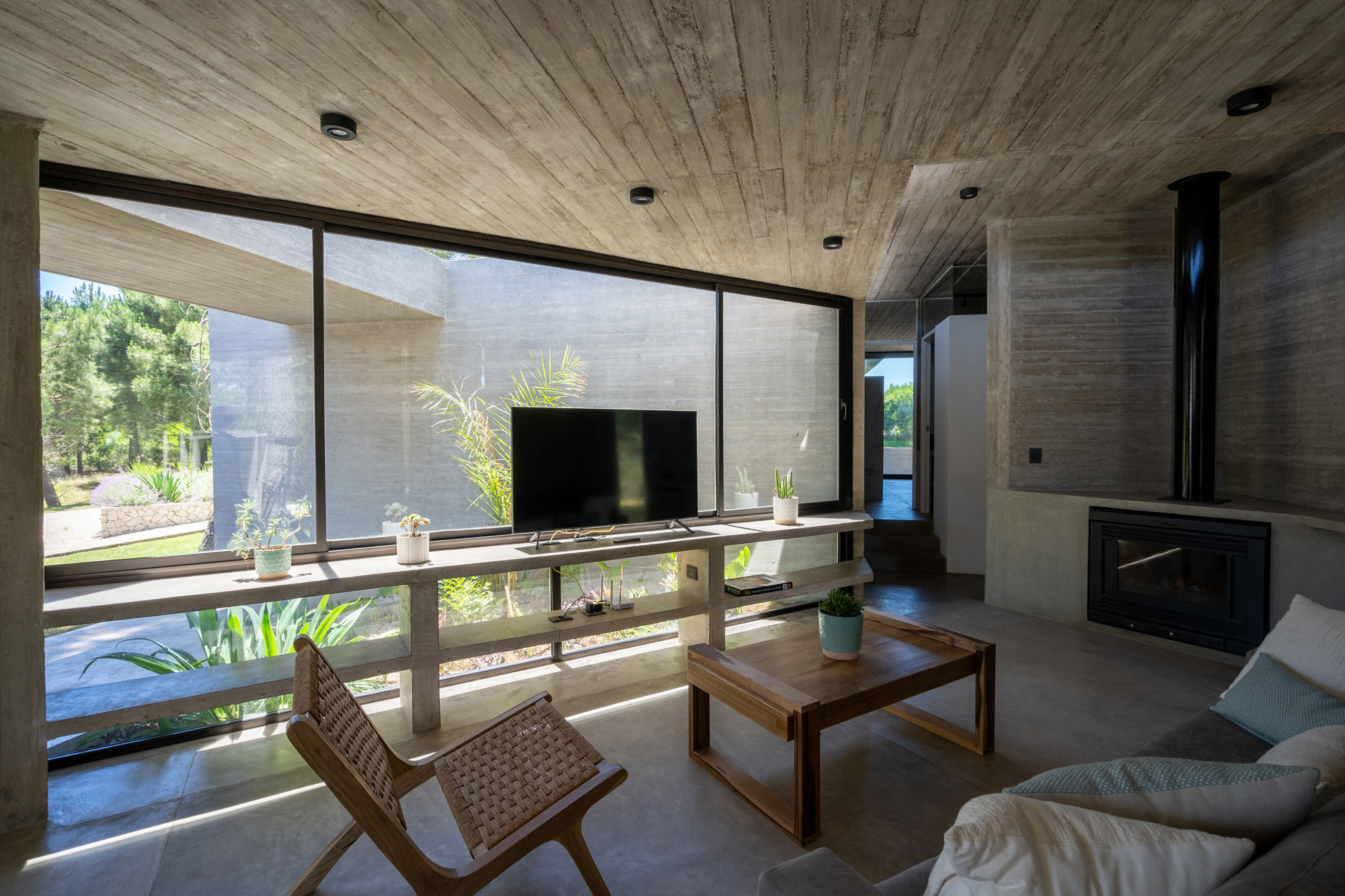
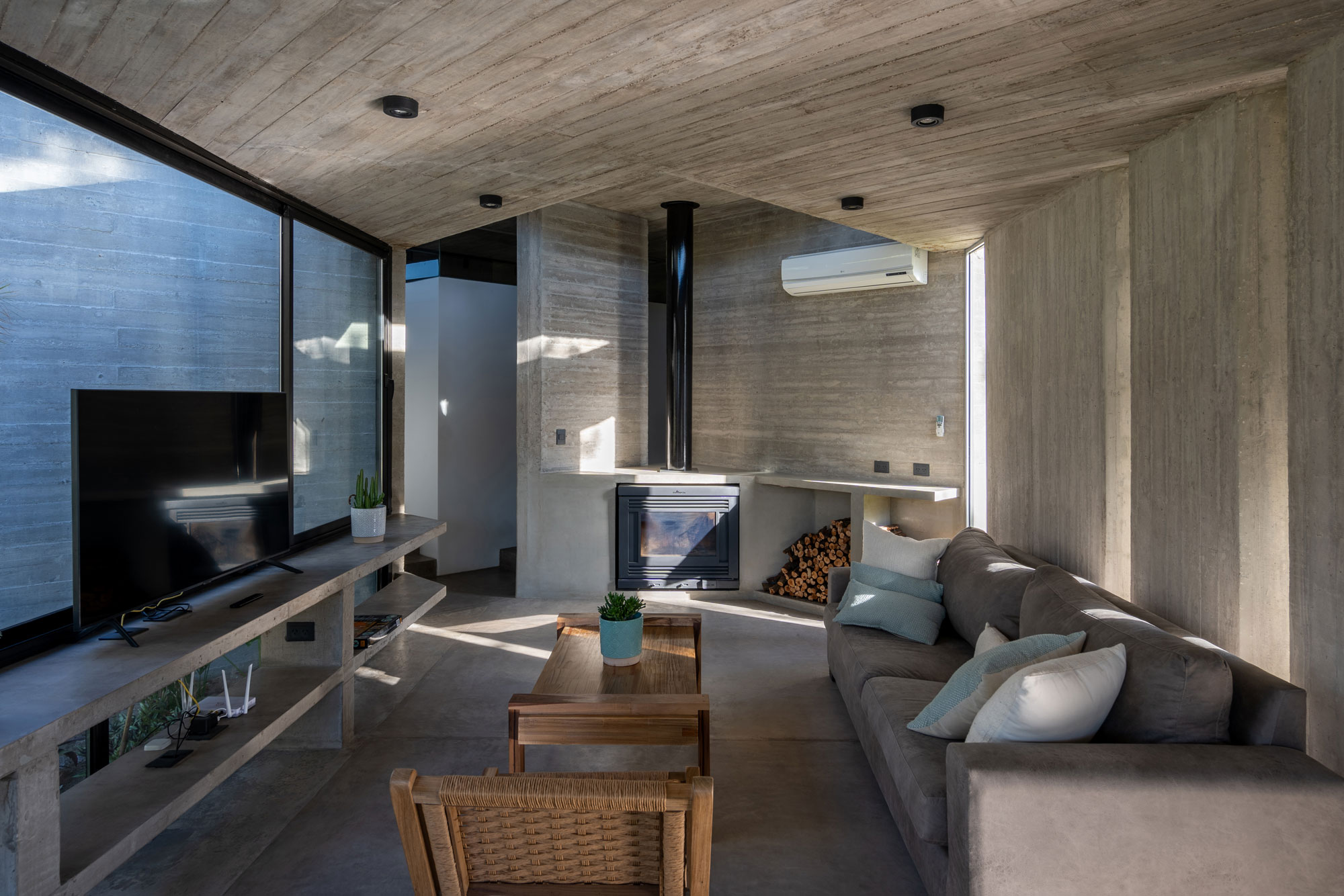
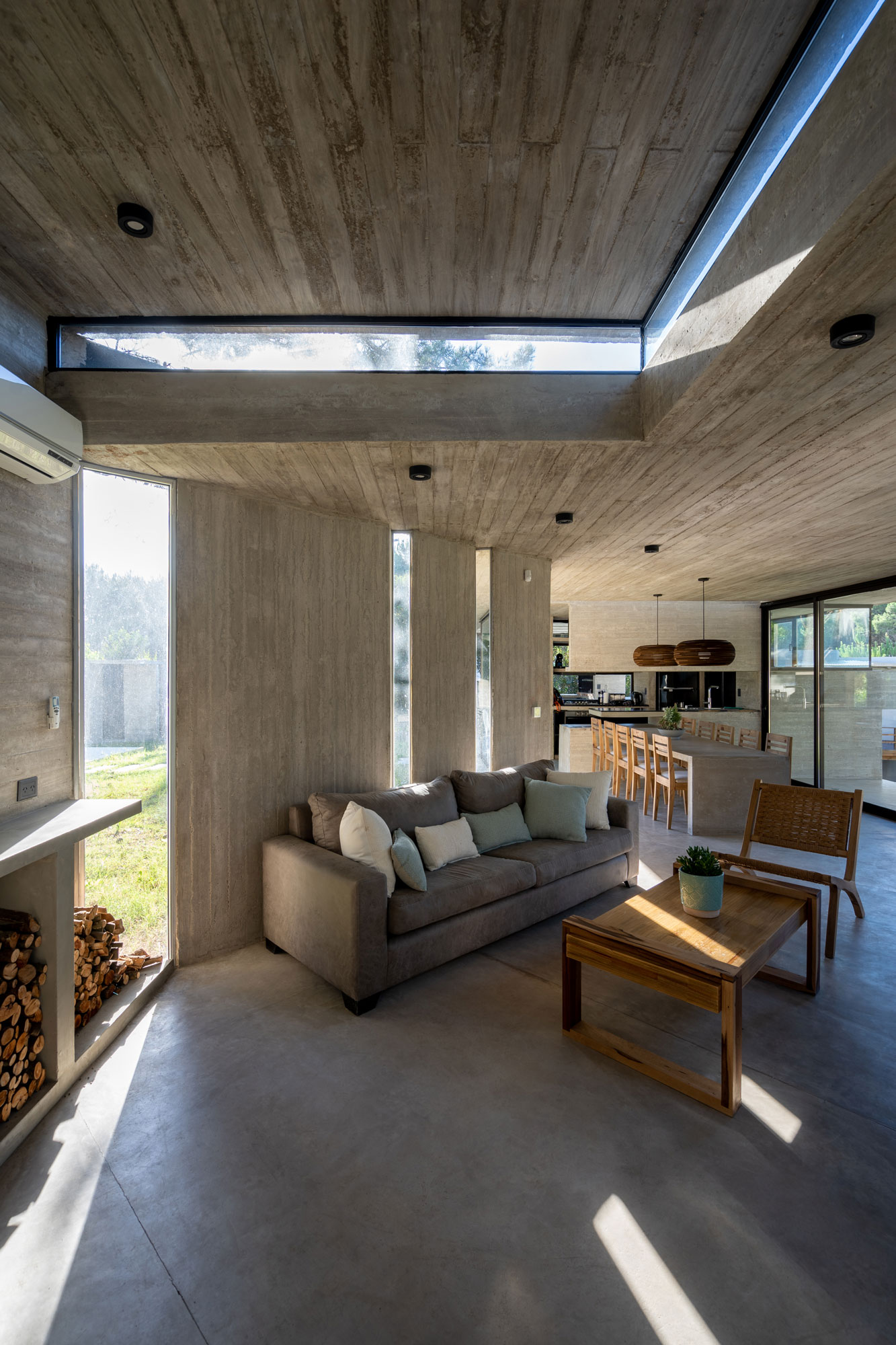
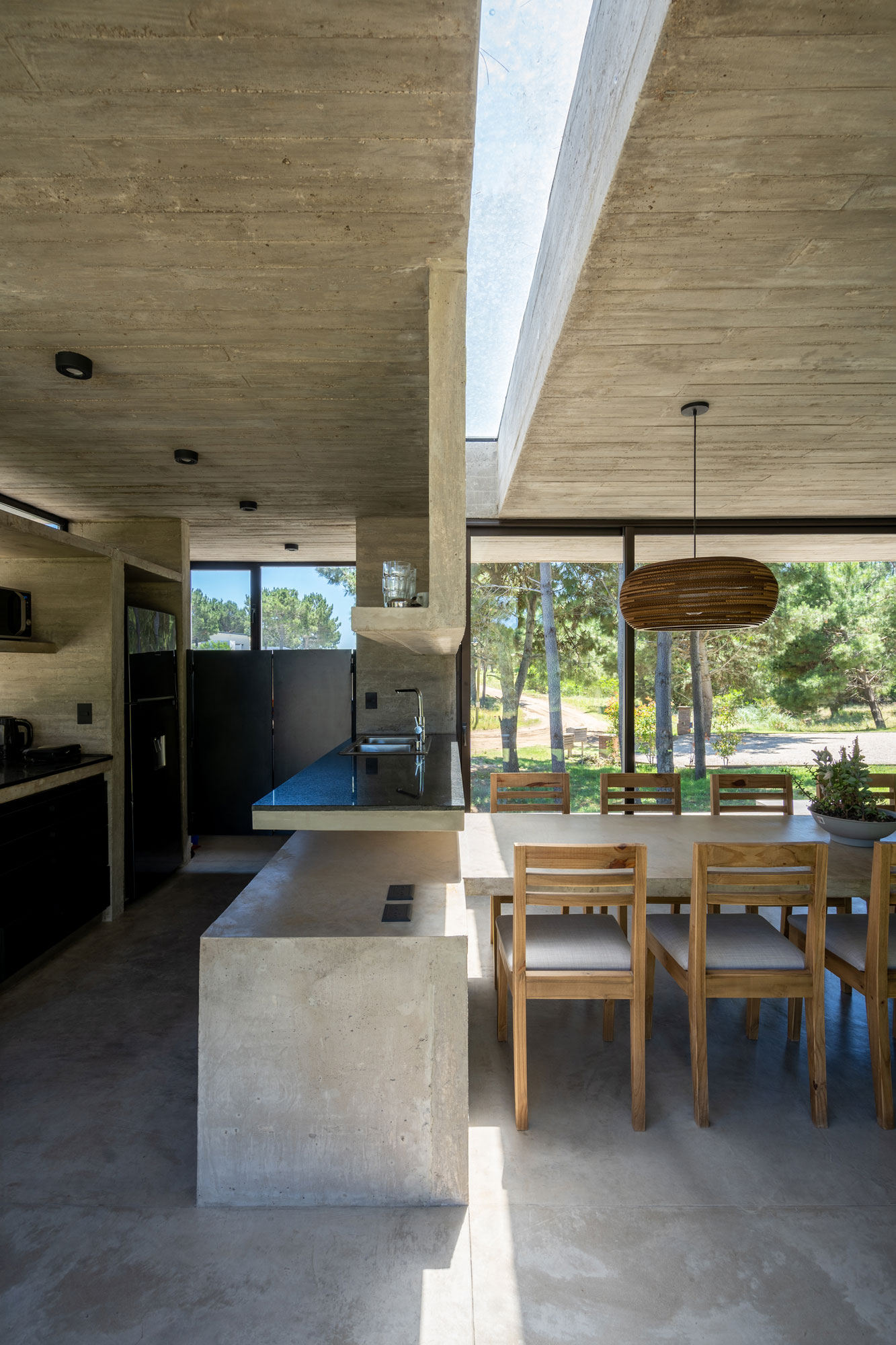
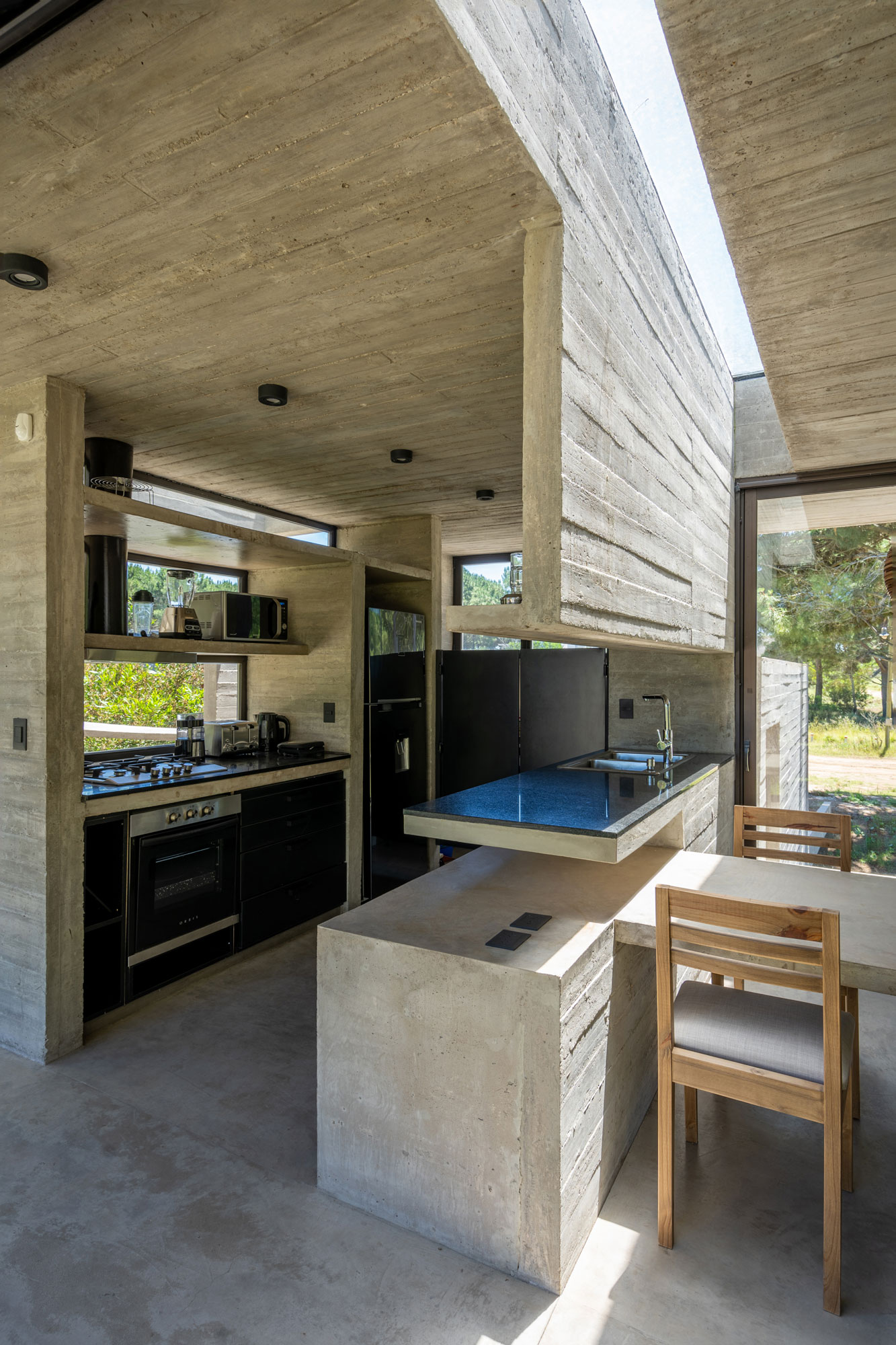
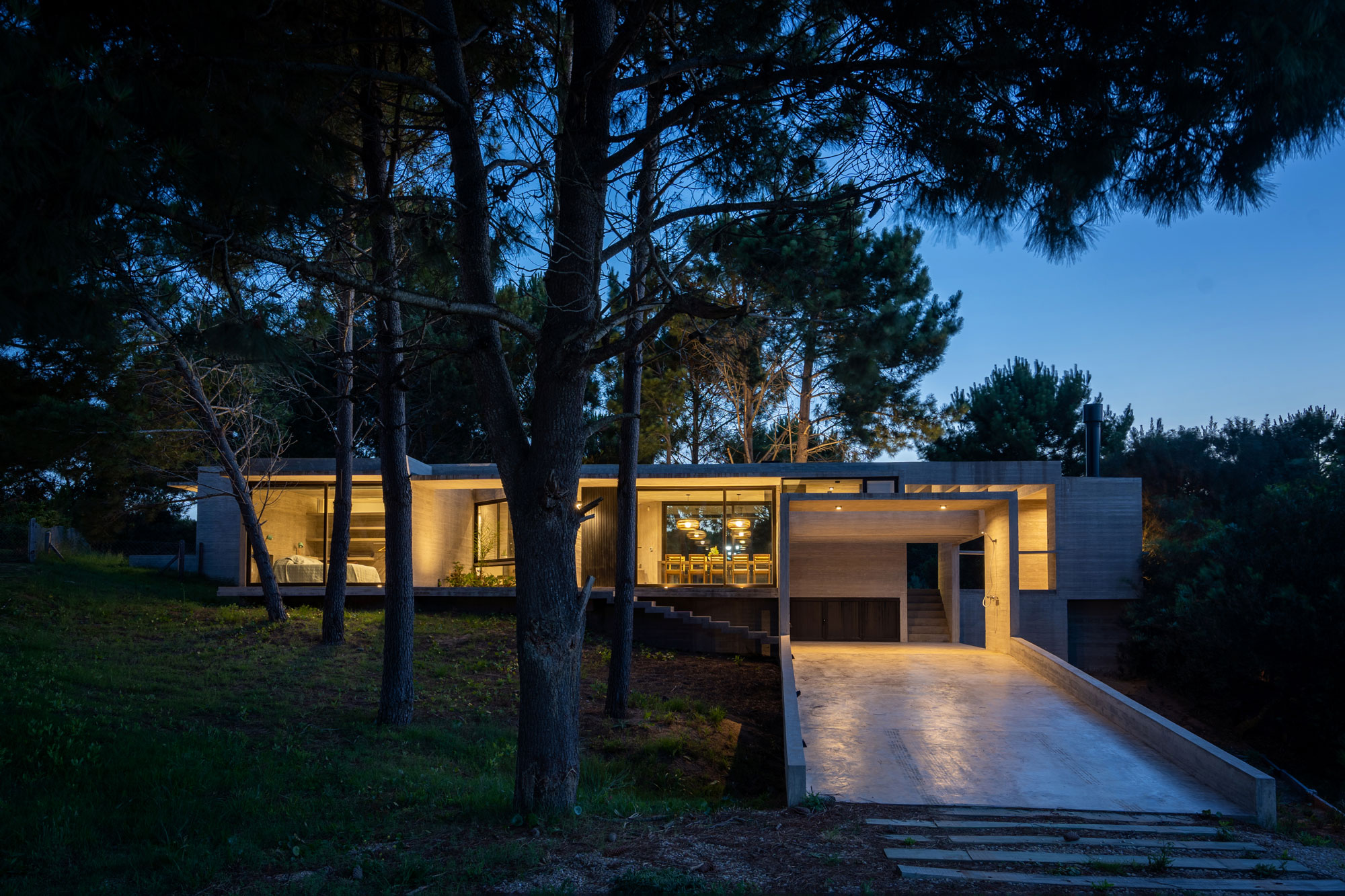
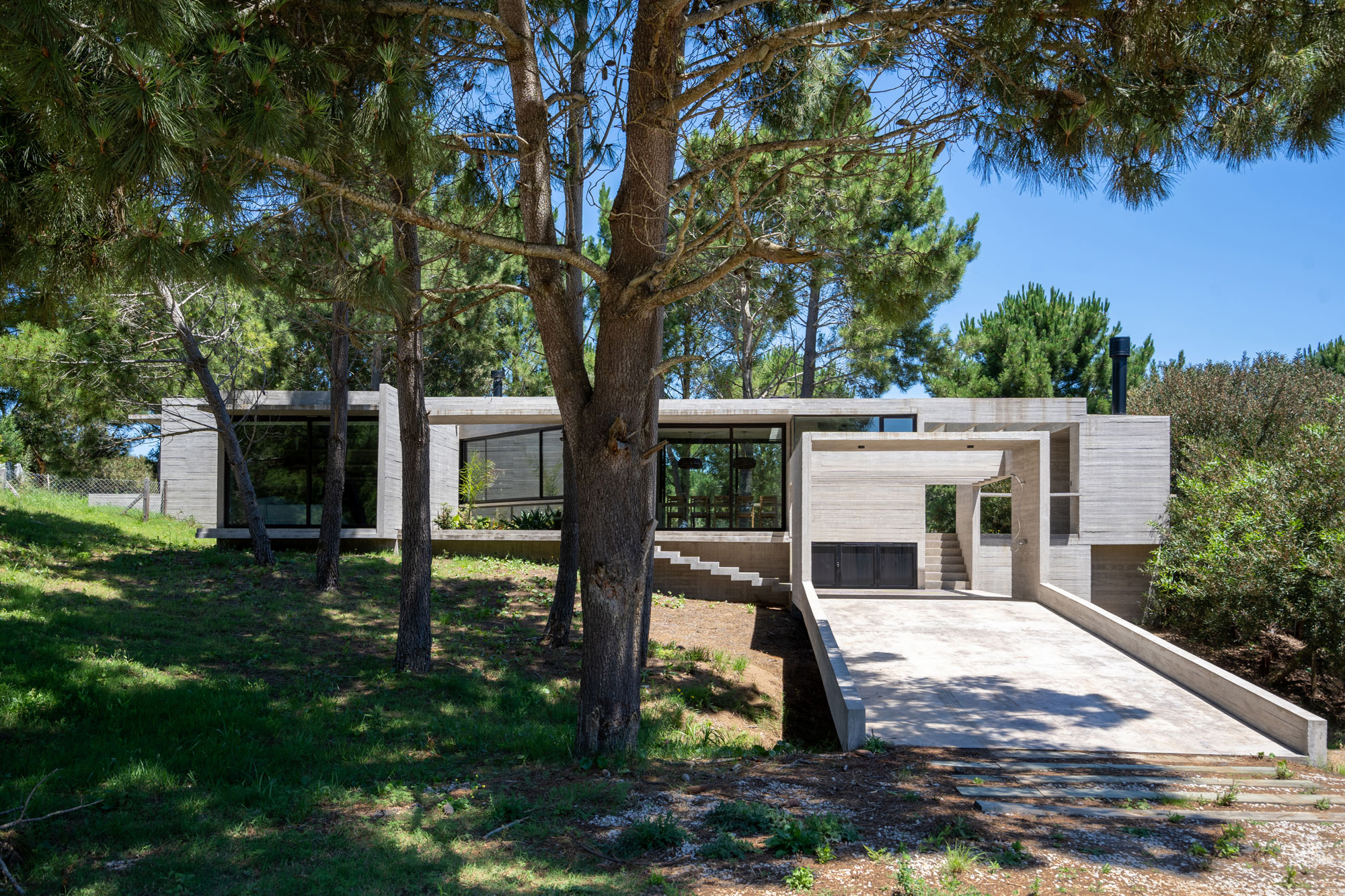
The project brief called for a versatile home, suitable both for use by its owners and for temporary rental at any time of year. Exposed concrete was chosen as the main material, even extending to the fixed equipment. This decision responds to a search for achieving a formal synthesis and minimal maintenance.
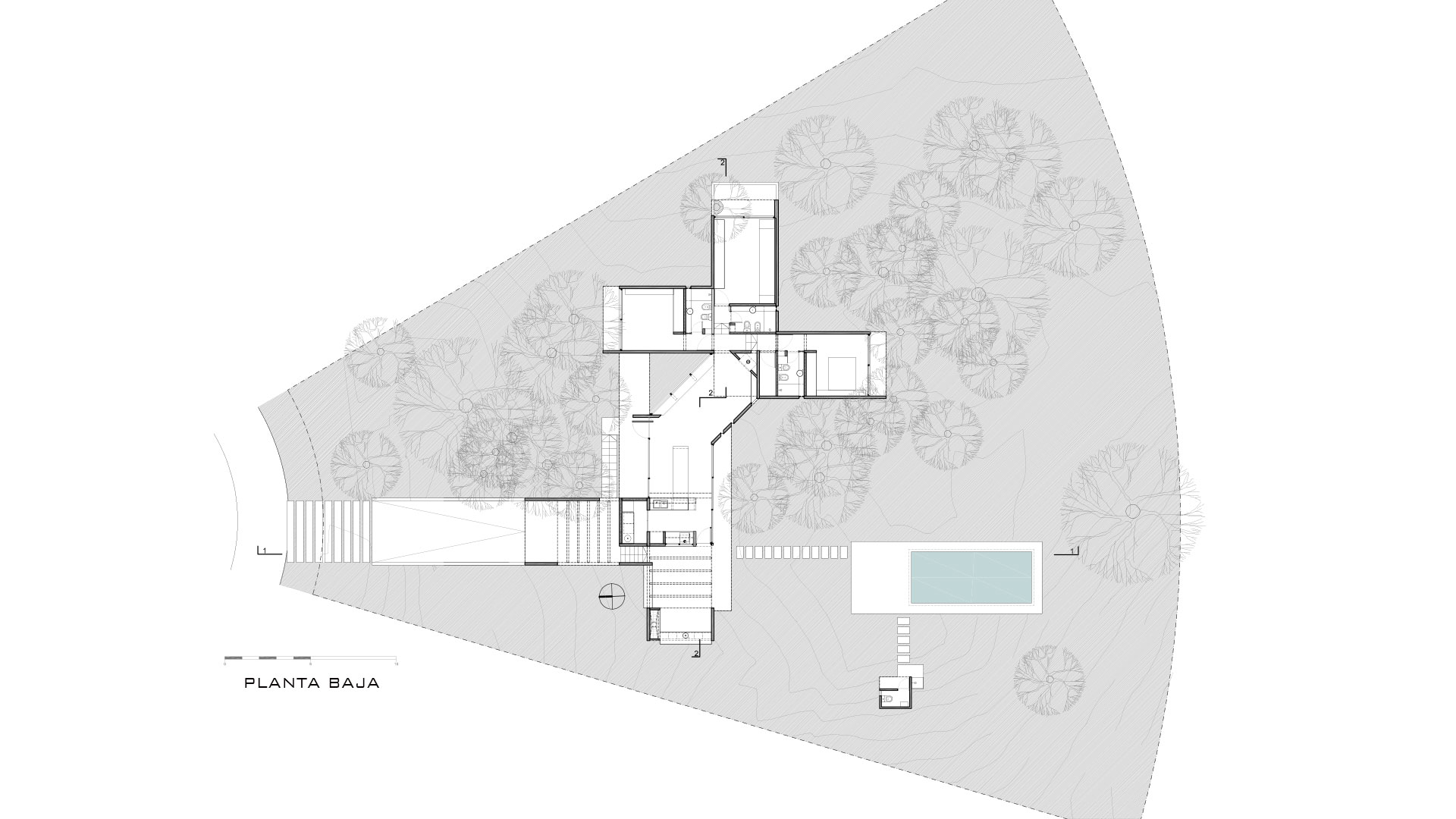
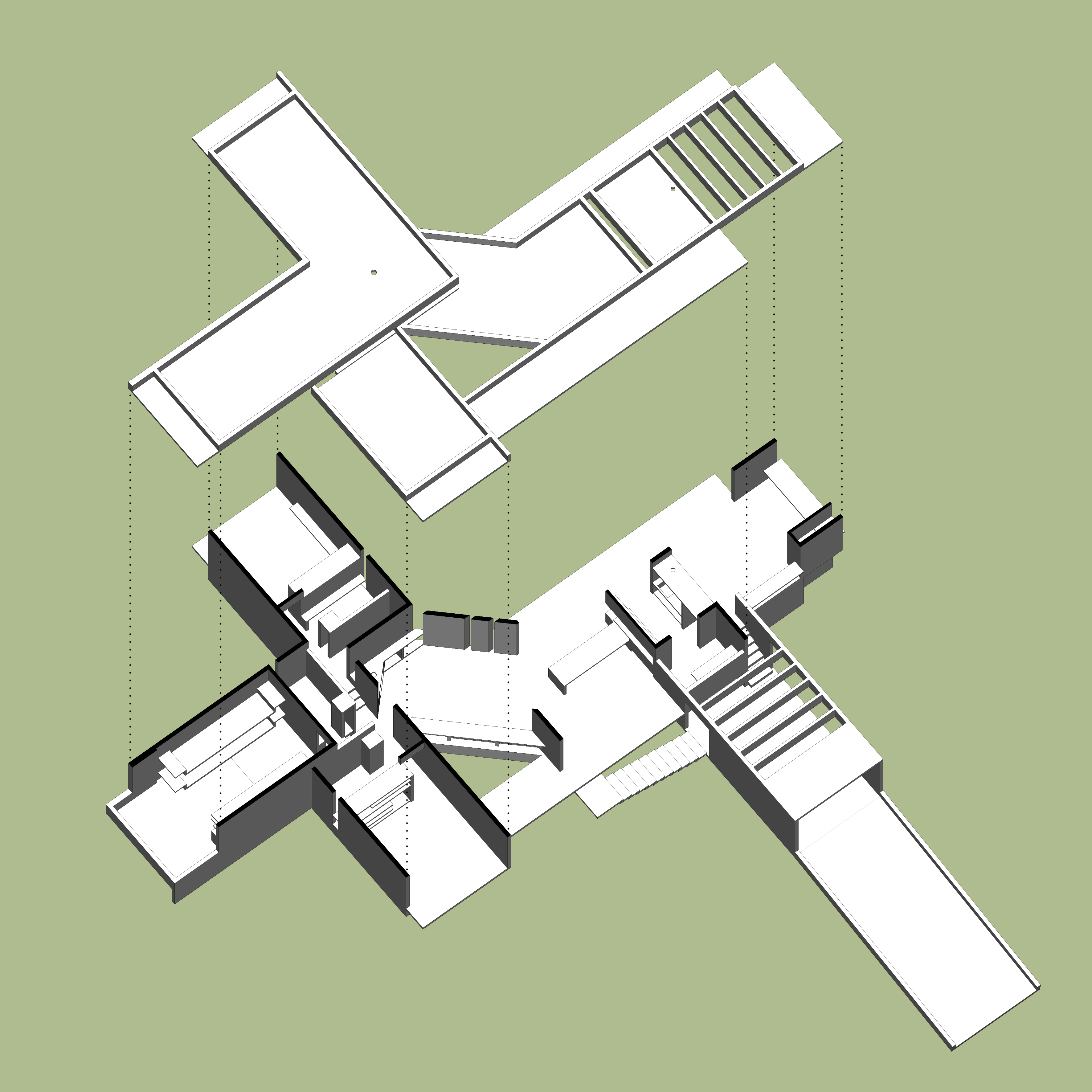
The program is organized around three bedrooms with private facilities—allowing different family groups to live together—and an integrated social area (living room, dining room, and kitchen) that acts as the heart of the house, closely linked to the natural environment. The layout is completed with services, storage area, a swimming pool with bathroom, and parking spaces.
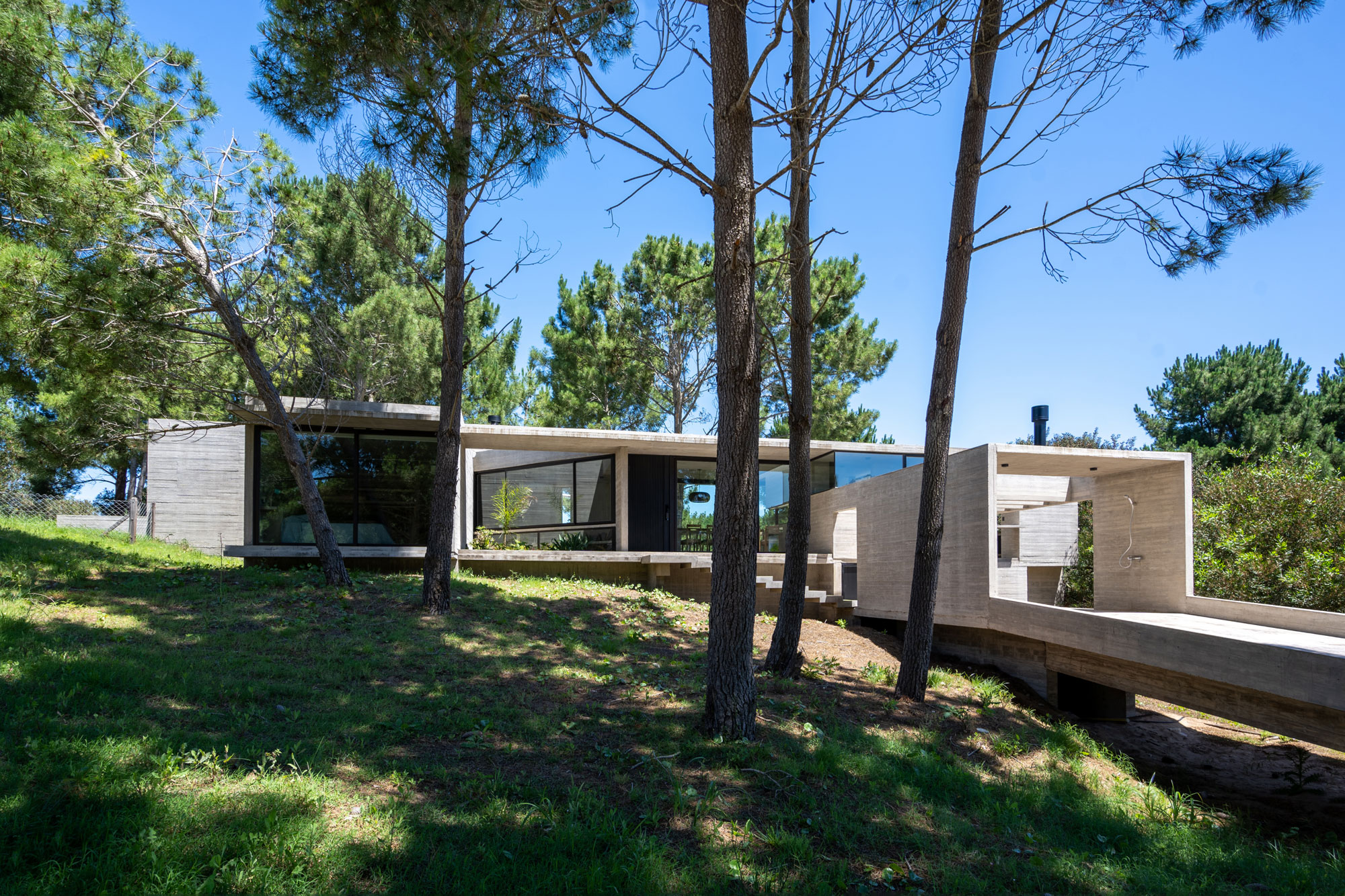
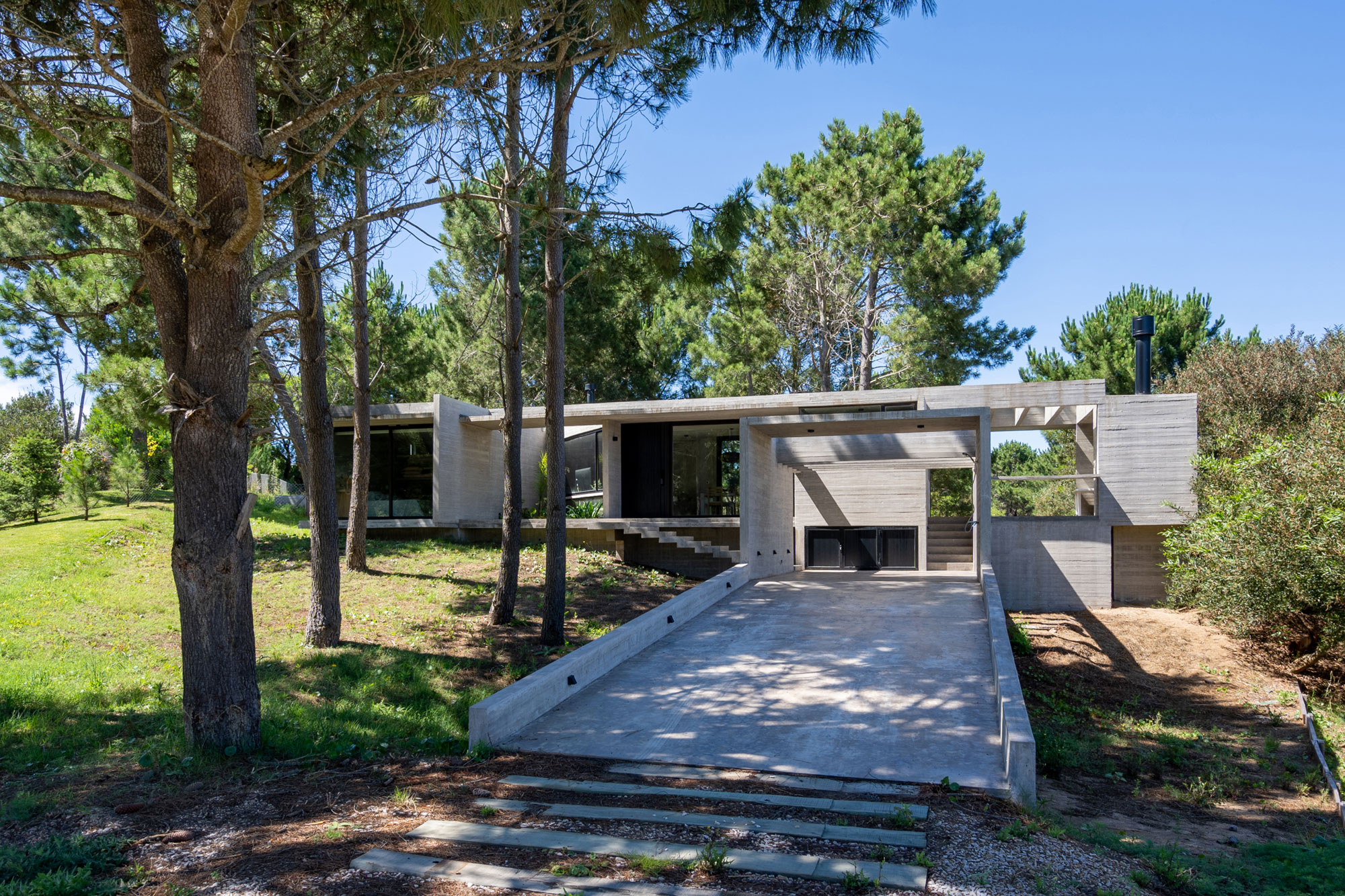
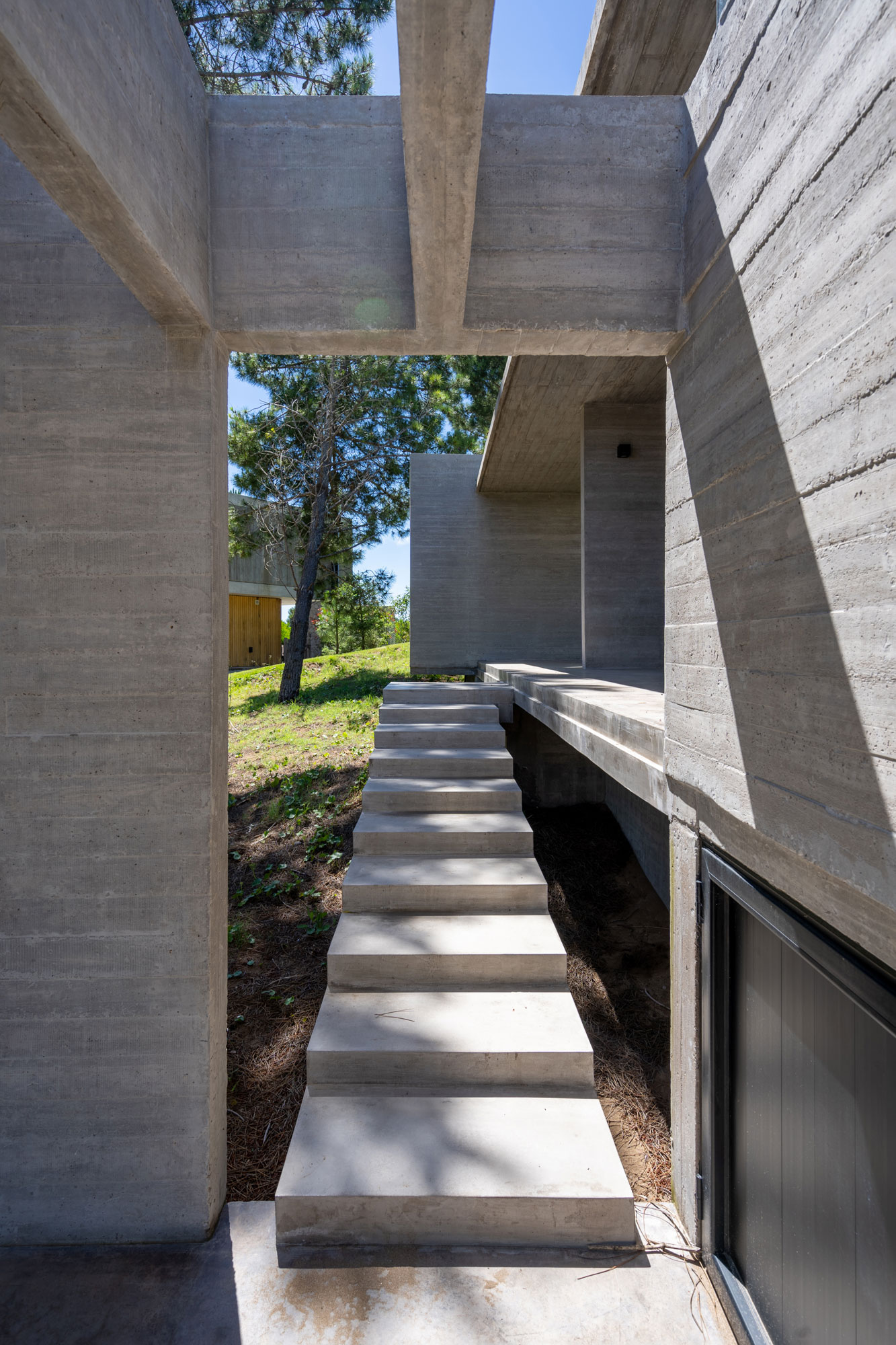
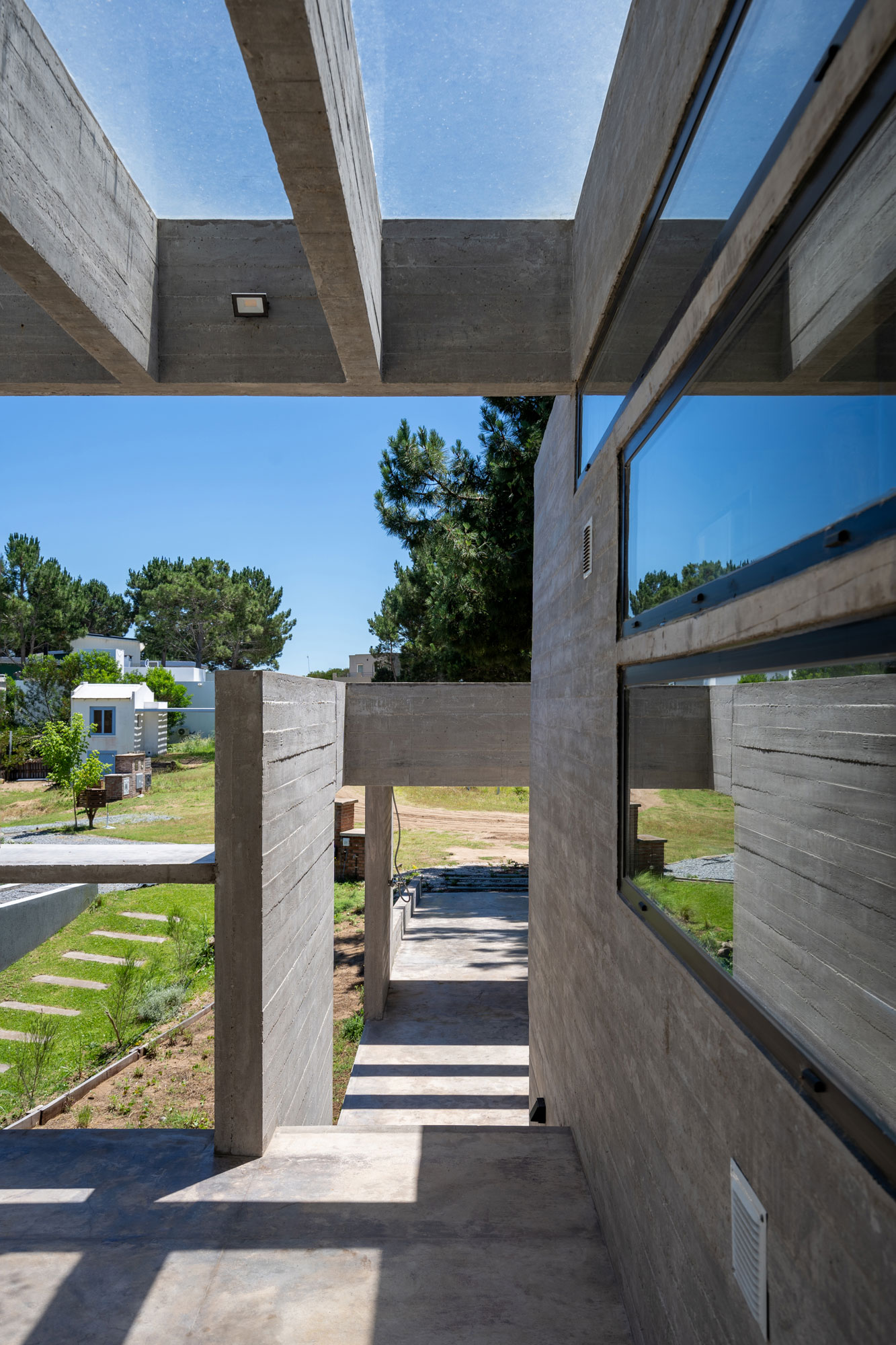
In order to respect the topography and existing tree grove, access was proposed via a sloping bridge that crosses the initial unevenness and defines the semi-covered garage. From this point, the walkway forks: a gently sloping staircase leads to the social area, while a secondary path connects to the grill area and the rest of the yard.
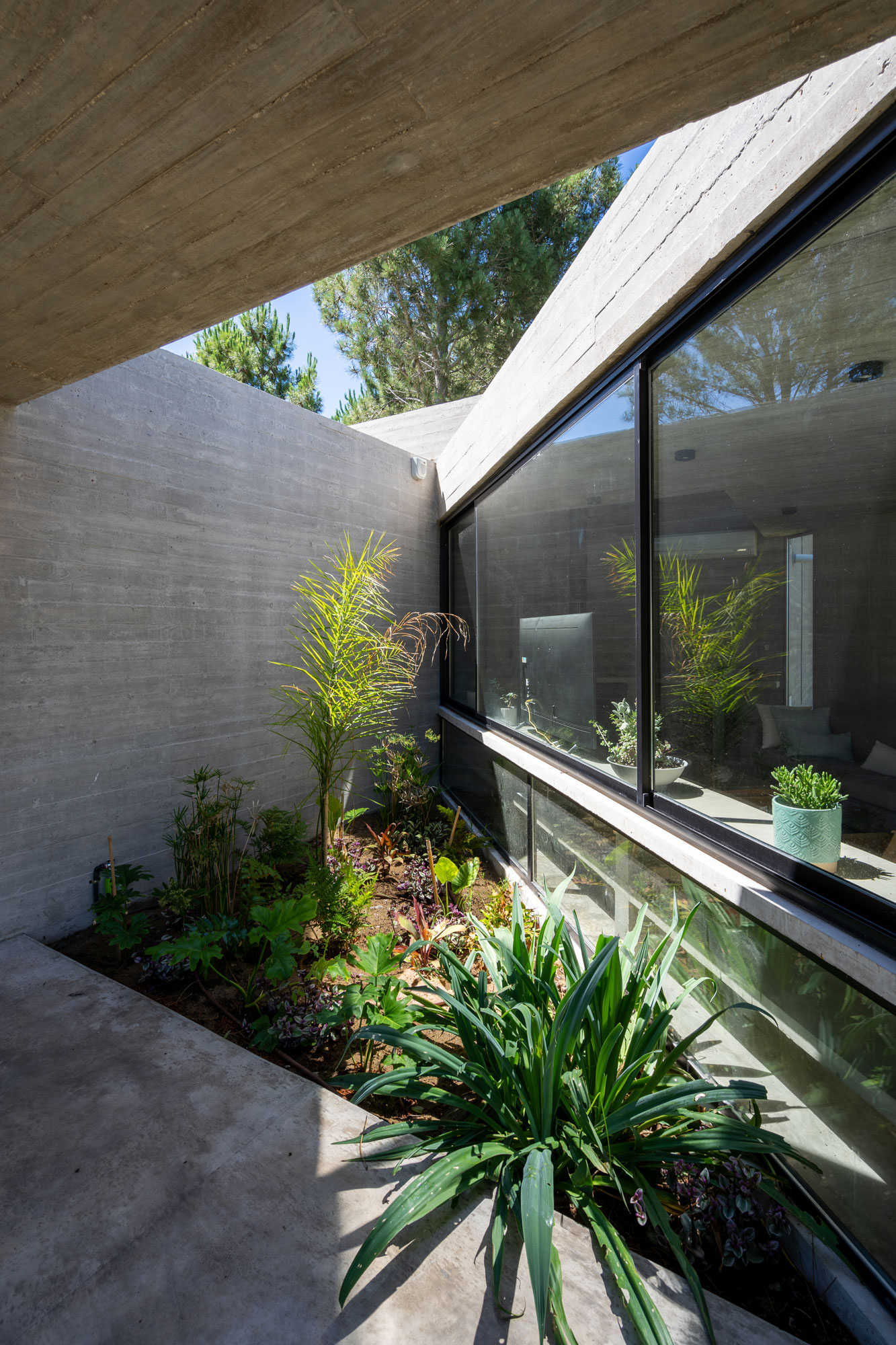
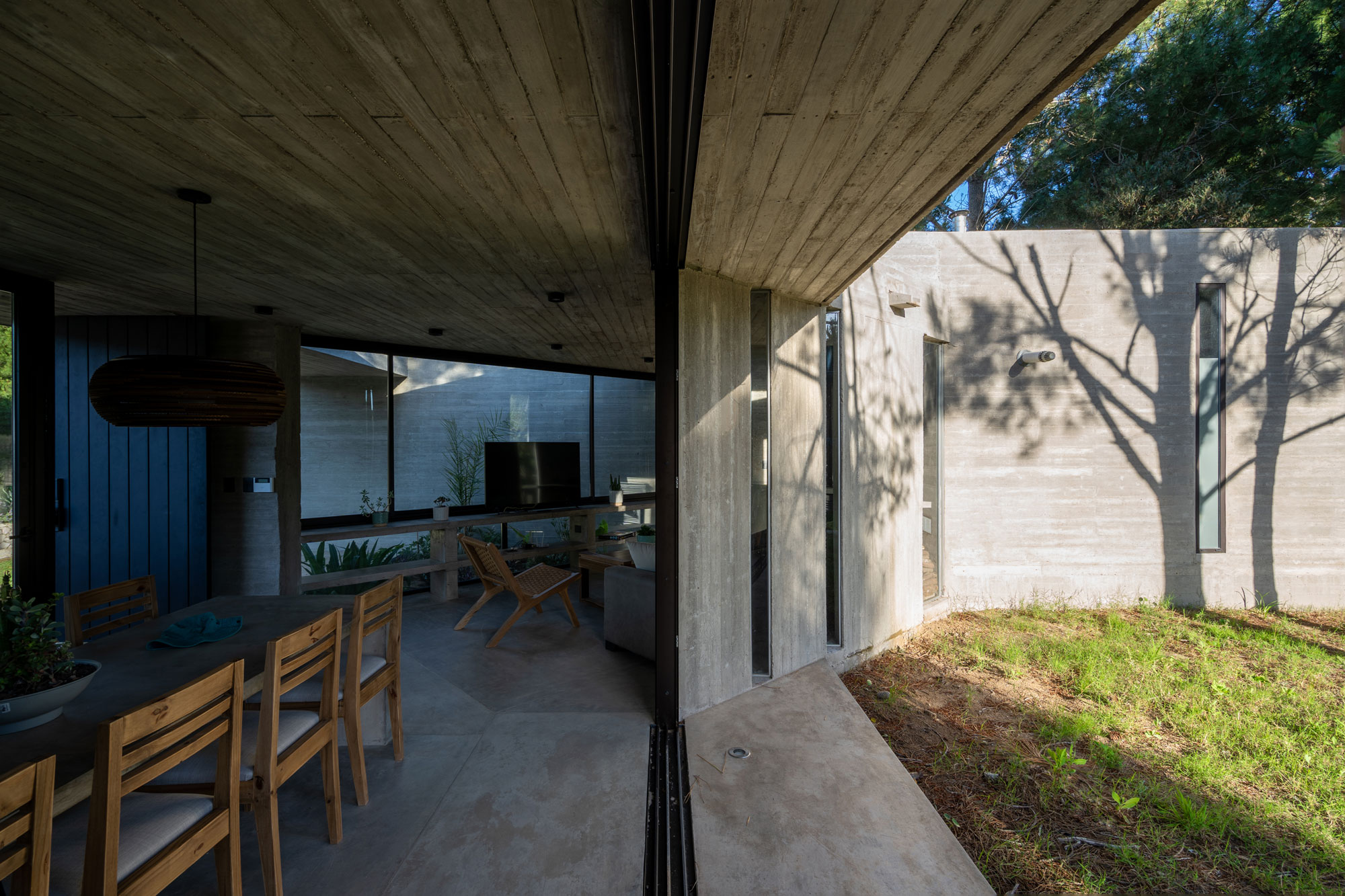
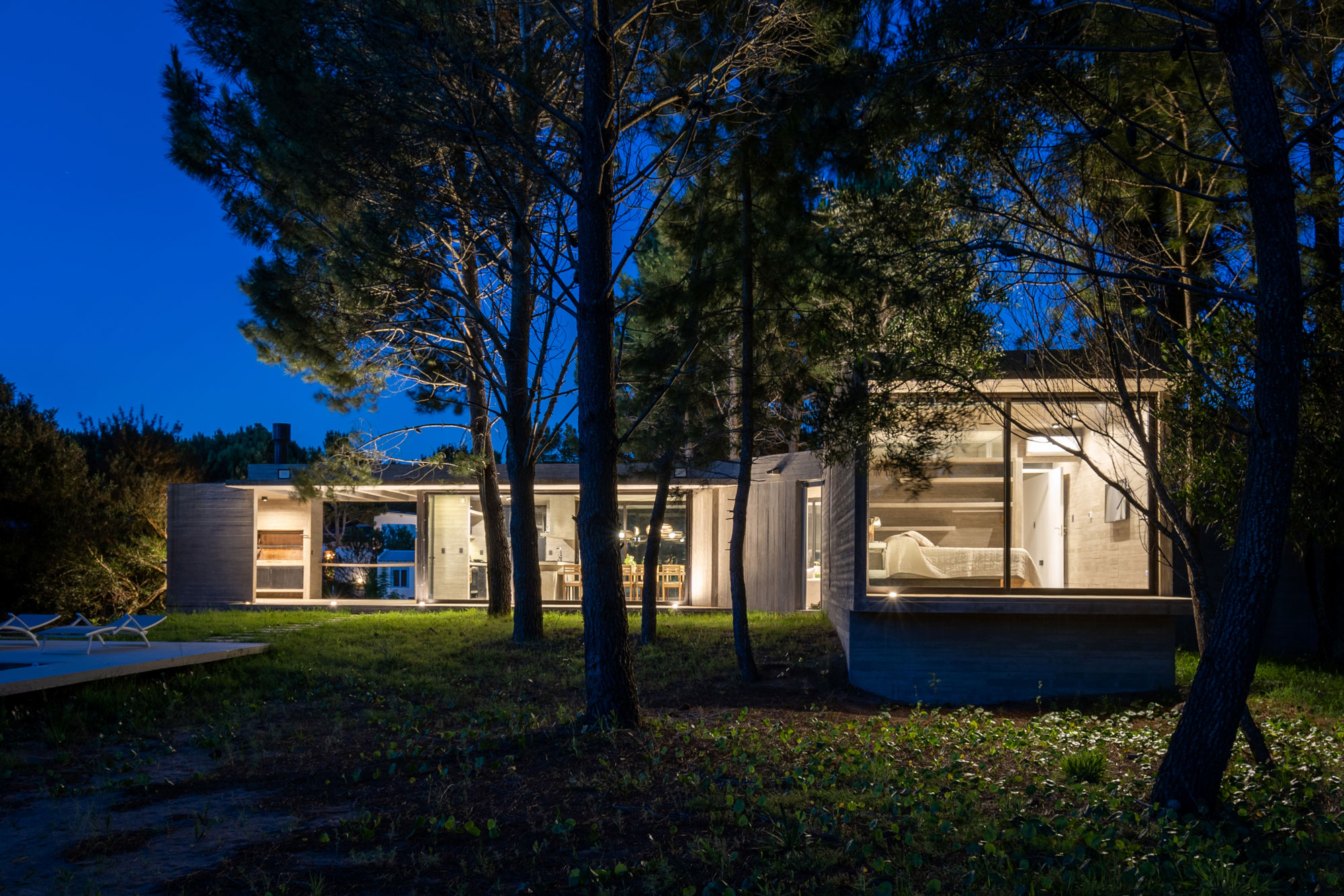
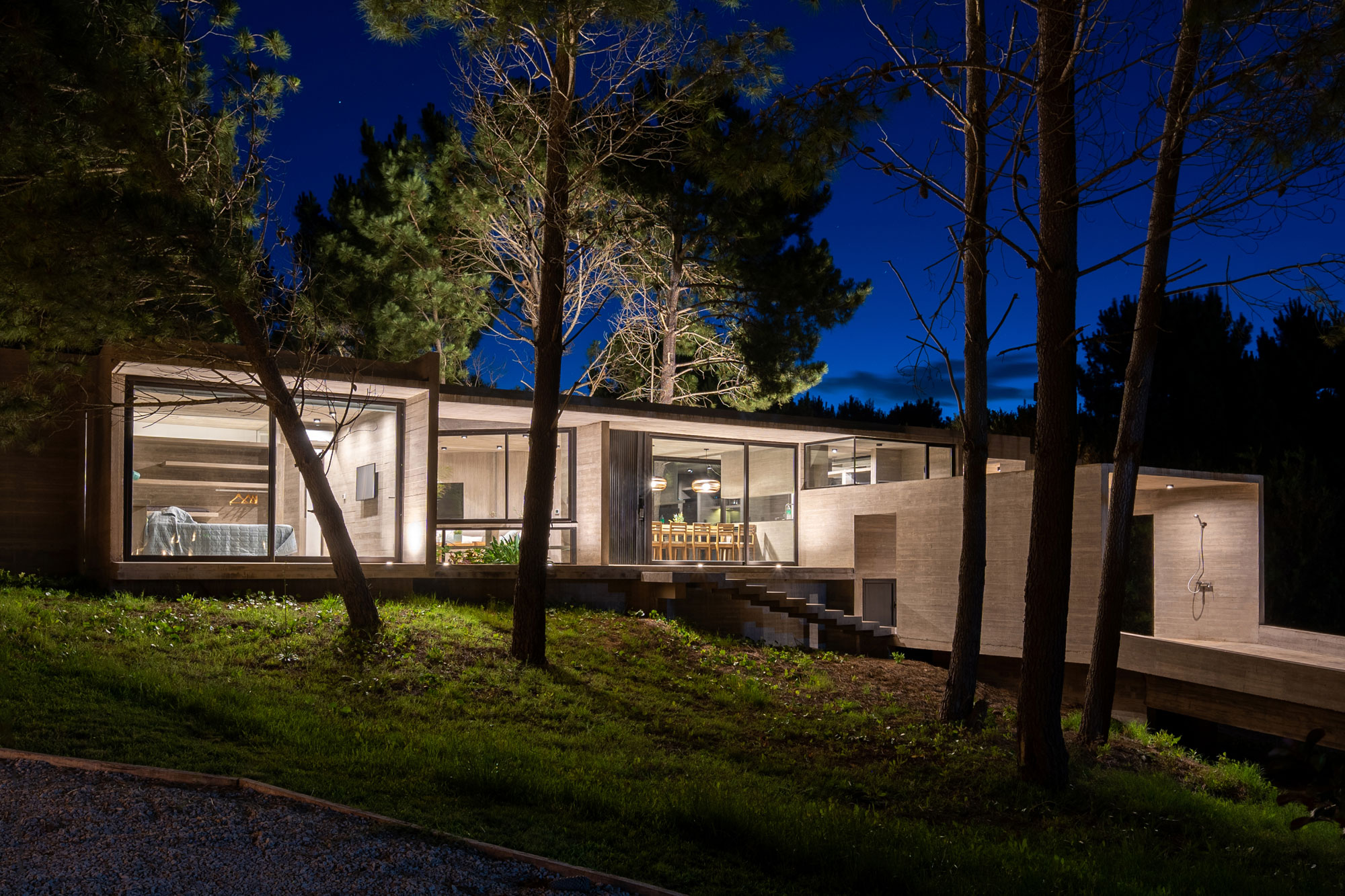
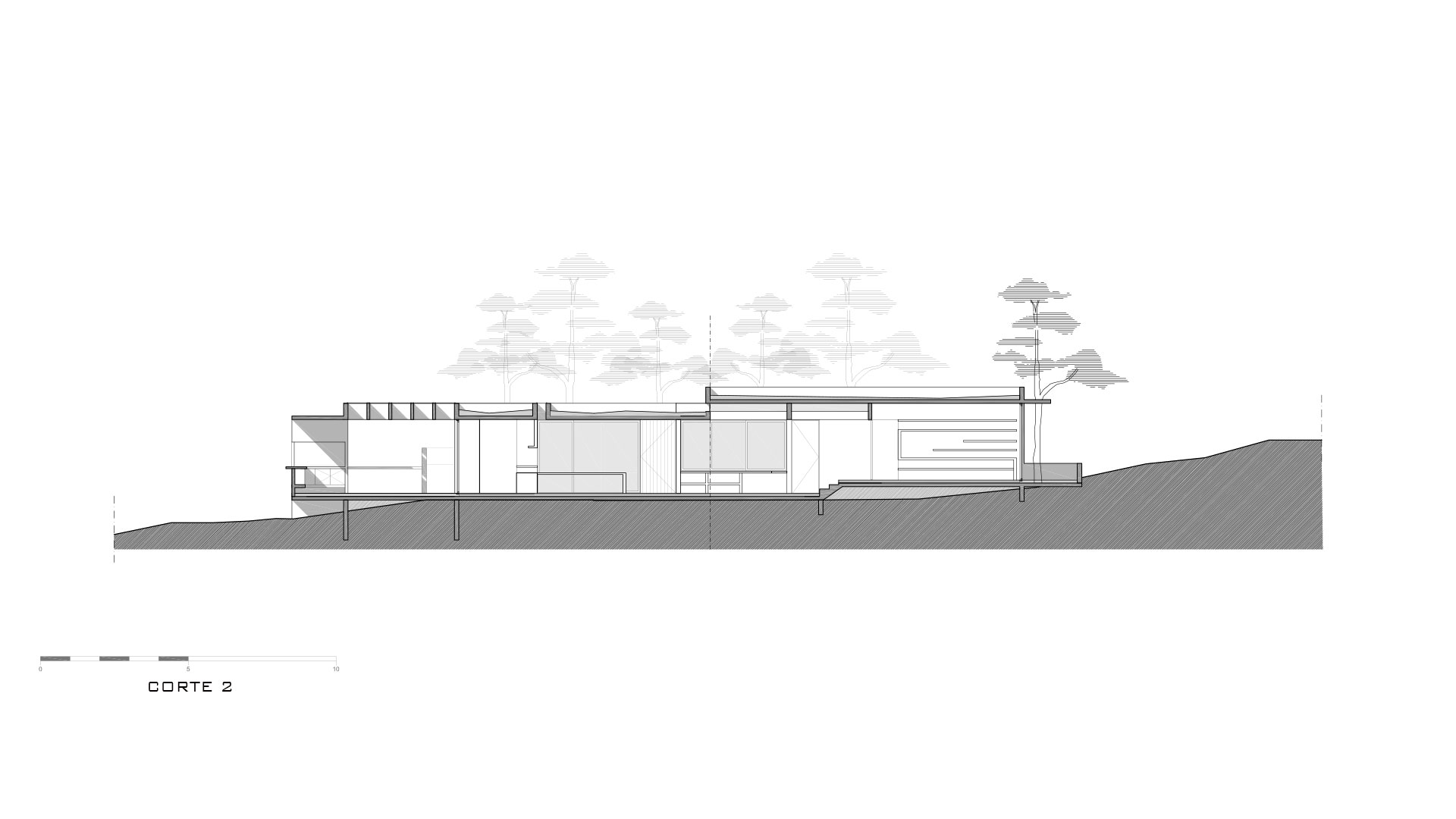
The floor plan fits organically among the trees, defining two clear areas. To the right, the dining room and kitchen are integrated in open connection with a concrete pergola for outdoor use. To the left, the living room feels more intimate, in visual contact with a private courtyard. Accompanying the elevation of the dune, the bedrooms are developed in three independent volumes, ensuring privacy and unique views of the landscape.
In our studio, we conceive of natural light not only as a functional requirement, but as a design material that adds spatial richness. The openings are not standardized elements, but strategic perforations that blur the boundary between interior and exterior. In Senderos House, the interplay of perforations, concrete pergolas, and skylights creates changing atmospheres that frame the forest and add dynamism to each environment.
Senderos House
Location: Costa Esmeralda, Buenos Aires, Argentina
Design and Project Management: Arch. María Victoria Besonías, Arch. Guillermo de Almeida
Collaborators: Arch. Micaela Salibe, Arch. Gisela Giovanetti, Hernán de Almeida
Land area: 1646sqm
Built area: 167sqm
Construction Year: 2025
Execution: René Mamani Construcciones
Photos: Hernán de Almeida
MEMORY
Senderos House is located in Costa Esmeralda, an area of outstanding natural beauty on the sand dunes of the Buenos Aires coast. The site is characterized by a harmonious coexistence between native grasslands, a young forest of acacias and maritime pines, and areas of established forest that the project seeks to preserve.
The lot has a peculiar geometry in the shape of a circular sector, with a narrow front of 12 meters that expands toward the back to reach 53 meters, bordering a forest reservoir. The topography presented an additional challenge: a depression near the access followed by an elevation of 2.50 meters, then descending abruptly toward the reservoir area.
The project brief called for a versatile home, suitable both for use by its owners and for temporary rental at any time of year. Exposed concrete was chosen as the main material, even extending to the fixed equipment. This decision responds to a search for achieving a formal synthesis and minimal maintenance.
The program is organized around three bedrooms with private facilities—allowing different family groups to live together—and an integrated social area (living room, dining room, and kitchen) that acts as the heart of the house, closely linked to the natural environment. The layout is completed with services, storage area, a swimming pool with bathroom, and parking spaces.
In order to respect the topography and existing tree grove, access was proposed via a sloping bridge that crosses the initial unevenness and defines the semi-covered garage. From this point, the walkway forks: a gently sloping staircase leads to the social area, while a secondary path connects to the grill area and the rest of the yard.
The floor plan fits organically among the trees, defining two clear areas. To the right, the dining room and kitchen are integrated in open connection with a concrete pergola for outdoor use. To the left, the living room feels more intimate, in visual contact with a private courtyard. Accompanying the elevation of the dune, the bedrooms are developed in three independent volumes, ensuring privacy and unique views of the landscape.
In our studio, we conceive of natural light not only as a functional requirement, but as a design material that adds spatial richness. The openings are not standardized elements, but strategic perforations that blur the boundary between interior and exterior. In Senderos House, the interplay of perforations, concrete pergolas, and skylights creates changing atmospheres that frame the forest and add dynamism to each environment.